importance of play

  • Encouraging Independent Play – When Your Kids Aren’t Used to It

    Encouraging Independent Play – When Your Kids Aren’t Used to It

    “Hey mom, wanna play Legos?” your son calls to you one morning. Truthfully, you don’t want to play Legos. You have other things on your to-do list, and even if you didn’t….you don’t want to play Legos! Shouldn’t he be able to play by himself? He’s five years old – are you asking too much of him developmentally? The simple answer is no, but let’s dig a little deeper.

    What Does ‘Play’ Really Mean?

    ‘Play’ can mean many things – experts divide it into three categories:

    • Social play – children play with one another or with an adult – throwing a ball, for example
    • Independent play – children play by themselves – pretending, doing a puzzle, etc.
    • Guided play – children play using props set up by adults, usually with an end goal in mind

    How Does Play Help With Child Development?

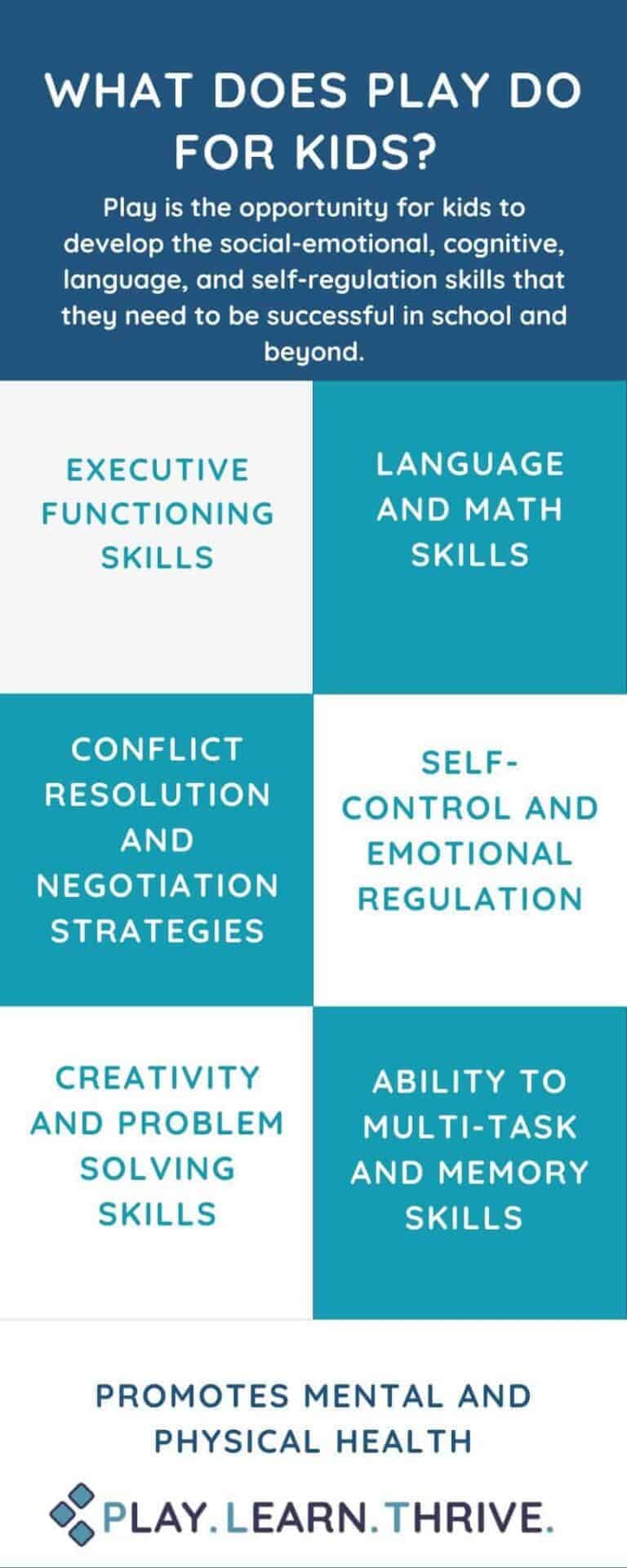
    Play is invaluable when it comes to child development; here are several tangible benefits:

    • influential in healthy brain development
    • critical part of fine motor and gross motor development
    • necessary for learning to negotiate and solve disagreements
    • helps children discovering new interests
    • essential for both expressive and receptive language development
    • crucial for social-emotional learning

    Encouraging independent play is important! The value of solo play specifically is rooted in skills of independence and imagination. A child playing in a self-directed way feels competent and capable – and isn’t this the end goal of raising children? 

    When Can I Begin Easing My Child Towards Independent Play?

    Short answer: sooner than you think! 

    It’s important, first and foremost, to consider the age and developmental stage of your child. Older children can be expected to play alone for longer periods of time than younger children. A six-month-old child, for example, may be able to play independently for about five minutes, while a one-year-old might play for fifteen minutes. 

    Obviously, these times refer to children who’ve been ‘trained’ for independent play. If, with no indoctrination, you tell your five-year-old one day to ‘go play’ and you’ll come check on him in an hour, he will likely have a problem meeting your expectations.

    Getting Started with Independent Play

    There are several variables to consider when guiding your child towards independent play, including environment, toys, routine and monitoring. 

    Step One: Check Your Environment

    To encourage independent play, the environment will be a safe space for children to explore. This area will not include breakable chachkies or pointy-cornered glass tables. It’s difficult to encourage independent play when a parent is hovering and constantly telling the child ‘no’. 

    The bedroom, living room, family room and even kitchen can be suitable play spaces as long as safety comes first. Think of all those pots and pans in the kitchen just waiting for little hands!

    Will I Need to Buy All New Toys?

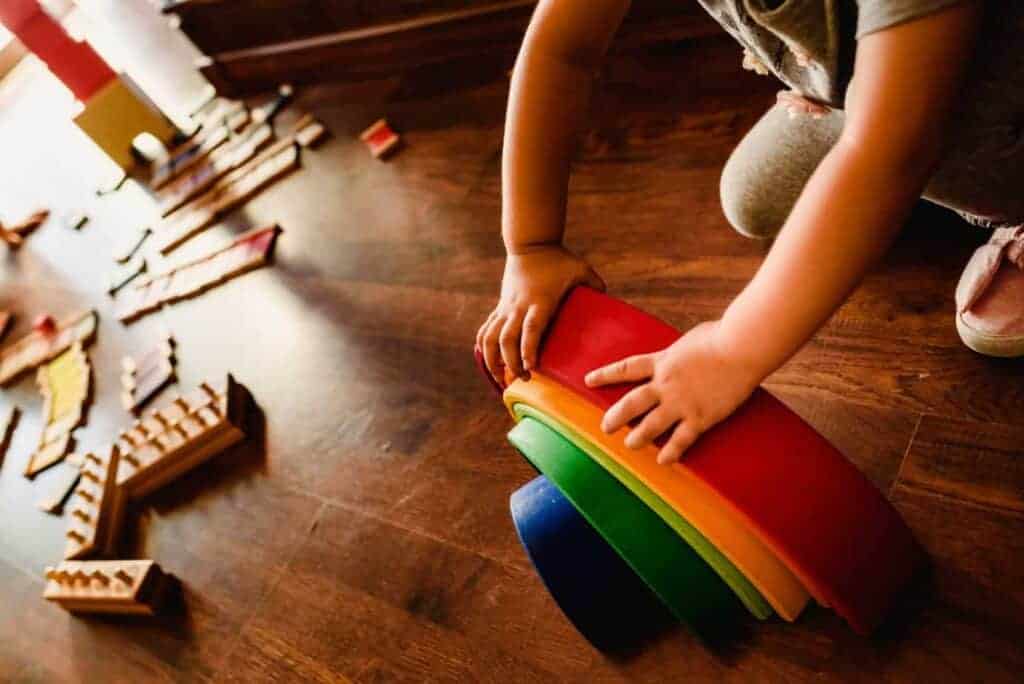
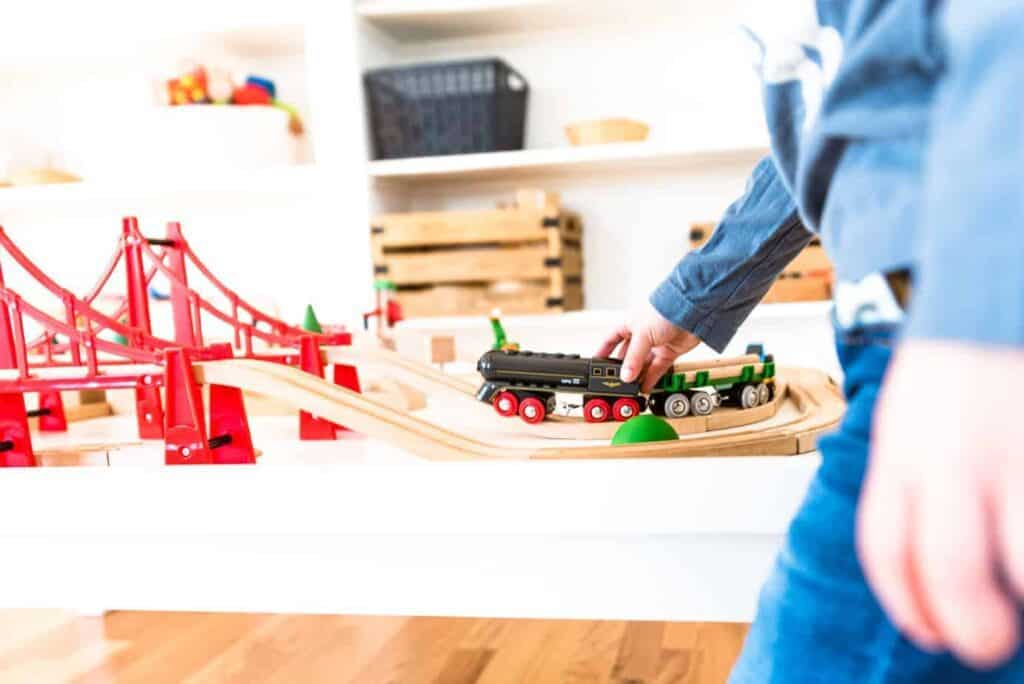
    Not only are fancy toys unnecessary for independent play, they’re actually detrimental to the whole process. Open-ended toys breed success in independent play. Wooden blocks, balls, Legos, magnets, and more are good examples of open-ended toys.

    Open-ended-toys can be used in many different ways. A block can be stacked as part of a building, or it can be used like a cell phone or a microphone. There’s no ‘wrong’ way to use a block (as long as you’re being safe). 

    When considering whether a toy is suited for independent play, consider how your child might use it.  If there is only one way to use the toy (an electronic keyboard, for example), save it for a session of guided play.

    Although one might say an iPad or smartphone has many uses, and is therefore suitable, electronics are not appropriate for independent play. Electronic devices may encourage boredom in children, as they are an ongoing source of stimulation. 

    When children become accustomed to blinking lights and lots of activity, it can make it difficult for them to transition to coloring or playing with blocks.

    Step Two: Time IN

    What is ‘Time In’? It is intentional time spent playing with your child with no distractions. Put away your cell phone or device and set a timer based on the age of your child. For an infant, start with five minutes, and if your child is five years old, set the timer for about twenty minutes.  

    Tell your five-year-old child, “I’m yours for twenty minutes – what should we do?” Then simply follow their lead. Don’t correct, coach or teach. Go with their ideas, and be present.

    When the time is up, tell them what fun you had, and how you need to go do your work now. Tell them you’ll be back a little later. Then, twenty or thirty minutes later, check on them. You may need to stay in the same room initially.

    When using this routine with an infant or toddler, you must stay in the same room. That being said, as your child is playing independently, be sure to busy yourself with another task. It’s not ‘independent play’ if you’re still involved.

    An Independent Play Routine

    Like anything you teach your child, independent play must be practiced over time. Don’t expect to try it once and have your child be an expert right out of the gate. 

    Additionally, don’t expect a three-year-old to acclimate to this practice immediately. Independent play is a quicker success story the earlier you begin the routine.

    Monitoring

    You will be observing and checking on your child during independent play. What are you looking for exactly? Flow is the ultimate goal – that state of mind where you’re so involved in something that you forget yourself. 

    Flow is a wonderfully gratifying state of mind for all ages, and it’s certainly possible for a preschooler to attain. 

    Final Thoughts on Independent Play

    Independent play is a worthwhile goal for you and your family. It may take a while to become comfortable in this routine, and there will undoubtedly be stops and starts along the way.

    Give yourself, and your child, lots of grace along the way, and keep in mind that the ability to be alone and entertain one’s self is a lifelong skill. Most of all, enjoy the journey!
    If you’re looking for more information about the importance of play and tips to reorganize your playroom check out my e-book: Simply Play: Everything You Need To Know About The Most Important Part of Childhood which you can buy here for only $4.99.
    If you like this post and want to read more like it then check out these articles:
    Outdoor Play: Why Does it Matter?
    Type of Play for Development
    Toy for Toddlers: Encouraging Active Play
    Top Toys to Encourage Outdoor Play
    7 Essential Playroom Spaces (and why you need them)
    The Power of Play
    Risky Play for Kids

    Read More

  • Understanding the Importance of Play

    Understanding the Importance of Play

    We take for granted the importance of play for our children’s growth and development.

    Often times parents are so focused on early academics, scheduling play dates, setting up Pinterest worthy crafts, enrolling their kids in organized sports, and entertaining them with flashy “educational” toys.

    It makes sense that many parents get sucked into this as this is what our society has come to place above free and unstructured play. 

    We need to understand the importance of play for our kids.

    Play is HOW Kids Learn

    It is how they develop the cognitive, social and emotional skills that allow them to succeed in all things. In a recent clinical report by the American Academy of Pediatrics (AAP) titled “The Power of Play: A Pediatric Role in Enhancing Development in Young Children” the abstract states play is “a singular opportunity to promote the social-emotional, cognitive, language, and self-regulation skills that build executive function and a prosocial brain.”

    So this concept is no joke.

    The importance of play cannot be overstated.

    The American Academy of Pediatrics is actually having to PRESCRIBE AND ADVOCATE for play. 

    This is what the AAP is recommending pediatricians do:

    1. Advocate for the protection of unstructured play because of it’s proven benefits in the development of motor skills that have lifelong benefits (such as preventing obesity, hypertension, and type 2 diabetes)
    2. Advocate for educators to focus on play by allowing children to take the lead and follow their own curiosity
    3. Encourage educators to put a “premium” on building social-emotional and executive functioning skills
    4. Advocate for protecting recess time in schools

    The Importance of Play Based Learning

    We have become so obsessed with “educating” our children; extending their school day, shortening their recess, increasing homework, signing them up for enrichment classes and organized sports, trying to provide them with endless stimulation and educational activities at home.

    Our society has forgotten that it is through play that children learn the process of learning.

    All the learning a child needs in their early years can be accomplished through play.

    What is play and why is it important?

    There are four basic types of play:

    Object play

    When children explore objects to learn about their different properties.

    Physical play

    Using and developing gross motor skills by doing activities such as running, jumping, wrestling, spinning and climbing.

    Outdoor play

    Play that happens outdoors and allows children to improve sensory integration skills

    Pretend play

    When children are experimenting with different social roles, including dress up, make believe and imaginary play.

    How much play do kids need?

    Okay so the importance of play. We know kids NEED to play. But how many hours a day should we be shooting for? An occupational therapist and author of one of my favorite books, Angela Hanscom, says kids should be playing (ideally outside) for three hours a day.

    That may seem impossible, especially given all the other commitments we tend to take on during the week but it’s time to make play a priority for our kids.

    7 Tips for getting in those “play” hours

    Break up the time

    It doesn’t all have to be done at once. You can “schedule” play as you would any other activity. This may be needed if you are used to a very booked schedule of classes, mommy and me activities etc.

    Unschedule your time

    Instead of going to a scheduled activity invite a friend or two over. Don’t stress about finding people with kids the exact same age, in fact, mixed age play is great for kids development.

    Don’t hover

    Sit back and let your kids do the work. Enjoy a book, a conversation with a friend, do your nails….seriously anything but getting to involved in your kids play. You may feel guilty at first but they need time to engage in play without adults participating or directing.

    Get Outside

    Visit a local park, playground, hiking trail. You don’t have to have a specific activity planned–I guarantee your little one will be able to find things to do given the opportunity.

    Evaluate your play space.

    Is it conducive to independent play? Are your toys open ended?

    If you need help with this, book a virtual consult! 

    Get the right gear

    Read this to make sure you have the right gear to play outside in all kinds of weather.  

    Don’t let messes get to you (hard, I know!).

    One of the best pieces of advice I was given specifically about kids and messes was….”there is no mess that can’t be cleaned up.”

    And a note about messes, I generally enlist my children to help clean whatever mess they make so it’s a win win. They get to play and get messy without me freaking out, and I feel like they are being taught a valuable lesson in picking up after themselves and contributing to our household. 

    If you’re looking for more information about the importance of play and tips to reorganize your playroom check out my e-book:Simply Play: Everything You Need To Know About The Most Important Part of Childhood which you can buy here for only $4.99.
    If you like this post and want to read more like it then check out these articles:
    Type of Play for Development
    100 Simple Things to do Outside With Your Kids
    Toy for Toddlers: Encouraging Active Play
    7 Essential Playroom Spaces (and why you need them)
    What I’ve Learned about Early Childhood Education
    Understanding Schema Play

    Read More

  • Outdoor Play: Why Does it Matter?

    Outdoor Play: Why Does it Matter?

    Research shows that the average American kid only spend 4-7 minutes in outdoor playing. Yet they spend 7 plus hours of time per day in front of a screen. This lack of time outside in unstructured play (no, organized sports don’t count…) is detrimental to our kids.

    To their health, their happiness, their creativity, their attention spans, their social, emotional and academic skills. 

    In an article titled “Getting back to the great outdoors” published by the American Psychological Association they quote research that connect times outside to brain development. The research states, “children who experienced the biggest increase in green space near their home after moving improved their cognitive functioning more than those who moved to areas with fewer natural resources nearby (Environment and Behavior (Vol. 32, No. 6).

    Studies have also found that the presence of nearby nature bolsters a child’s resilience against stress and adversity, particularly among those children who experience a high level of stress.

    Benefits of Outdoor Play

    • Physically healthier kids (better immunity, less obesity, more physical strength)
    • Mentally healthier kids (less anxiety, less depression, better moods and sleep)
    • Increase in attention span and creativity
    • Increase in sensory specific skills
    • Stronger ability to collaborate with others, adapt to new situations, problem solve, and negotiate–all life skills that your child will NEED to be successful in the world beyond school

    The need for risky play

    Children have an innate need for risk taking–and some research indicates that children who are encouraged to take risks at a younger age are able to better manage risk once they have gained more independence (so think about when your child is older and you want them to be able to manage risk when you aren’t there to swoop in to save them).

    It also shows that lack of ample opportunity to take risks may increase fear, inappropriate aggression, and the ability to cope with stress. 

    All of which translates into increased anxiety–this article also notes that “anxiety disorders are the most prevalent mental disorder in children and adolescents and parental overprotection has been associated with increased rates.”

    What does risky play look like?

    Some ways you may see kids engaging in risky play are:

    • playing at heights
    • running at high speeds
    • using things in ways that aren’t intended (climbing the couch, going up the slide instead of down), rolling down hills, climbing rocks
    • walking on anything that requires balance
    • spinning in circles
    • jumping off anything and everything

    These are things we should be encouraging our kids to do.

    To read more about risky play check out the article “A Guide to Understanding Risky Play”

    A little dirt never hurt

    Pick up a copy of the book Dirt is Good: The Advantage of Germs for Your Child’s Developing Immune System by Jack Gilbert Ph.D. for a more detailed explanation of why I let my kids eat dirt (and gasp…I don’t always wash their hands after they have played in dirt even when they are about to eat).

    Basically, exposure to low level germs and microbes are actually good for your kids as they help the immune system build itself up (read this article for more immune system boosting tips).

    Professor Gilbert explains that “exposure to microbes prevalent in the great outdoors will establish a stronger, more robust immune system in young people.”

    So stop stressing about washing off every speck of dirt, let your kids eat food from the floor, and stop using hand sanitizer unless you’re in a pinch and near “real” germs like cold and flu viruses (even then warm soapy water is best!)

    There is no such thing as bad weather, only bad clothes.

    This is not just a great book, but a philosophy lived by many families in Scandinavian countries and other areas of the world where outdoor play is held in higher regard.

    It’s much easier to get your kids outside when you have all the right gear.

    The right rain suit and boots can allow kids to stomp in puddles for hours.

    Rain Gear

    Some of my absolute must haves for outdoor play include the OAKI rain suit which my kids wear outside even in torrential downpour and still stay dry. Typically we wear base layers in the fall and spring as the OAKI suit is a thin waterproof material.

    We have tried both the Crocs rainboots and the Bogs rainboots.

    We prefer the bogs because they have a nice liner which makes them easy to slip on. They are also taller and made of a more flexible rubber.

    Base Layers (Layering)

    Baselayer just means the FIRST layer of clothing that is touching your skin.

    We mostly use merino wool as a base layer because the material is breathable, helps regulate body temperature and is a natural fiber.

    We love wool by Nui Organics and Sloomb because we wear a lot of wool year round, but if you just need a base layer you can get the Merino Kids thermal set by Simply Merino or these pajamas by Woolino.

    Many moms like to use fleece for warmth. Fleece is the synthetic version of wool. It isn’t as breathable as wool, but it is a great option and is typically less expensive. These are some good fleece options: The Rocky fleece thermals for girls and boys.

    Snow Gear

    For snow, we are LOVING our Patagonia Snow Pile one piece.

    We have tried a bunch of gloves and really love using these wool Melton Baby gloves underneath these POLARN O. PYRET waterproof shell gloves.

    What’s nice is you can use both of these separately or together depending on the weather.

    If your little one prefers a mitten style glove then you can get these waterproof shells and these merino mittens both by Polarn O. Pyret.

    For serious snow play we have been using, and loving, these Stonez Mitts. They cinch at the wrist and elbow and are super warm and SO easy to put on.

    As for hats I strongly recommend a baclava this like one from SmartWool, or a hat that pulls down over the ears.

    Our favorite snow boots are Bogs. I would recommend either the Bogs “Slushie” Snow boots or the Bogs baby waterproof boot. They are super easy to walk in and really protect their feet from the cold.

    My Outdoor Play Challenge

    I challenge you all to purposely send your kid outside to get dirty or play in weather you normally wouldn’t.

    Set up a water table and with a couple buckets of dirt and a shovel.

    Let them dig a hole and plant something with their bare hands. Then don’t freak out when you see them then stick their dirty fingers in their mouth or their nose.

    Bundle them up and send them outside in the snow. You can watch them from the shelter of your house if you need to.

    Put on those rain suits and boots to stomp in puddles and run around in the pouring rain.

    Just get those kids outside. Every. Single. Day.

    Ready to join an amazing challenge? Check out the 1000 Hours Outside Challenge!

    If you’re looking for more information about the importance of play and tips to reorganize your playroom check out my e-book: Simply Play: Everything You Need To Know About The Most Important Part of Childhood which you can buy here for only $4.99.
    If you like this post and want to read more like it then check out these articles:
    Type of Play for Development
    100 Simple Things to do Outside With Your Kids
    Toy for Toddlers: Encouraging Active Play
    7 Essential Playroom Spaces (and why you need them)
    The Power of Play
    What I’ve Learned about Early Childhood Education

    Read More