play

  • Understanding the Importance of Play
    Understanding the Importance of Play

    We take for granted the importance of play for our children’s growth and development.

    Often times parents are so focused on early academics, scheduling play dates, setting up Pinterest worthy crafts, enrolling their kids in organized sports, and entertaining them with flashy “educational” toys.

    It makes sense that many parents get sucked into this as this is what our society has come to place above free and unstructured play. 

    We need to understand the importance of play for our kids.

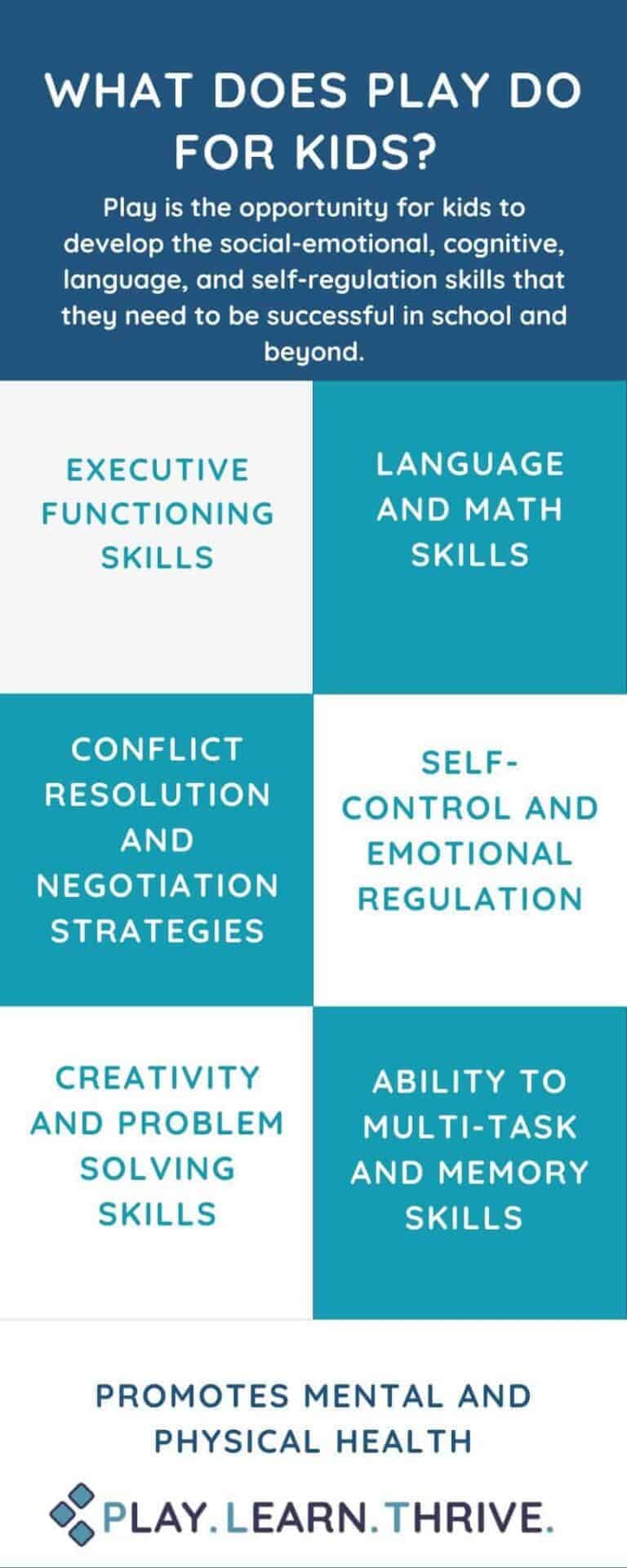
    Play is HOW Kids Learn

    It is how they develop the cognitive, social and emotional skills that allow them to succeed in all things. In a recent clinical report by the American Academy of Pediatrics (AAP) titled “The Power of Play: A Pediatric Role in Enhancing Development in Young Children” the abstract states play is “a singular opportunity to promote the social-emotional, cognitive, language, and self-regulation skills that build executive function and a prosocial brain.”

    So this concept is no joke.

    The importance of play cannot be overstated.

    The American Academy of Pediatrics is actually having to PRESCRIBE AND ADVOCATE for play. 

    This is what the AAP is recommending pediatricians do:

    1. Advocate for the protection of unstructured play because of it’s proven benefits in the development of motor skills that have lifelong benefits (such as preventing obesity, hypertension, and type 2 diabetes)
    2. Advocate for educators to focus on play by allowing children to take the lead and follow their own curiosity
    3. Encourage educators to put a “premium” on building social-emotional and executive functioning skills
    4. Advocate for protecting recess time in schools
    The Importance of Play Based Learning

    We have become so obsessed with “educating” our children; extending their school day, shortening their recess, increasing homework, signing them up for enrichment classes and organized sports, trying to provide them with endless stimulation and educational activities at home.

    Our society has forgotten that it is through play that children learn the process of learning.

    All the learning a child needs in their early years can be accomplished through play.

    What is play and why is it important?

    There are four basic types of play:

    Object play

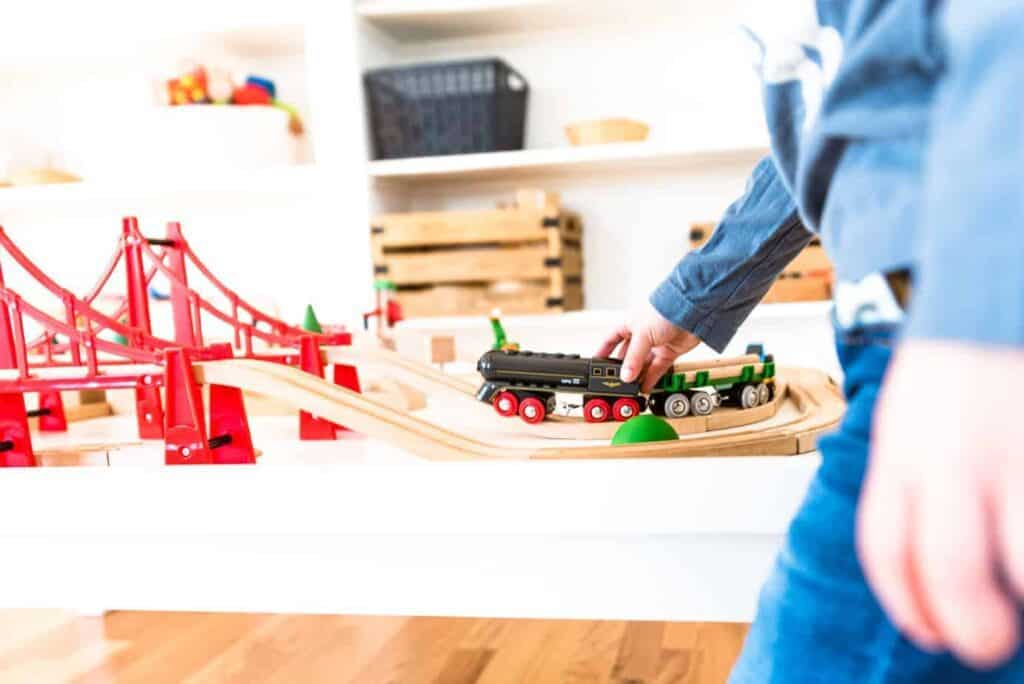
    When children explore objects to learn about their different properties.

    Physical play

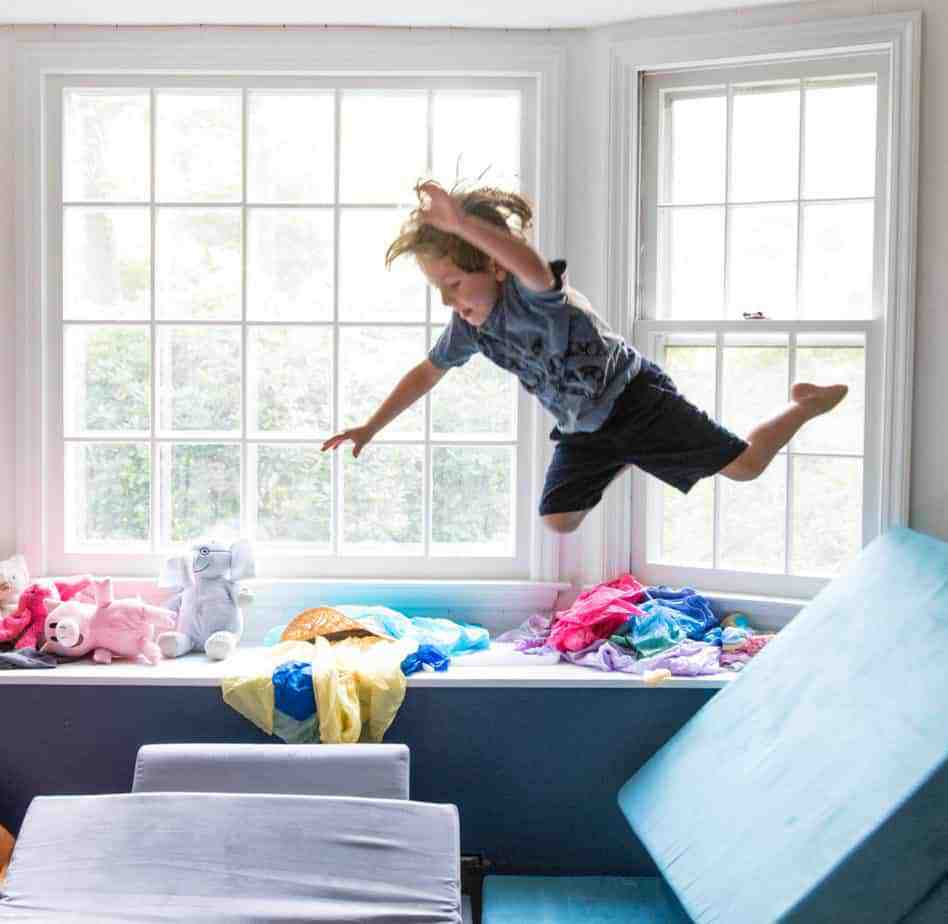
    Using and developing gross motor skills by doing activities such as running, jumping, wrestling, spinning and climbing.

    Outdoor play

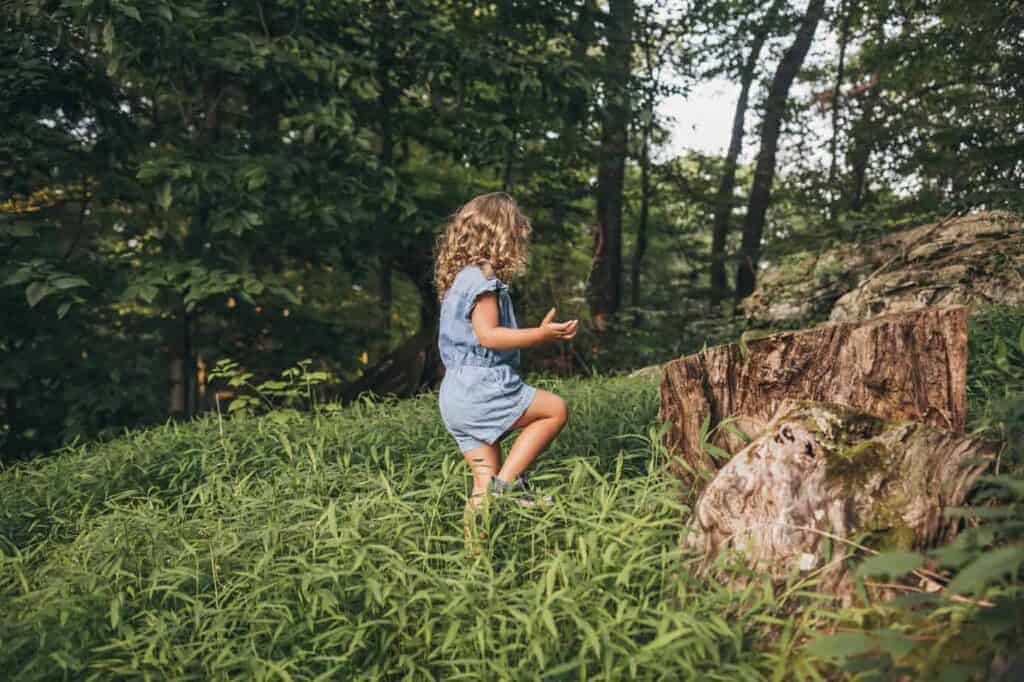
    Play that happens outdoors and allows children to improve sensory integration skills

    Pretend play

    When children are experimenting with different social roles, including dress up, make believe and imaginary play.
    How much play do kids need?

    Okay so the importance of play. We know kids NEED to play. But how many hours a day should we be shooting for? An occupational therapist and author of one of my favorite books, Angela Hanscom, says kids should be playing (ideally outside) for three hours a day.

    That may seem impossible, especially given all the other commitments we tend to take on during the week but it’s time to make play a priority for our kids.
    7 Tips for getting in those “play” hours

    Break up the time

    It doesn’t all have to be done at once. You can “schedule” play as you would any other activity. This may be needed if you are used to a very booked schedule of classes, mommy and me activities etc.

    Unschedule your time

    Instead of going to a scheduled activity invite a friend or two over. Don’t stress about finding people with kids the exact same age, in fact, mixed age play is great for kids development.

    Don’t hover

    Sit back and let your kids do the work. Enjoy a book, a conversation with a friend, do your nails….seriously anything but getting to involved in your kids play. You may feel guilty at first but they need time to engage in play without adults participating or directing.

    Get Outside

    Visit a local park, playground, hiking trail. You don’t have to have a specific activity planned–I guarantee your little one will be able to find things to do given the opportunity.

    Evaluate your play space.

    Is it conducive to independent play? Are your toys open ended?

    If you need help with this, book a virtual consult! 

    Get the right gear

    Read this to make sure you have the right gear to play outside in all kinds of weather.  

    Don’t let messes get to you (hard, I know!).

    One of the best pieces of advice I was given specifically about kids and messes was….”there is no mess that can’t be cleaned up.”

    And a note about messes, I generally enlist my children to help clean whatever mess they make so it’s a win win. They get to play and get messy without me freaking out, and I feel like they are being taught a valuable lesson in picking up after themselves and contributing to our household. 

    If you’re looking for more information about the importance of play and tips to reorganize your playroom check out my e-book:Simply Play: Everything You Need To Know About The Most Important Part of Childhood which you can buy here for only $4.99.
    If you like this post and want to read more like it then check out these articles:
    Type of Play for Development
    100 Simple Things to do Outside With Your Kids
    Toy for Toddlers: Encouraging Active Play
    7 Essential Playroom Spaces (and why you need them)
    What I’ve Learned about Early Childhood Education
    Understanding Schema Play

    Read More

  • Kids Need Risky Play

    Risky Play

    Children have an innate need for risk-taking. In addition, children who are encouraged to take risks at a younger age are able to better manage risk once they have gained more independence. A lack of ample opportunity to take risks may increase fear and inappropriate aggression, as well as limit the ability to cope with stress. All of this translates into an increase in physical and mental health issues, particularly in children.

    What is Risky Play?

    To begin, risky play isn’t synonymous with dangerous play. For many adults, risky play is what we became accustomed to as young people. This was before fear became an all too present element in parenting.

    Remember riding your bike alone or exploring the creek in the neighborhood park? These are normal, everyday activities that children should experience. Today, however, children are experiencing risky play less and less often.

    Some ways you may see kids engaging in risky play are:

    • playing at heights
    • running at high speeds
    • using things in ways that aren’t intended (climbing the couch, going up the slide instead of down)
    • rolling down hills
    • climbing rocks
    • walking on anything that requires balance
    • spinning in circles
    • jumping off anything and everything

    In addition, risky play is often unstructured. This means that the child is free from direct adult supervision. Of course, if you have a young child engaging in risky play, you may still be at the park or in the home nearby, but you are letting them climb, explore, and build without fear or retribution. Risky, unstructured play gives the child a chance to explore, imagine, and self-regulate in a way that structured, adult-initiated play does not.

    Although risky play can happen indoors, so much of positive risky play happens outdoors. In a world dominated by screen time and personal devices, I am a huge advocate of getting our kids outside to experience nature! Rain, snow, or sunshine, outdoor play with risky elements helps children engage in imaginative exploration.

    Research on Risky Play

    Dr. Peter Gray writes in his book Free to Learn, “Over the past 60 years we have witnessed, in our culture, a continuous, gradual, but ultimately dramatic decline in children’s opportunities to play freely, without adult control, and especially in their opportunities to play in risky ways. Over the same 60 years we have also witnessed a continuous, gradual, but ultimately dramatic increase in all sorts of childhood mental disorders, especially emotional disorders.”

    Gray’s findings come from the study of a school, Sudbury Valley, that focuses on the philosophy of student ownership and community responsibility of learning. Ultimately, the students design their own learning path. Grade levels and formal courses are not part of the Sudbury way. In fact, risky play and exploration is encouraged. Gray sees the result as students that are more resilient, independent, and able to navigate the world after their school years.

    Parental (Over)-Involvement

    Today, parents are often seen hovering over kids at the playground, or even worse, following them up into the playground equipment. Parents aren’t necessarily doing this to play with their child but to make sure they don’t fall or get minor bumps and bruises. “Helicopter parenting” isn’t necessarily new, but it seems like it’s becoming the norm rather than the exception. This also means many children aren’t scaling rocks and climbing trees anymore. They aren’t jumping from heights that are just a little too high. Our kids aren’t taking risks!

    Funny enough, injuries haven’t decreased. In fact, it’s been quite the opposite. Why? Children are not testing their bodies enough. They are more likely to get hurt because they are grossly unaware of their physical limits.

    We need to shift our mindset. These are things we should be encouraging our kids to do. Take a breath, step away from the top of the slide, and let them take healthy and age-appropriate risks. As Gray states in his 2014 Psychology Today article, “Play, to be safe, must be free play, not coerced, managed, or pushed by adults.”

    Benefits of Risky Play

    When children are allowed to engage in risky play, it gives them a chance to expand their imagination. For example, building a fort out of couch cushions and furniture that a child may climb over and under can open a world of story-telling, building, and all-over imaginative play!

    The power of play itself simply can’t be disputed. Play is the basis for how young children learn. By encouraging risky, unstructured play, children develop physical and mental skills that build imagination, resilience, and physical endurance.

    Gray also states that risky play allows children to experience a healthy sense of fear. When adults do not allow kids to engage in risky play, they are unable to experience self-regulation and understand what their limits are.

    Besides just being plain fun, risky play gives young people a chance to build resilience, fear, strength (in spirit and physicality), and experience a world of imagination. It’s time for adults to remember what it was like to be young again when risky play was a normal part of our everyday lives! Let your kids play, set some appropriate boundaries, of course, but let go a little bit to let them experience risky play.

    If you’re looking for more information about the importance of play and tips to reorganize your playroom check out my e-book:

    Simply Play: Everything You Need To Know About The Most Important Part of Childhood which you can buy here for only $4.99.

    Read More