playroom

  • Every Playroom Needs Toy Blocks

    Take a look around your playroom – what do you see? Balls, puzzles, dolls, electronics ……. toy blocks? I hope you have them, because toy blocks are a powerhouse when it comes to quality playtime for children! 
    Every playroom needs blocks.

    These flexible toys come in a variety of shapes, sizes and materials. Indeed, there is something for virtually every child out there to enjoy in the world of blocks.  

    The Value of Blocks

    What might seem like a simple, old, reliable toy might surprise you with its options and merit. Playing with blocks is time well-spent – that’s why every playroom needs blocks. Here are just some of the skills and abilities addressed by block play:

    Motor Skills

    Exploring and building with blocks encourages both fine and gross motor exercise. Imagine a toddler using his whole body, and all the balance he can muster, to stack blocks – it’s not an easy task for a little one! Now picture a seven-year old doing the same thing – the precision involved in manipulating the blocks into just the right position is impressive! This gross motor exercise aids in overall body strength, balance, and the ability to bend and lift.

    Fine motor skills really blossom when working with blocks. Children perfect the skill of bringing hands together and also hone the pincer grip, which is used in coloring, writing, painting, etc. Children will transfer this fine motor strength to life skills such as buttoning, zipping, and tying. 

    Eye-Hand Coordination

    When the brain imagines something, it is no small feat for the fingers and hands to make that vision into reality. By manipulating blocks, children are perfecting this process – getting the eyes to communicate with the brain and the brain to relay directions to the hands and fingers.

    The value of eye-hand coordination cannot be overestimated. Besides being essential for throwing and catching, eye-hand coordination is also instrumental in the visual tracking process involved in reading.

    Problem-Solving Skills

    Through block play, children have endless opportunities to solve problems. What do you do when your tower falls down? How can you carry several blocks at once? Which blocks should you use to build a bridge? These are just some examples of problems that might present themselves during a typical session of block play. Through trial and error, your child will build competence every day.

    Creativity

    Anytime a child uses an open-ended toy such as blocks, he is exercising creativity. The builder can create whatever his imagination dictates – a skyscraper, fortress, or castle. Architects-to-be will never tire of creating.

    In pretend play, a block can be a cell phone or a hot dog. There is no ‘right’ way to use blocks! A block wall can provide shelter from a thunderstorm or the big bad wolf. Playing blocks with a peer only increases creativity and imagination.

    Language Skills

    Another reason every playroom needs blocks is for the growth of language skills. Anytime a child is using his or her imagination, language is a natural connection. Offering questions and concepts can enhance the play experience.

    Playing alongside your child? Block play is the perfect time for narrating your child’s actions and exposing him to language. Be sure to use positional words like ‘over’, ‘under’, ‘through’, ‘on top’, etc., to encourage spatial awareness, too.
    Types of Toy Blocks

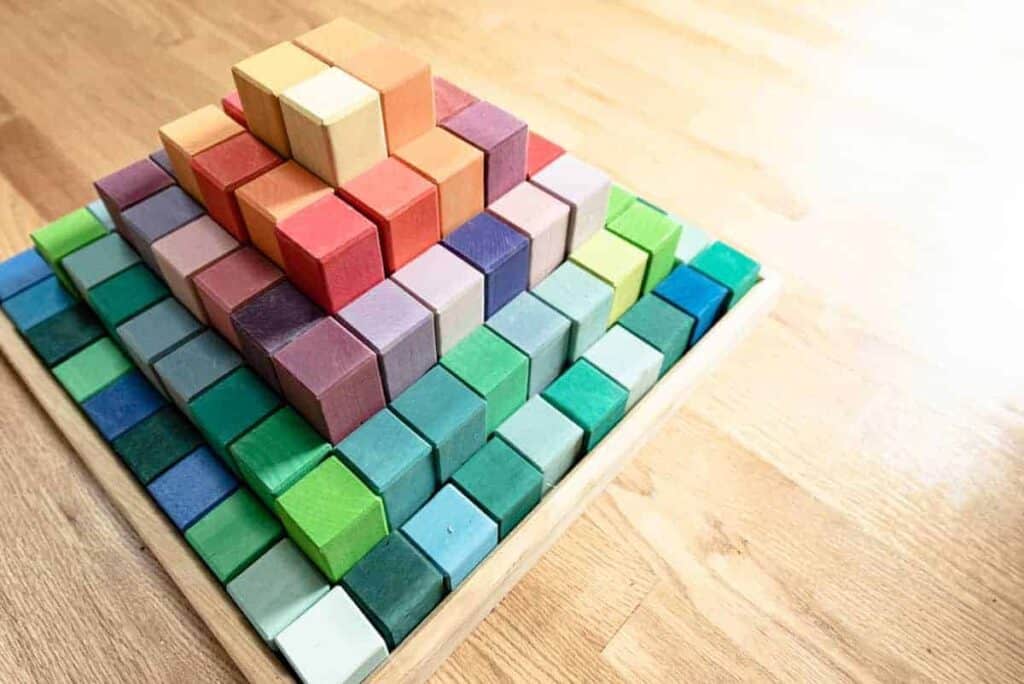
    Every playroom needs blocks – but which kind? Toy manufacturers have responded to consumer demands by creating blocks of seemingly every type. Whether made of wood, plastic, foam or cardboard, each variety has its virtues. Blocks can be smooth, bristly, and even magnetic.

    Each sort of block has something important to teach a child.

    Wooden Toy Blocks

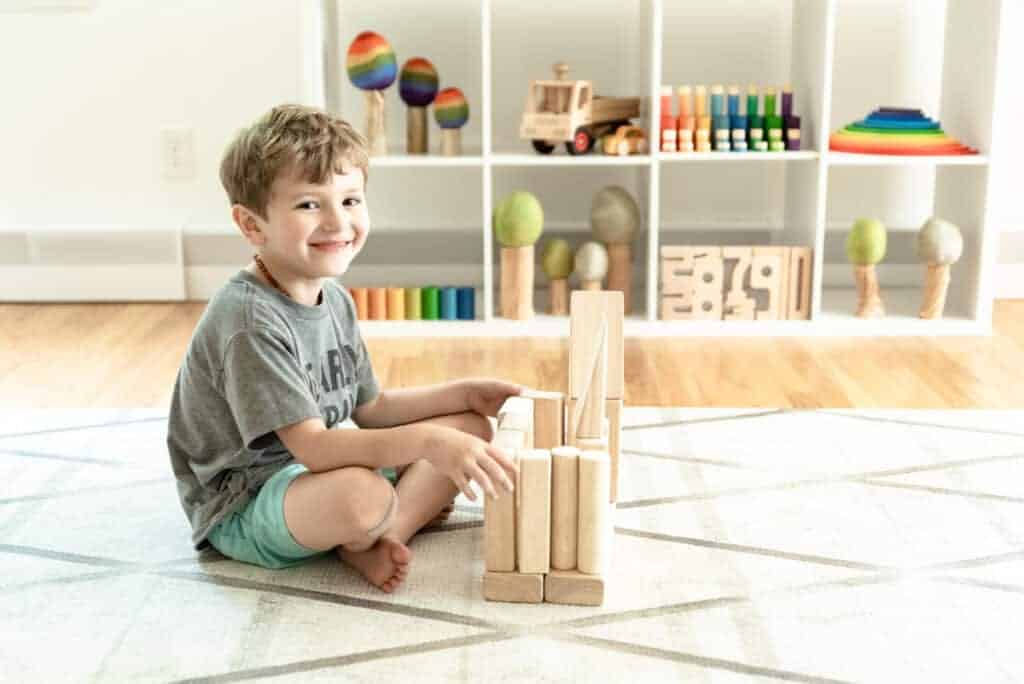
    From as far back as 1811, wooden blocks have been admired as an ideal toy for learning. Friedrich Froebel, known as the inventor of Kindergarten, developed a series of wooden toys for exploration in the year 1837. 

    Decades after their development, these wooden toys underwent a transformation with the work of Maria Montessori, Italian physician and educator. Montessori found that wooden blocks helped develop motor skills while also exploring the laws of physics.

    Wooden blocks are available painted or unpainted, and come in a variety of sets. Sets including only colorful square cubes are as valuable as larger sets with more shape variety – both are engaging for young children.

    Foam Toy Blocks

    A lighter (and safer if being thrown) version of the standard wooden variety, foam block allow children to explore shapes and experiment with stacking and building. These blocks come in a variety of colors, and some blocks even fit together like puzzle pieces.
    Jumbo Cardboard Blocks

    There is something magical for a small child to be able to manipulate a relatively large item – these blocks are in the shape of big bricks, perfect for building a fort or just stacking one atop the other. Best of all, it doesn’t hurt when they fall on your head!

    Duplo Toy Blocks

    The precursor to Legos, these blocks are the perfect thing to fit into the chunky hands of toddlers and preschoolers. For younger children, large Duplo blocks provide the challenge of building without the danger of chocking on small parts.

    Magnetic Toy Blocks

    Completely different from wooden blocks, these building materials are 3D, translucent and magnetic. School-age children will especially enjoy the possibilities with magnetic blocks, which add another dimension to play.
    Legos

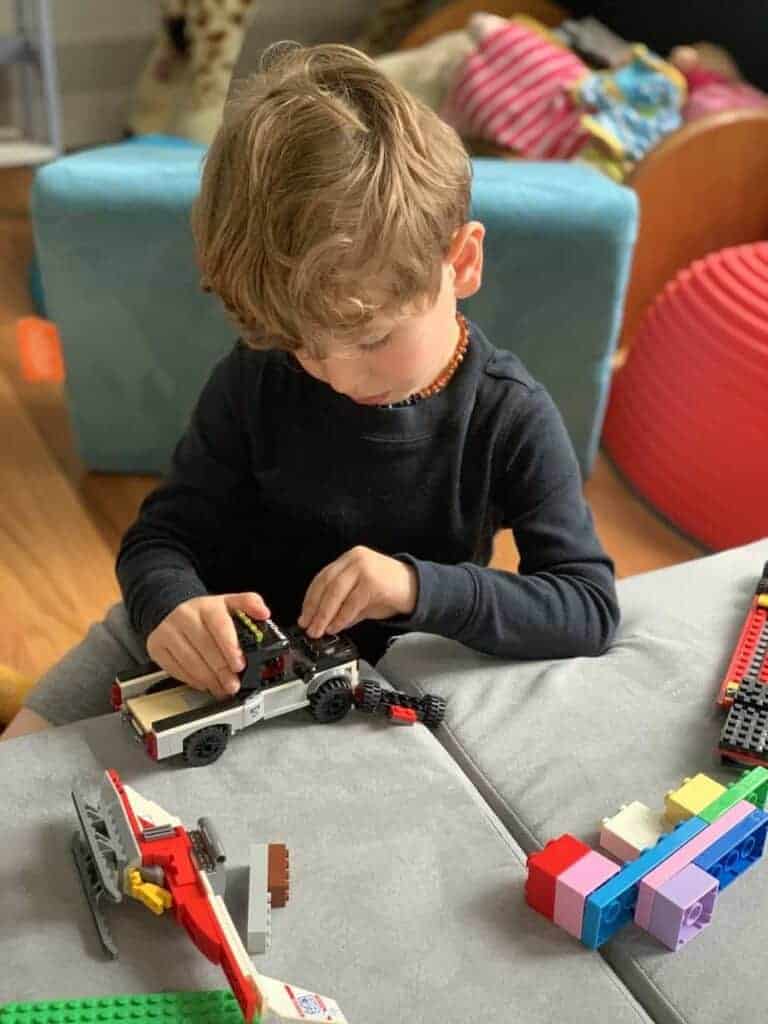
    Preschoolers on up will have hours of productive and imaginative fun creating whatever they can think of with Legos. Then they can take their creation apart and begin again!

    Legos can be purchased in large general kits, which is the most open-ended choice. Lego manufacturers also make ‘kits’ (Star Wars, for example) so that children can create favorite movie scenes. 

    The great news is that, regardless of when you bought your Legos, they all fit together flawlessly.

    Now is the Time!

    Regardless of your current block status, now is the time to take action! Already got blocks? Rotate them! Put the old ones in a cupboard for a month or so while introducing a new variety. Don’t have blocks yet? Choose a variety to use with your child – and get ready to have some fun!

    Need more toys recommendations? Check out this article about our top must haves for every play space.

    Want to create a more purposeful play space? I invite you to join us with our purposeful play space course.

    Get ready to transform your play space, gain back your own time, and help your kids play independently!

    If you want more individualized help you can set up a free 15 minute consultation to chat about your play space design needs.

    Want more information about the importance of play and tips to reorganize your playroom check out my e-book: Simply Play: Everything You Need To Know About The Most Important Part of Childhood which you can buy here for only $4.99.
    Do you like this post? If so, check out some of these related articles.
    Make Organizing Your Play Space a Priority
    Outdoor Play: Why Does it Matter?
    Type of Play for Development
    Toy for Toddlers: Encouraging Active Play
    Top Toys to Encourage Outdoor Play
    The Power of Play


    Read More

  • Encouraging Independent Play – When Your Kids Aren’t Used to It

    Encouraging Independent Play – When Your Kids Aren’t Used to It

    “Hey mom, wanna play Legos?” your son calls to you one morning. Truthfully, you don’t want to play Legos. You have other things on your to-do list, and even if you didn’t….you don’t want to play Legos! Shouldn’t he be able to play by himself? He’s five years old – are you asking too much of him developmentally? The simple answer is no, but let’s dig a little deeper.

    What Does ‘Play’ Really Mean?

    ‘Play’ can mean many things – experts divide it into three categories:

    • Social play – children play with one another or with an adult – throwing a ball, for example
    • Independent play – children play by themselves – pretending, doing a puzzle, etc.
    • Guided play – children play using props set up by adults, usually with an end goal in mind

    How Does Play Help With Child Development?

    Play is invaluable when it comes to child development; here are several tangible benefits:

    • influential in healthy brain development
    • critical part of fine motor and gross motor development
    • necessary for learning to negotiate and solve disagreements
    • helps children discovering new interests
    • essential for both expressive and receptive language development
    • crucial for social-emotional learning

    Encouraging independent play is important! The value of solo play specifically is rooted in skills of independence and imagination. A child playing in a self-directed way feels competent and capable – and isn’t this the end goal of raising children? 

    When Can I Begin Easing My Child Towards Independent Play?

    Short answer: sooner than you think! 

    It’s important, first and foremost, to consider the age and developmental stage of your child. Older children can be expected to play alone for longer periods of time than younger children. A six-month-old child, for example, may be able to play independently for about five minutes, while a one-year-old might play for fifteen minutes. 

    Obviously, these times refer to children who’ve been ‘trained’ for independent play. If, with no indoctrination, you tell your five-year-old one day to ‘go play’ and you’ll come check on him in an hour, he will likely have a problem meeting your expectations.

    Getting Started with Independent Play

    There are several variables to consider when guiding your child towards independent play, including environment, toys, routine and monitoring. 

    Step One: Check Your Environment

    To encourage independent play, the environment will be a safe space for children to explore. This area will not include breakable chachkies or pointy-cornered glass tables. It’s difficult to encourage independent play when a parent is hovering and constantly telling the child ‘no’. 

    The bedroom, living room, family room and even kitchen can be suitable play spaces as long as safety comes first. Think of all those pots and pans in the kitchen just waiting for little hands!

    Will I Need to Buy All New Toys?

    Not only are fancy toys unnecessary for independent play, they’re actually detrimental to the whole process. Open-ended toys breed success in independent play. Wooden blocks, balls, Legos, magnets, and more are good examples of open-ended toys.

    Open-ended-toys can be used in many different ways. A block can be stacked as part of a building, or it can be used like a cell phone or a microphone. There’s no ‘wrong’ way to use a block (as long as you’re being safe). 

    When considering whether a toy is suited for independent play, consider how your child might use it.  If there is only one way to use the toy (an electronic keyboard, for example), save it for a session of guided play.

    Although one might say an iPad or smartphone has many uses, and is therefore suitable, electronics are not appropriate for independent play. Electronic devices may encourage boredom in children, as they are an ongoing source of stimulation. 

    When children become accustomed to blinking lights and lots of activity, it can make it difficult for them to transition to coloring or playing with blocks.

    Step Two: Time IN

    What is ‘Time In’? It is intentional time spent playing with your child with no distractions. Put away your cell phone or device and set a timer based on the age of your child. For an infant, start with five minutes, and if your child is five years old, set the timer for about twenty minutes.  

    Tell your five-year-old child, “I’m yours for twenty minutes – what should we do?” Then simply follow their lead. Don’t correct, coach or teach. Go with their ideas, and be present.

    When the time is up, tell them what fun you had, and how you need to go do your work now. Tell them you’ll be back a little later. Then, twenty or thirty minutes later, check on them. You may need to stay in the same room initially.

    When using this routine with an infant or toddler, you must stay in the same room. That being said, as your child is playing independently, be sure to busy yourself with another task. It’s not ‘independent play’ if you’re still involved.

    An Independent Play Routine

    Like anything you teach your child, independent play must be practiced over time. Don’t expect to try it once and have your child be an expert right out of the gate. 

    Additionally, don’t expect a three-year-old to acclimate to this practice immediately. Independent play is a quicker success story the earlier you begin the routine.

    Monitoring

    You will be observing and checking on your child during independent play. What are you looking for exactly? Flow is the ultimate goal – that state of mind where you’re so involved in something that you forget yourself. 

    Flow is a wonderfully gratifying state of mind for all ages, and it’s certainly possible for a preschooler to attain. 

    Final Thoughts on Independent Play

    Independent play is a worthwhile goal for you and your family. It may take a while to become comfortable in this routine, and there will undoubtedly be stops and starts along the way.

    Give yourself, and your child, lots of grace along the way, and keep in mind that the ability to be alone and entertain one’s self is a lifelong skill. Most of all, enjoy the journey!

    If you’re looking for more information about the importance of play and tips to reorganize your playroom check out my e-book: Simply Play: Everything You Need To Know About The Most Important Part of Childhood which you can buy here for only $4.99.
    If you like this post and want to read more like it then check out these articles:
    Outdoor Play: Why Does it Matter?
    Type of Play for Development
    Toy for Toddlers: Encouraging Active Play
    Top Toys to Encourage Outdoor Play
    7 Essential Playroom Spaces (and why you need them)
    The Power of Play
    Risky Play for Kids

    Read More