education

  • Teaching Questioning Skills
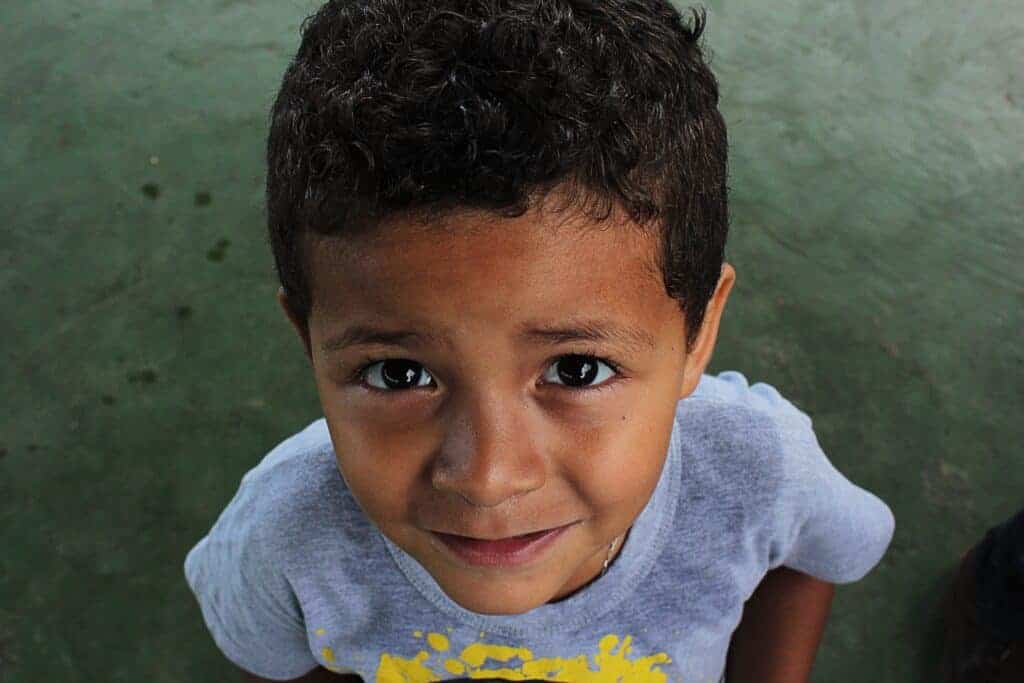
    Our children are full of questions. We are inundated and overwhelmed by their relentless need to know things. A simple change in perspective can show us how asking good questions can lead to independence, learning, and intrinsic motivation.

    We know play is the work of children. They learn by manipulating things in their environment and by watching others do so. Children also learn by asking questions. They need to make sense of the world around them – so they ask.

    Metacognition

    Metacognition involves something that most people do all day: think about thinking. Obviously everyone thinks – from infants to the elderly – we all have thoughts. But to be aware of those thoughts is something different. In the field of education it is considered a holy grail of sorts when a child realizes whether or not he understands a concept.

    Children who think critically are more in tune with their own cognition than those who don’t. That is the goal. Metacognitive thinking is a critical part of the learning process and simply knowing yourself as an intelligent human being.

    Often students (and people) go through life without thinking much at all. But we can change that! It is the quality of questions that help an individual to tune into metacognitive thinking.

    Twenty-Four/Seven

    Talk about working overtime – the brain never shuts off. Like a soldier, it’s always on guard, guiding us, protecting us, and leading us.

    Consider a book you’ve recently read or a movie you’ve watched lately. While reading or watching, you probably thought something along the lines of ‘Why did he do that?’ or ‘What will happen next?’

    THAT is the kind of questioning that leads to metacognitive thinking. This type of open-ended question encourages the brain to make connections and predictions, strengthening synapses in the brain.

    The Right Kind of Question

    The outcome of questions is language. Therefore, questions should foster talking and thinking – ideally, in both parties.

    The questions to model and encourage for children do NOT include the 4 W’s: who, what, when and where. Why? Answer will likely be very brief with little depth.

    Example: What are we having for dinner? Example answer: grilled chicken and green beans. See that? Not a lot of deep information.

    By contrast, asking a WHY or HOW question will produce a much richer, more detailed answer – and perhaps even a follow-up question.

    Example question: Why do we have to leave the park so early?

    Example answer: We’re leaving earlier because it’s getting dark earlier.

    Follow-up question: Why is it getting dark earlier?

    Follow-up answer: It gets dark earlier because the seasons are changing and we’re moving from Summer into Fall.

    At this point, the conversation can turn to what causes the seasons, the Earth’s rotation, the sun’s tilt, the position of the U.S. on the globe, and so on. From one simple query, we are heading into a full-blown PBL science lesson!

    Keep in mind that the transformation to more open-ended questions doesn’t happen overnight. As in everything parenting-related, you must model the behaviors you want to see in your children. So ask those ‘why’ and ‘how’ questions of your child – and celebrate their curiosity every time you respond patiently to yet another question!

    Read More

  • Project Based Learning – Upper Grades

    So we’ve talked about Project Based Learning in the elementary grades. Great stuff, right? Loads of engagement, cross-curricular connections, and real-world relevance. What about using Project Based Learning with students in middle school and high school? Even. Better.

    Creative. Authentic. Using Project Based Learning with older students (maturity, advanced skill level, etc.) is magic. The skills they bring to the table can move PBL forward exponentially.

    How Will PBL Look Different With Older Students?

    As students grow and mature, their skills do, too! The capabilities of a person at age seventeen versus ten are significant. While the Project Based Learning process is infinitely valuable for students of all ages, older learners bring a lot of extras to the game, fundamentally changing the outcome.

    To revisit: the meaning of Project Based Learning is “an authentic performance-assessment task in which students must apply the knowledge and skills learned in class to solve a genuine problem outside the classroom”.

    What Makes a Good Project?

    The ‘project‘ part of PBL is limited only by imagination. What does your student want to learn? What interests does he or she have? Which hobbies does your student enjoy? All of these factors can figure in to choosing a project.

    In order to be a good project, it has to be authentic. What is a real problem that’s happening in the community? Is the water quality poor? Is there a lack of affordable preschools? Maybe there is a vacant building and a lack of meeting space for older folks or youths.

    Creating the Plan

    Older students are more capable than younger ones – this is true. But that doesn’t mean that high school students can forge ahead with a large, multifaceted project independently. Just like their younger counterparts, older students will require adult guidance and supervision through the PBL process.

    This guidance may be a little less hands-on in older students, but it will still be necessary. One thing supervisors may help with is getting the right tools for the job. Middle and high school students should have access to real-world tools in order to participate in PBL. These tools will obviously depend on the type of project, but would include video cameras, spreadsheets, apps and other tech used by industry experts, and more.

    What will ‘the plan’ be? It could include just about anything – but it will not be simple. Although a slide presentation or research paper may be components of this real-world solution to an authentic problem, it will not be the focal point. Though many teachers mistake a ‘report’ for PBL, that is but one fraction of a final project.

    Evaluation: It’s All About the SME

    Student work should be evaluated against adult standards. We’re asking students to solve real-world problems; they must know the criteria for success.

    One aspect of evaluation is the SME, or subject matter expert. Whomever the project revolves around (preschoolers getting a new play space, a community getting a riverfront clean-up) is key in evaluating the final product.

    The involvement of subject matter experts immediately makes the stakes higher for students involved in Project Based Learning. Having a real, live person who will give verbal feedback is tremendously motivating for students.

    Overall Impact of Project Based Learning

    When done right, Project Based Learning can be life-changing to a child, no matter the age. Through PBL, students can unlock their passions and awaken a genuine and intrinsic desire for learning. Seeing their impact on the world around them, students become both more competent and more confident.

    PBL is a different way to design learning for students. It is non-linear, and can be very ‘messy’ compared to traditional learning from books and lectures. Is it worth the trouble? Absolutely. Try it and find out for yourself!

    Read More

  • Project Based Learning

    So you’re learning about health and wellness in science. You read an article about how to calculate your BMI – wait – calculation…isn’t that math? STOP. You can’t do math in the middle of a science lesson. Absurd, right? Enter Project Based Learning.

    Proponents of Project Based Learning feel that the best kind of learning is cross-curricular learning. Through PBL, learners make connections between reading, writing, math, science and social studies. Do you know who else believes this is a good idea? Kids.

    What Does PBL Mean?

    Project Based Learning is a teaching method in which students learn by actively engaging in real-world and personally-meaningful assignments. PBL is student-driven and child-led, and fits in well with ‘unschooling’, ‘homeschooling’, and many other varieties of schooling.

    Why Do We Need PBL?

    Children are natural learners, curious about the world around them. The deeply personal connections that happen through Project Based Learning are long lasting. Success in this realm encourages competence and confidence in the learner.

    Why is there such a personal connection? Because the student is driving the learning! Engagement is key in learning. When a student is engaged and interested, he learns much easier. This engagement drives the whole process and keeps the student interested for the duration of the project.

    PBL is Just Fluff!

    Another great thing about PBL is its solid content. Project based learning is different from writing a report after reading a book, or creating a diorama after watching an educational video. Projects developed between teachers and students are multifaceted, detailed endeavors that involve many disciplines.

    Just like planning and creating a bridge would involve science, math, geography, reading and writing, projects taken on by children can have similar breadth and depth.

    Is it Wise to Let Children Be in Charge of Their Learning?

    The answer to this question is a resounding ‘YES’! Children have very little agency when it comes to their lives. Adults tell them where to go, when to go, and what to do when they get there. Through PBL, young learners can influence their own learning with the guidance of trusted adults.

    Together, the child and adult create a plan to solve a real-world problem. The idea is that the child will ‘drive’ the project while the adult will guide, making suggestions, edits and decisions as the project moves forward.

    What Kind of Projects Work for PBL?

    There are many projects through which a child can, with adult guidance, learn a great deal about real-world problems. Here are some ideas.

    The Environment

    Countless problems currently plague our environment, making environmental issues very interesting to learners. A great question to explore might be how can humans improve the health of bees?

    Economics

    Money makes the world go ’round, right? It’s an integral part of most of our lives, so it matters to children, too. PBL on the question of starting a small business in a poor neighborhood would be very engaging and relevant.

    Health and Wellness

    Another problem we’re facing is a health crisis brought on by obesity – this is an issue for both children and adults. Creating a health fair would be a perfect project for learning more about the many aspects of health and wellness.

    Getting Started

    The hardest part of any project is knowing where to begin. So just start! Each time you begin anew, both you and your child will be better at the process. Also, get ready to have some FUN through this transformative learning experience!

    Read More

  • How to Learn About Your Child’s Interests

    You’re so busy doing the maintenance work – changing the diapers, making the meals, bandaging the knees. But do you actually know what makes your child tick? What do you know about your child’s interests?

    Let’s talk about why you would need to know these things. The thought behind Child-Led Learning is that when a child is in charge of her own learning, her engagement is much higher. This increased engagement results in more motivation and ultimately better learning.

    Knowing that play is the work of the child, it’s helpful to acknowledge that what may look like play to most of us, is actually how the child is learning about the world around her.

    You as the parent know your child better than anyone else. So how can you get a handle on what your child’s interests are? In short, be present. Often we as parents are pulled in so many directions we find it difficult to stop multi-tasking long enough to take in our surroundings in any more than a cursory way. So, take a deep breath. Look around you. Is your child there? Great. Focus.

    Observation

    Taking time to observe your child can provide lots of feedback in terms of your child’s talents, interests and motivation. How is this observation done? Sit, be still, and be quiet. If you look hard enough, without multi-tasking, you will learn so much about your child.

    What does she enjoy playing with? Does she prefer playing alone or with others? How might she integrate herself into a bunch of children – or does she prefer to hang back from the group? Besides giving you information, this intentional observation can strengthen your relationship with your child.

    Learning About Your Child’s Interests By Spending Time Together

    Besides observation, just spending time together with your child can give great insight into her potential hobbies and interests. Together you might read a book, watch a program, or try an art project. The feedback you get from these activities will be valuable in planning next steps.

    Try Something New!

    Expose your child to a broad range of experiences – trying something new might ignite a spark in her and send her in a new direction! One area that is often popular for children to explore is art. Providing a sensory rich environment will encourage your child to explore and possibly find great enjoyment through art.

    Regardless of the field trips, materials and experiences, it’s important to keep a couple of things in mind. First off, don’t pressure. When you put intriguing materials in front of your child, get out of the way. This is child-led learning. Second, be sure to nurture your own passion for learning. Children learn what they live. If your child watches you joyfully knit a sweater, create a collage, or sing a song, she will be more inclined to dig in, as well!

    Want more information about the importance of play and tips to reorganize your playroom check out my e-book: Simply Play: Everything You Need To Know About The Most Important Part of Childhoodwhich you can buy here for only $4.99.

    Do you like this post? If so, check out some of these related articles.

    Make Organizing Your Play Space a Priority

    Outdoor Play: Why Does it Matter?

    Type of Play for Development

    Toy for Toddlers: Encouraging Active Play

    Top Toys to Encourage Outdoor Play

    The Power of Play   

    Read More

  • 5 Ways to do Montessori at Home

    What is Montessori?

    Dr. Maria Montessori’s educational philosophy is multi-faceted. It is famous for the concept of following the child. Montessori believed that children are eager and capable of learning new concepts, of doing for themselves, and of articulating their needs.

    What makes Montessori unique?

    Montessori teaching methods are based on the science behind how children develop. 

    The teaching philosophy focuses on what we know about child development for example, awareness of the sensitive period for language development. It is during this period that Montessori teachers would be focused on literacy development.

    To read more about Montessori click here.

    The Montessori Approach at Home

    The Montessori approach to learning is fairly easily implemented at home. The biggest take away is to follow the child. 

    This boils down to observing the child, letting the child lead and shifting our mindset to understand that a child is eager and capable of learning new concepts, of doing for himself, and of articulating his needs.  

    5 Ways to “Do Montessori” at Home

    Work with your child to establish a routine, but not necessarily a ‘schedule.’  

    This means after breakfast and getting ready for the day, your child may, for example, select an activity to practice reading or handwriting.  

    After some time practicing, you may have your child help you select his or her lunch and help you prepare it.  

    Then might be play time, quiet time, time spent watering the garden, etc.  

    A routine can generally be seen as ‘first comes this, then comes that’ instead of ‘it’s 10:00, time for Math.’  

    This allows for some activities to take longer, or shorter, based on how interested your child may be that day or how much longer he may want to complete something.  It also allows you to observe if an activity is just not fun or engaging, to modify it or cut it short.

    This is similar to a block schedule. You can download a free printable block schedule template here.

    Work with your child to do as much as he or she can do on their own.  

    This may mean that they set out the lunch ingredients–bread, jam, peanut butter, fruit, then you prepare it.  

    Or that you introduce new words in Spanish, but they find pictures to match and cut them out.  

    It could also be that they want to use playdoh, so you ask that they clear the breakfast dishes first.  

    Establish a 3:1 practice to introduction ratio.  

    This means (at least at our home!) that our children practice what they’ve learned about 75% of their ‘academic’ time and are introduced to new material about 25% of the time.  

    I may be a Montessori mom, but that doesn’t mean that even in a traditional classroom do students have all new lessons, all the time.  

    Most of their time is actually spent refining and perfecting what they’ve already been introduced to, so they can achieve mastery. 

    Have dedicated spaces to work and to play. 

    This helps you and your child maintain order.  

    If their ‘work space’ is the kitchen table, help them locate and maintain a basket of materials–scissors, pencils, crayons, and paper. 

    When inspiration hits, they know where to go to create, and you don’t have to help them gather anything.  It also helps them internalize the process for order.  

    This also applies to traditional toys. Proving organization for toys in open end brackets and on accessible shelves allows them to have more independent control over their toys.

    Also, when cleanup time comes, they will be less overwhelmed by the materials and where they should go.

    Encourage your child to do one more.  

    This follows the Montessori principle of developing the child’s willpower and the teacher’s role in extending learning or practice.  

    They’ve lined up 0-10 correctly for the first time since beginning to practice it a week ago.  Now can they put 1 bear under the 1?  Two under the two?  

    Or, they colored a favorite character in their coloring book–now can they draw her on paper?  Cut her out?  Name the colors?  Describe the picture to big brother?

    Extending the learning and activity even just the slightest helps build confidence and stamina.

    This article was written in collaboration with Rachel Kincaid, editor of the of The Montessori Post 

    Want to create a more purposeful play space? I invite you to join us with our purposeful play space course.

    Get ready to transform your play space, gain back your own time, and help your kids play independently!

    Want more information about the importance of play and tips to reorganize your playroom check out my e-book: Simply Play: Everything You Need To Know About The Most Important Part of Childhood which you can buy here for only $4.99.
    Do you like this post? If so, check out some of these related articles.
    Make Organizing Your Play Space a Priority
    Outdoor Play: Why Does it Matter?
    Types of Play for Development
    Toy for Toddlers: Encouraging Active Play
    Top Toys to Encourage Outdoor Play
    The Power of Play   

    Read More