education

  • The Biggest Issue with Self-Directed Learning in the Public School System

    Parents See Problems with Self-Directed Learning

    I recently read a post by a frustrated mom of a middle school aged child. She was upset that her son was being given “independent studies” that were not taught by the classroom teacher.

    The teacher was, for a few select units, only providing or directing students to videos, and the students were expected to learn new concepts, in this particular case, math, independently–without any clear formal classroom instruction. Other moms chimed in to say how much they also hated this approach.

    How could this be an effective teaching method?

    They were upset and couldn’t understand why teachers, who were being paid to teach, were essentially abdicating their responsibilities and just facilitating instead of actually teaching. They noted how this was becoming a trend; teachers being more in the background, instead of leading the learning.

    One mom talked about how her child experienced something similar and felt they didn’t learn anything–that the year was almost a waste for that particular subject.

    Someone noted that, while it might work for some students who could learn more independently, there were others who weren’t as capable of doing so–and that it was the teachers job to know how each student learned and to tailor instruction to the individual student.

    Many were also, understandably so, uncomfortable with kids using technology as they were already spending way too much time on electronics in general.

    A parent noted that curriculums were being revamped, and that they understood the need for teachers to get more done over the course of the year. They were also understanding that this seemed to be a way for teachers to cover more material–given the scope of what was expected to be taught.

    At the end, one person even said that while the theories behind collaboration and independent learning were great, they feared we had swung too far in that direction, and that kids were floundering without the more structured guidance of the teacher.

    This post sparked so many emotions for me as a public school teacher. Even more so as someone who is actively trying to disrupt the public education system. And by “disrupt” I mean passionately writing about and advocating for what many see as radical changes in how we approach educating our children. But let me be clear. These so called “radical” ideas, aren’t so radical. They are driven by well researched philosophies, and backed by strong data.

    Issues with Our Current Education System

    So let me start by saying this. We need to first recognize that the public school system overall, is fundamentally, in crisis. 

    Measures of success in the form of tests scores, reading and math ability levels, and graduation rates have, overall, been minimal at best. You can argue that graduation rates have gone up. But I will tell you it isn’t because skill level and mastery gone up, it’s because we have lowered our standards and are graduating kids who are absolutely not ready for the world–both academically or socially and emotionally. I’ve spent almost 10 years watching kids move up grade levels or graduate nowhere near meeting what should be the standard of “education.”

    Record numbers of school children are experiencing negative emotions and mental health issues surrounding school. Feel free to Google “School makes me feel” and see what pops up. Here is a screen shot I took in case you want the quick version.

    There is a mass exodus of teachers leaving the profession for a variety of reasons and significantly less students applying to teacher training programs. Check out Google News and type in “teacher shortage.”

    With this, policy makers, districts, schools and teachers are desperately seeking a better way to provide a quality education to our kids.

    The Need for Individualized Learning

    In comes the idea of student-led learning–a new approach that puts the student in the center of their own learning. It encourages the teacher to move away from direct instruction (lecturing and pushing content at kids) to facilitating learning or acting as a guide to allow children to uncover content in a more individualized way.

    A step in the right direction, but…

    How can this amazing individualized learning happen effectively when you have 25+ kids in a classroom, a strict bell schedule that often cuts off learning right when it’s about to really take hold, classrooms that have students with such a variety of academic, social and emotional needs that one single teacher cannot physically, emotionally or mentally take on and make truly individualized learning happen.

    But here’s the problem…

    Public schools systems were NOT designed for individualized learning. They were designed to deliver or push content to a mass of students at once.

    The rows of desks. The set curriculum. The required readings. The bell system that herds kids like cattle. The penalization for getting something wrong and the celebration for getting it “right.”

    Public schools were created to educate people to become workers. Not to become thinkers. But our society has changed. And while public schools have taken steps to change, an enormous, bureaucratic, notoriously slow to adapt system is not keeping up.

    Rise of Free Online Learning Tools

    Now comes the rise of free online learning tools that make individualized learning easier for a public school setting. Programs such as Khan Academy (which is amazing by the way!) are adopted by people in the education system (who are often quick to jump on the bandwagon of the next best thing without much thought about unintended consequences).

    They genuinely want to provide these tools, in the best way they know how, to their students. It only makes sense. Right?

    Khan Academy has shown that kids who use the program increase test scores, show more skill mastery and decrease anxiety surrounding the particular subject. That’s great. That’s more than great.

    But…

    Khan Academy (and other used tools for independent learning) is based on the idea that children have a natural drive to learn, and that they can be empowered to learn at their own pace, both in and out of the classroom.

    In theory, this is 100 percent true.

    The idea that children are born with a natural inclination and drive to learn is not a new idea.

    Think back to your baby who learned to crawl, walk, and speak a language without any formal instruction. 

    To your toddler who repeatedly asked “why” every time you opened your mouth. 

    To your preschooler who explored the outdoors with an inquisitive eye, closely examining their surroundings and asking thoughtful questions like “why is the sky blue?” or “where does rain come from?”

    Kids are naturally curious. Kids want to learn. They are desperate to uncover new information. They are beyond active learners.

    So why are kids and parents having so many issues with this type of “new” learning?

    So why are many parents seeing their child balk at independent studies that put them in charge of their learning? Why are they feeling as though the school year that gave their child more flexibility in learning was actually a waste? Why are they frustrated with the fact that the teacher isn’t teaching but rather facilitating?

    The problem lies with how we have conditioned kids, and parents alike, through our public school model. Traditional compulsory schooling makes kids passive learners and makes parents quickly forget how much their child loved learning when they were little.

    The sad truth is that once children start formal schooling, the passion they once had for learning for the sake of learning deteriorates. They begin to want to BE EDUCATED.

    They look for teachers to give them the information, to answer all their questions, to find ways to get a “good” grade. They don’t want to think for themselves because the have become accustomed to others doing the heavy lifting.

    Speaking from personal experience, and this is just one SMALL glimpse at their learned helplessness, I have kids consistently come to me asking me what to do when the directions for a task is spelled out very clearly (Mind you 99% of the time they haven’t even read the directions.)

    They literally look to the teacher for every step. To make sure they are doing it “right” and that they have the “right answer.” They are terrified of failure. They have, in essence, lost their ability to really learn. It has been replaced with learning something to get a grade.

    As Sal Khan, founder of Khan Academy, writes, “Far too many bright, motivated kids are being badly served by their educational experiences—ones at elite, wealthy schools as well as underfunded ones. Too many kids have their confidence trampled; even many “successful” students acknowledge that they’ve gotten good grades without learning much of anything.”

    So when parents are concerned about this new way of teaching popping up in the public education world; creating space for, and encouraging, maybe even requiring that children initiate their own learning, I encourage them to recognize the real issue behind using online teaching programs.

    It isn’t the programs or the fact that our kids are being asked to drive their own education. That’s what should be happening.

    It’s the fact that, for so long, we have removed their wants, needs, and passions and thrust them into a setting where their natural drive to uncover new information has become so diminished that they no longer want to learn–they want to “be taught.”

    I will leave you with this quote from Maria Montessori, a famous physician and educator, who said; “The greatest sign of success for a teacher… is to be able to say, ‘The children are now working as if I did not exist.’”

    Read More

  • What is Waldorf — A Spotlight on Waldorf Education

    Waldorf is a worldwide education philosophy that feels more like a way of life, as it extends from early childhood through the teenage years. The philosophy focuses on engaging the head, heart and mind with curriculum and practice that incorporates academics, arts and practical life skills.

    The philosophy was developed by Austrian scientist and philosopher, Rudolf Steiner, who believed that social improvement and personal development had to go hand in hand. Waldorf schools are dedicated to providing an extremely nurturing environment that fosters the development of the whole child.

    The Waldorf Philosophy

    The Waldorf philosophy begins with the idea that childhood is made of three stages that are each approximately seven years. Additionally, enrollment director at the Housatonic Valley Waldorf School, Therese Lederer, explains that  “According to Steiner, the human being is a threefold being of spirit, soul and body, whose capacities unfold in three developmental stages on the path to adulthood: early childhood, middle childhood and adolescence.  Each stage has a specific learning style and therefore teaching method.”

    These stages are:

    Early Childhood: Birth to age seven

    In this stage of childhood, the focus should be on developing the limbs through doing. Kids in this age group learn through their sense and through imitation, so providing a sensory rich environment is key. Children are encouraged to explore nature, use their imaginations and begin o understand social relationships.

    Middle Childhood: Age seven to 14

    Children in this age group are focused on developing the heart through their imagination. They learn through storytelling, drama, movement, art and music. This is the age where formal academic learning begins, but Waldorf education strives to also foster moral development and help children increase their awareness of the world.

    Adolescence: Age 14 to age 21

    This is the age Waldorf marks the development of independent intellectual ability along with the true ability to examine the world. Students in this age group are challenged to use critical thinking and are given increasing autonomy over their education.

    The Waldorf Early Years

    Therese Lederer explains that children are learning and experiencing the world mainly through physical activity in the early years, a Waldorf education strives to provide opportunities to learn through exploration and creative play. For example, children learn by participating in “household” chores and spending time outdoors each day in all weather.  At this age, emphasis is developing skills such as coordination, balance, core strength, cooperation, resilience, self-regulation, personal boundaries, and relationships.

    Advantages of the Waldorf Philosophy

    The Waldorf philosophy looks to preserve each phase of child development. The goal is to follow the child, not to rush them ahead. The slowing down of early childhood actually leads children to make greater leaps in competencies, capacities and skills later in life. The education they receive is on a deeper level. Children in this environment tend to have strong executive functioning skills, greater confidence and less stress.

    The Waldorf Classroom

    A beautiful description of a Waldorf classroom as described by Therese Lederer.

    The classroom is a child’s first home away from home.  It is a place of warmth, order, and beauty. It is an environment that nourishes the senses and fosters reverence for nature and the material world.

    Each day follows a gentle rhythm which provides the children with a sense of security. The day begins with circle time, during which the children sing and recite verses. Finger plays and rhymes inspire a love of language and develop children’s fine and gross motor skills. Creative free play follows and offers an opportunity for children to exercise healthy fantasy.

    Playthings are created from natural, simple materials such as wood, colorful silks, shells, and smooth stones. Mid-morning, children, and teachers prepare a wholesome, organic snack.  They eat at a table set with candles, real plates, silverware, and cloth napkins. Every day of the week includes an artistic activity such as watercolor painting, modeling with colored beeswax, drawing with crayons, or Eurythmy (a movement art).

    Myths about Waldorf Education

    The primary focus of a Waldorf education is on play, imagination, the development of the physical body, art, and social and emotional skills. As such, a common myth about Waldorf Education is that children are somehow “behind” since there is less focus on academics. However, this is not the case. By giving the time and space to master developmentally appropriate skills, they develop an inner confidence that follows them through their academic career.

    Waldorf Views on Technology

    Parents who are concerned about introducing screen time and technology to their young child will find a community of support at Waldorf schools.  The “no-tech approach to learning is foundational to the Waldorf teaching philosophy” explains Therese Lederer, but that doesn’t mean that Waldorf is completely anti-technology. In fact, many parents who are innovators in the tech space, or who work in companies such as Google, Apple, Yahoo!, choose to send their kids to Waldorf schools.

    In Waldorf schools, timing is everything. Waldorf educators seek to first strengthen students’ ability to think for themselves and build confidence in their creativity and problem-solving skills. So that when they are older they are able to use technology as a tool—as a means, not as an end. The results of current research into technology in the classroom remain mixed. However, the science is clear that play, art, and music all support better learning and thinking.

    Read More

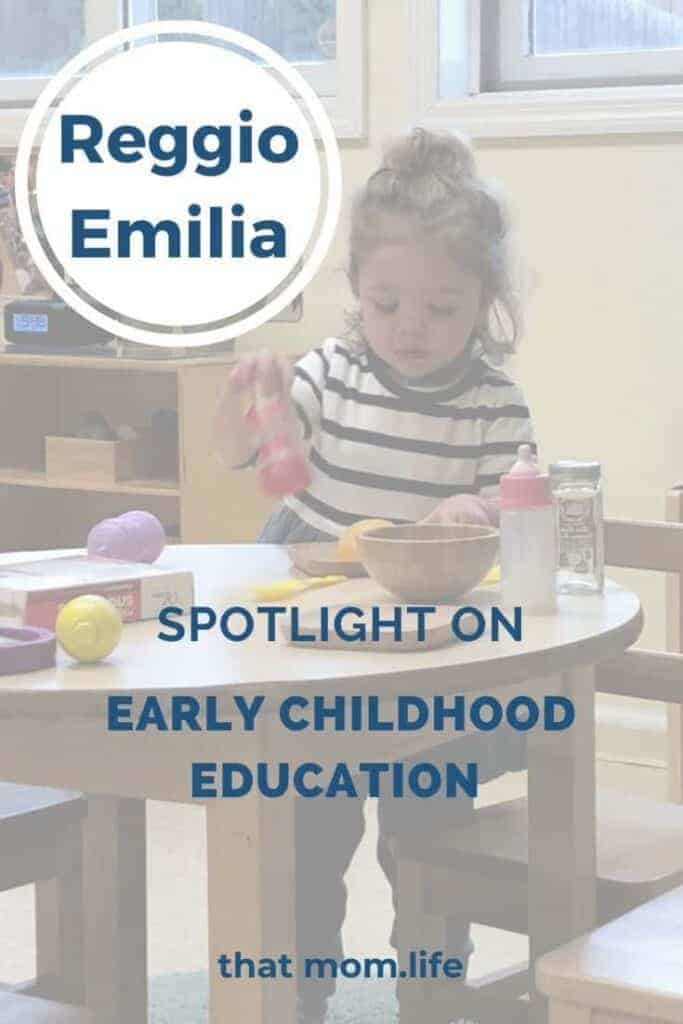
  • Reggio Emilia — A Child Centered Approach to Learning

    Reggio Emilia inspired learning

    This article includes information from Lee Longo, the director of Sound Beach Day School.

    Reggio Emilia is a philosophy of early childhood and primary education that dates back to right after World War II–created by Loris Malaguzzi in the villages surrounding Reggio Emilia, Italy.

    The Reggio Emilia philosophy starts with the belief of a strong image of the child. The philosophy encourages a deep respect for the child as a whole person. Children are viewed as strong, capable and driven by the power of wanting to learn.

    In this style of learning parents, teachers and the environment are partners in the education process.

    The Reggio Emilia Curriculum

    In traditional schools’ teachers are forced to align their work with standards or readiness guidelines. In the Reggio philosophy there is no set curriculum. The curriculum is child driven.

    That means that it is constantly changing based on what children are passionate about and what the teachers see unfolding in the classroom. You won’t see a upfront breakdown of themes, or month by month outline of what the kids will be learning and that’s one of the most amazing qualities of Reggio inspired education. The child leads the way.

    The teacher’s role is to guide, stimulate and engage the student in the learning process.  The questions presented to the child, the environment and materials presented facilitate in the learning.

    The Reggio Emilia Advantage

    The biggest advantage of this philosophy is the ownership that the child has in the learning process. When you follow the child’s interests the learning is more meaningful. Children that learn this way develop a lifelong love for learning.

    The Reggio Emilia philosophy encourages a connection with nature. Children should be outside and exploring, getting dirty picking up bugs and playing in mud. When you are an observer in this process you can see the learning taking place.

    Another wonderful advantage is the collaboration among teachers and families. Parents are updated on project work and valued as partners in the learning process.

    The Reggio Emilia Classroom

    This philosophy considered the classroom environment the “third teacher.” The classroom is set up to resemble as close to home as possible. For example. the kitchen area may have real items that resemble what kids see at home–glass objects, a cleaned out ketchup bottle, real plates and silverware. The classroom is designed using more natural materials vs the traditional bold or bright colors. The goal is to create a soft and calming space for the children. Children’s art work is respected and displayed . Overall the aesthetics of the classroom are very important.

    Reggio Emilia Provocations

    This philosophy often references what is called a provocation. This simply means that teachers, after having observed the children, will set out materials that are selected specifically to provoke thoughts and ideas, and encourage creativity. Provocations are meant to compliment what the children are working on and help extend their thinking. They are not overtly teacher led activities, instead they are thoughtfully designed “set ups” that invite children to expand their own learning of an idea or concept.

    Myths about the Reggio Emilia philosophy

    Longo says that she often hears questions like “what are they actually learning in this way?” Because there is no set curriculum, parents unfamiliar with the philosophy are sometimes skeptical. But Longo assures parents that, “Reggio children gain self-confidence, they are respected and encouraged to try things on their own before asking for help. They learn about risk taking, they learn how to self-regulate and develop communication skills, they are truly valued.”

    She reminds parents that the pre-school level is about social emotional development and that these are the skills that will take them through life. They also learn language, literacy, numbers, science, and nature. The learning truly follows the child’s interest and addresses learning in a holistic way.

    Read More

  • Importance of Early Childhood Education

    As a public school educator, I’m naturally very drawn to learning about the best ways to educate children. While I don’t believe that one size fits all, I do feel that there are some specific philosophies that really focus on following the child, emphasizing nature, prioritizing outdoor time, encouraging independence and incorporating more sustainable materials into the classroom.

    My top choices for early education philosophies are:

    Many of these philosophies are not considered mainstream–especially in my area of the country where we have some of “the best” schools (aka high test scores) and it feels like families are extremely focused on academics and “school readiness” starting in preschool (and sometimes earlier). My hope is that more and more parents will begin to seek out these types of learning environments for their little ones–and understand that many of the basics of these philosophies can be easily implemented at home.

    The importance of early childhood education

    The importance of early childhood education is well established and reaches well beyond the preschool years. In fact, “early childhood” is considered birth to eight years old–so approximately 2nd or 3rd grade.

    This time period is crucial for children. I’d even go so far as to say more crucial than post secondary education. Why? Because how and what they learn during this time period will provide them with a foundation for the rest of their lives. Education during these early years will help shape social, emotional and physical health, as well as develop intrinsic motivation for life long learning–not just learning to get a grade.

    With that in mind, the basis of any early childhood education philosophy should be to follow the child, to encourage their natural curiosity, to provide them with a variety of opportunities to connect with people, places and things around them, and most of all to allow them to play freely.

    If you have any specific questions about these philosophies (or others you have heard or read about) please feel free to ask ❤️

    If you’re looking for more information about the importance of play and tips to reorganize your playroom check out my e-book:

     Simply Play: Everything You Need To Know About The Most Important Part of Childhood which you can buy here for only $4.99.

    If you like this post and want to read more like it then check out these articles:
    The Power of Play
    The Ever Growing Importance of Outdoor Play.
    Toy for Toddlers: Encouraging Active Play
    100 Simple Things to do Outside with Your Kids
    What is Montessori–Understanding this Early Childhood Education Philosophy
    Reggio Emilia — A Child Centered Learning Approach
    What is Waldorf — A Spotlight on Waldorf Education

    Read More

  • Back to school: Holistic health for kids

    Keeping kids healthy when they go back to school is a fun parenting challenge. I feel like I always have at least one sick kid between the months of November and April. Fortunately, we are all extremely healthy and our kids have built up some pretty good immune systems (I’d like to partially credit this to allowing them to play in the dirt!), so while they may get sick, their bodies usually fight illness pretty quickly.

    My family takes a pretty well rounded approach to our health which includes trying to eat less processed foods, incorporating whole fruits and veggies into our every day diet, staying active, spending time outdoors in all weather, making sure we have medical doctors that are progressive, and complementing our modern conventional healthcare with more natural alternatives.

    One of my dear friends, Kaitlyn, is a holistic health practitioner and master herbalist who founded her own organic skincare line called Zen Society (which you should check out here!) I’m partnering with her to bring you some simple ways to keep your family healthy for back to school and beyond.

    Kaitlyn Gustafson, Holistic Health Practitioner and Master Herbalist, Founder and Owner of Zen Society an organic skincare line. Follow her on Instagram @kaitlyngus

    Foods to help keep kids healthy

    One of the most important things for staying healthy is a strong immune system and in order to maintain that Kaitlyn recommends, “eating real, fresh, organic foods.” She also would encourage you to give a daily vitamin as kids diets often don’t provide them with the nutrition they need.
    Additionally, she explains that “the foods we eat now are grown in soil that’s so depleted it often doesn’t produce food with the same amount of nutrients as it used to.” So that serving of spinach 50 years ago was WAY more nutrient dense than the spinach you’re eating now (pro tip for those who don’t love green veggies: put some raw spinach into basically any smoothie and you can barely taste it–our go to is almond milk, spinach, banana, frozen strawberry, chia seeds and flax seeds).
    She notes that today’s fruits and vegetables are lacking vitamins A and C, niacin, riboflavin, thiamine, magnesium, iron, zinc and copper so these are key nutrients to make sure you are getting into kids diets every day. She recommends 8-10 servings of fruits and vegetables per day, and while that might seem like a lot, foods like carrots or cucumbers dipped into hummus counts as two servings and you can easily get a few servings in with a fruit and veggie smoothie.
    Kaitlyn says that “there are some specific foods she strives to incorporate into her children’s diet which can help boost immunity.” She notes that it’s important to aim for fruits and vegetables that are high in vitamin C like “berries, broccoli, sweet potatoes and citrus fruits.” She also suggests adding walnuts to smoothies, yogurts and cereals as they are high in omega 3 fatty acids that help fight illness.
    Superfoods should be included into the diet whenever possible. Some of her favorites are:

    • Blackstrap molasses (can be used in baking as a substitute for sugar)
    • Manuka honey (anti-bacterial properties and can even be applied to a cut instead of an antibiotic)
    • Hemp seeds
    • Chia seeds
    • Flaxseed (always use ground flaxseeds as whole seeds will just pass through your system undigested)
    • Leafy greens like spinach, kale, Swiss chard (all good in smoothies)
    • Wild caught salmon
    • Blueberries
    • Broccoli (my kids loves this best when roasted with a little olive oil and garlic!)

    Daily supplements for kids to help boost immunity

    One of the best things you can give your kids is a high quality probiotic (live healthy bacteria that help your digestive system). Gut health is SO important and Kaitlyn says “healthy gut means good immunity!” There are some food options that can provide a healthy dose of probiotics such as kimchi, fermented vegetables, kefir, grass-fed yogurts–she prefers sheep or goats milk yogurt to cow as they are known to cause less inflammation. If these are not things your kids will eat (let’s face it, kids can be pretty particular…) then giving a probiotic supplement is a great strategy. She recommends Mary Ruth’s Plant Based Liquid Probiotic–they also make a spray one that’s easy to spritz into your little one’s mouth.
    Some other daily supplements to include are:

    But….your kid will still get sick

    So yes, all these things are amazing and will absolutely help boost immunity but that doesn’t mean your kid will never get sick. So when they do here are some more natural and eco-friendly products to help support them while they fight off illness.

    Just a  couple reminders as we head into cold and flu season. Fevers are not necessarily bad. Fevers are your body heating up to kill viruses and bacteria that are causing illness. Many times people rush to treat the fever, when in reality you should be treating the symptoms. I do use over the counter fever reducers if I feel like my little one is really suffering from a fever (can’t sleep, is super cranky) but that usually doesn’t happen until closer to a fever or 102-103. Most often, they can take a luke warm bath and that will help drop their temp enough for them to be comfortable (don’t use cold water as that can cause their body to heat itself even more to combat the cold). Also, keep in mind a fever is a temperature over 100.4.
    If I use a fever reducer I always try to use one that is dye free like the Little Remedies Dye Free Fever and Pain Reducer or the Infant or Children’s Motrin Dye Free (Depending on age–Ibuprofen can only be used in infants 6 months and up).
    **PLEASE make sure you speak to your pediatrician prior to giving any medications. They can help you decide the best course of action as well as dosing.

    Read More