education

  • Raise a Child Who Loves to Learn

    5 Must Read Books To Raise a Child Who Loves to Learn

    Are you interested in how you can help promote curiosity, independence, and self-motivation in your child? Do you want your child to actually love to learn?

    We know that so many children these days are losing this innate love of learning. But it doesn’t have to be that way.

    Read these five books to help you understand how to raise a child who loves to learn.

    #1 The Montessori Toddler: A Parent’s Guide to Raising a Curious and Responsible Human Being

    This book is great for anyone who is not familiar with the Montessori teaching approach and for people who have or work with younger children.

    It has tons of practical advice and ideas that are all based on the Montessori idea that teachers and parents are meant to be guides that follow the child’s lead. This book talks about trusting the child and fostering a sense of wonder and curiosity. The Montessori method seeks to develop a life long learner who is self-motivated and inquisitive. Children taught using the Montessori philosophy are often children who love to learn.

    #2 Free to Learn: Why Unleashing the Instinct to Play Will Make Our Children Happier, More Self-Reliant, and Better Students for Life

    In this book Peter Gray writes about the decline in free play and emphasis on structured education and activities directly contributes to the rise in stress-related mental disorders and depression in young people.

    I recently published a more in depth book review here if you want to read that instead of the full text. I would, however, still encourage reading the book because it is incredible and will change your views on how children really learn.

    #3 Balanced and Barefoot: How Unrestricted Outdoor Play Makes for Strong, Confident, and Capable Children

    In this book the author, who is a pediatric occupational therapist, discusses how children benefits from having unstructured play outside. She explains how children are experiencing a record amount of cognitive difficulties, such as attention deficit/hyperactivity disorder (ADHD), emotion regulation and sensory processing issues, and aggressiveness–all of which are impacting their ability and motivation to learn.

    #4 Unschooling Rules: 55 Ways to Unlearn What We Know About Schools and Rediscover Education

    Written by a global education thought leader this book will help you to understand how traditional schooling is going against what we know about how children learn and the best way to build on their natural curiosity.

    He touches on ideas such as:

    • Learning to be, do and know.
    • Tests don’t work. Get over it. Move on.
    • What a person learns in a classroom is how to be a person in a classroom.
    • Animals are better than books about animals.
    • Internships, apprenticeships, and interesting jobs beat term papers, textbooks, and tests.
    • The only sustainable answer to the global education challenge is a diversity of approaches.

    #5 The One World Schoolhouse: Education Reimagined

    If you are really interested in the future of education then this is the book for you. This book was life changing for me as an educator (along with Laura Sandefer’s book Courage to Grow). Our public education system is struggling in more ways than one, and this book discusses how we can capitalize on students innate drive to learn (that are discussed more deeply in some books listed above) and deliver a world class education to anyone, anywhere all while following the child.

    If you’re looking for more information about how play to connected to learning check out my e-book:Simply Play: Everything You Need To Know About The Most Important Part of Childhood which you can buy here for only $4.99.
    If you like this post and want to read more like it then check out these articles:
    Types of Play for DevelopmentGuarding our Children’s Mental Health

    The Ever Growing Importance of Outdoor Play

    Toy for Toddlers: Encouraging Active Play

    7 Essential Playroom Spaces (and why you need them)

    The Power of Play

    What I’ve Learned about Early Childhood Education

    100 Things to do Outside with Your Kids

    30 Ideas to Get Your Kids to Play Outside

    Read More

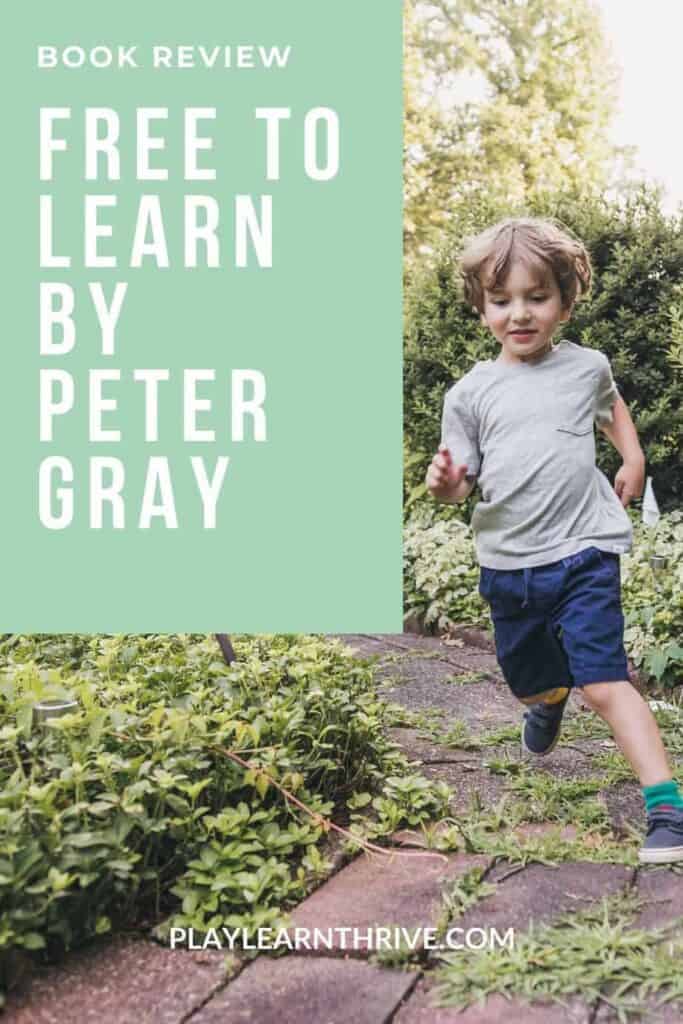
  • Free to Learn by Peter Gray: A Book Review

    Free to Learn by Peter Gray: A Book Review

    As a public school educator and a parent, I am constantly reading topics about education, inquiry, and play. I love public schools, but there is no secret that time for play has been replaced with standardized test preparation in schools. At home, structured activities in the form of sports, dance, music, and more often take priority over free play. These activities are also important, but freedom to learn through unstructured play is something I am passionate about, both in school and at home.

    In my doctoral studies, I came upon the book, Free to Learn: Why Unleashing the Instinct to Play Will Make Our Children Happier, More Self-Reliant, and Better Students for Life by Peter Gray, a research professor and scholar from Boston College. Although some of Gray’s ideas when it comes to education may seem extreme, there is a lot parents and teachers can learn from this book.

    Gray writes that the decline in free play and emphasis on structured education and activities directly contributes to the rise in stress-related mental disorders and depression in young people. It comes down to this. When our children are able to make their own decisions regarding the when, where, why, and how of learning, they are more likely to learn and be motivated to learn.

    Gray’s research draws on an anthropological study of hunter-gatherer children, a historical study of the impact of agricultural mores, feudalism, and monotheistic religion in the eventual rise of formalized, compulsory education. The historical context is an important review of the history of compulsory education, although not a comprehensive study. Gray’s focus goes beyond education itself and looks at learning.

    Students Responsible for Their Own Learning

    Sudbury Valley first operates on the principle that “adults do not control children’s education; children educate themselves”. In effect, learning is a uniquely personal experience. The student is part of the community. Students are not only responsible for decisions regarding their own learning but the decisions regarding the existence and responsibility of the school community as a whole.

    The Seven Sins of Compulsory Education

    In Free to Learn, Gray addresses the seven sins of our system of forced education. Whether you are homeschooling or your children are attending traditional school, these are important concepts to look at. Through extensive case studies of a private, radical constructivist school, Gray uses research to support the claim that formalized education guilty of the seven sins causes many students not to enjoy school. Gray addresses the need for students to be at the forefront of decisions when it comes to not only what they learn, but where, when, how, and even whom they learn from.

    In the book, Gray focuses on the sins in our current system of compulsory education.

    • Denial of liberty without just cause and due process
    • Interference with the development of personal responsibility and self-direction
    • Undermining of intrinsic motivation to learn (turning learning into work)
    • Judging students in ways that foster shame, hubris, cynicism, and cheating
    • Interference with the development and cooperation and promotion of bullying
    • Inhibition of critical thinking
    • Reduction in diversity of skills and knowledge

    In addressing these “sins”, Gray studies Sudbury Valley School, a privately funded school founded in 1968 on the principles of self-directed, student-held responsibility of learning. Students and staff have a vested democratic say in the community through a “School Meeting” model.

    The Denial of Liberty Without Just Cause and Due Process

    Each of Gray’s “seven sins” have student ownership of learning as the focus. First is the denial of liberty without just cause and due process. The way to reinstate liberty is by allowing play. Gray said, “Play is always accompanied by the feeling of this is what I want to do right now”. Yes, play has rules, but the rules should be agreed upon by the group. This also allows for a democratic community.

    Interference with the Development of Personal Responsibility and Self-Direction

    Next, Gray focuses on the second “sin of our system of forced education”. This is interference with the development of personal responsibility and self-direction. Gray explains that the forced nature of schooling stifles curiosity that children are born with. Compulsory schooling turns learning into work, something to be avoided. When teachers take control of children’s learning and tell that work must come before play, then learning no longer becomes an act of joy but becomes work. Comparing student learning and work with other children not only becomes work but a source of anxiety which inhibits learning.

    Undermining of intrinsic motivation to learn (turning learning into work)

    The third sin of compulsory education, undermining of intrinsic motivation, starts when students enter formal schooling. No matter how engaging and fun teachers attempt to make class activities, learning tasks are traditionally referred to as “work”. Gray mentions that teachers often say, “you must do your work before you can play”. Using anthropological studies of hunter-gatherers and evidence of modern pre-school-aged children, Gray is able to assert that children are naturally playful and curious, and school, is ultimately what kills their desire to learn.

    Judging students in ways that foster shame, hubris, cynicism, and cheating

    The fourth sin is focused on the sins of grading by judging students in ways that foster shame. One of the most shameful parts of education, according to Gray, is the way we teach children that their worth is determined based on others’ judgments through class rank or grades. Overall, when the value is placed on grading rather than learning, cheating becomes a preferable option for students faced with inferior grades or those competing in the cutthroat system of education.

    Interference with the development of cooperation and promotion of bullying

    Through segregation by age, caging students, and the atmosphere of competition, schools become places that interfere with the development of cooperation and promotion of bullying, the fifth sin. Children that develop at a slower rate physically, academically, or emotionally are placed with peers that may not relate with In addition, when students are allowed to age-mix, which is often seen in free play (think neighborhood children playing outside), the presence of younger children helps older youth develop their nurturing skills. The decline in age-mixed play has aligned with the rise of narcissism among youth. This lack of self-concern, according to Gray’s research, comes from the age-grading.

    Inhibition of Critical Thinking

    Curriculum, standards, and grading relate to the sixth sin of forced education, inhibition of critical thinking. Too often, grading rewards “correct” answers, and what is deemed correct in schools is the information and questions given to students from the teacher rather than students generating the questions.

    The Sudbury Valley School, which serves as Gray’s model for schooling, does not assign grades. Students still report success beyond high school. Seventy-five percent pursued higher education and 82 percent of students reported that their education benefited them by helping them think more critically and take responsibility for their own learning. Gray, using qualitative research methods, studied graduates via surveys, which became additional research studies after Gray’s initial findings.

    Reduction in diversity of skills and knowledge

    Finally, the last sin is reduction in diversity of skills and knowledge through a system that focuses on all children rather than individuals. Standardized curriculum reduces opportunities for students to follow different pathways. In Sudbury Valley, students decide and propose what they will study and learn. Because the diversity of personalities and in knowledge is valued, students at the Sudbury Valley School are ultimately very successful in pursuits beyond secondary education.

    What does this mean for parents and teachers?

    What can parents and teachers learn from Gray’s book? As a teacher, I still have faith in public education. I am not ready to uproot the entire system and disregard all standards and systems of aged socialization. However, there are a few things you can do as a classroom teacher or a parent to negate the seven sins.

    Foster Inquiry

    Kids are intrinsically curious, but too often schools tell them what questions to ask. By implementing Genius Hour or Passion Projects at school or home, your children will be able to explore and learn things that are authentic and meaningful to their own learning goals.

    Give Choice

    Instill elements of democratic learning by giving your children choice in the way they demonstrate their learning through the mode or output when it’s applicable. I’m such a huge fan of Genius Hour in helping students reach their future goals. One of my students once told me that they didn’t enjoy school because they weren’t learning things that were going to help them in the future. That may only be partially true, but letting students explore their passions with specific learning targets and goals is so meaningful.

    Allow Free Play

    There’s nothing that frustrates me more than when I see recess being taken away from young children. Even older children need time to experience “free play, but when our youngest learners are exchanging recess for testing, we’re doing them no favors. Taking a little time away from structured school helps mental health for kids and teachers. Not only does free play help with social-emotional learning, it also increases imagination.

    Embrace Boredom

    It’s more than OK for kids to be bored. Over-scheduling and even unintentional scholastic competition can lead to shame and cheating. Let your children learn for the sake of fun and curiosity and play without it being planned.

    The 21st century child is changing the world. Gray embraces play and student-direct learning, but even if your school or homeschool isn’t curriculum-free or 100% student-led, looking at Gray’s “seven sins” can certainly help you think about what today’s education could be for your child when we bring back curiosity and play.

    Jen Schneider is a middle school public school teacher and PhD student in Omaha, Nebraska. She writes about education at Creative Tech Teacher

    If you’re looking for more information about the importance of play check out my e-book:

    Simply Play: Everything You Need To Know About The Most Important Part of Childhood which you can buy here for only $4.99.

    If you like this post and want to read more like it then check out these articles:

    Type of Play for Development

    Guarding our Children’s Mental Health

    The Ever Growing Importance of Outdoor Play

    Toy for Toddlers: Encouraging Active Play

    7 Essential Playroom Spaces (and why you need them)

    The Power of Play

    What I’ve Learned about Early Childhood Education

    100 Things to do Outside with Your Kids

    30 Ideas to Get Your Kids to Play Outside

    Read More

  • What is Montessori — Understanding This Early Childhood Education Philosophy

    Choosing how you will educate your child is probably one of the most important and most stressful choices you make as a parent.

    In this article I argued that early childhood education was more important than college. Education during these early years will help shape social, emotional and physical health, as well as develop intrinsic motivation for life long learning–not just learning to get a grade.

    We know that education matters. But sometimes we don’t know what options are out there. It’s important to dig into some of these early learning philosophies to really understand the choices you have for your child.

    Rachel Kincaid, editor of the of The Montessori Post explains this amazing early childhood education philosophy.

    “We discovered that education is not something which the teacher does, but that it is a natural process which develops spontaneously in the human being” — Dr. Maria Montessori

    A Quick Overview of Montessori 

    Dr. Maria Montessori’s educational philosophy is multi-faceted and most notably includes the idea that children are eager and capable of learning new concepts, of doing for themselves, and of articulating their needs.

    At the core of the philosophy is to look at ‘education’ as actually ‘scientific pedagogy.’

    That is to say, we as educators and caretakers should approach teaching (pedagogy) from a scientific approach.

    The general rule of thumb is–observe, experiment, observe again.

    What makes the Montessori philosophy different from other early childhood learning philosophies?

    Fortunately (or unfortunately) there are many early childhood learning philosophies. Oftentimes many of these are more of a fad vs a tried and true learning philosophy.

    Because the Montessori method is rooted in science, it capitalizes on what we know about child development such as the awareness of the sensitive period for language, and encourages teachers of young children to expose them to not only rich and accurate language, but also multiple languages when possible. (For example, my kids are already being exposed to Mandarin and Spanish at their current Montessori preschool).

    Other philosophies don’t always ‘strike while the iron is hot’ or teach students concepts when they are most interested and apt to learning them.

    Advantages of the Montessori Philosophy

    One of the biggest advantages of the Montessori Method is independence. While it may be a buzzword, independence is a core result of the Montessori method that comes about through the careful observation of the child.

    Don’t children want to do for themselves and by themselves?

    With the right tools, right guidance and the right amount of liberty, a child can become truly independent in many areas of their lives much earlier than they might in traditional schooling or family life.

    The Montessori Classroom

    Montessori classrooms are very carefully and intentionally prepared with activities that not only allow children to do what they naturally want to do, but also that aide them in developing important skills along the way.

    For example, a 3-year-old will have many choices throughout her day to pour water, cut with scissors, prepare food, socialize, work independently, learn letter sounds, begin counting, move her body and so much more.

    A well-trained teacher (called a Guide) will suggest new activities or encourage more practice to solidify her skills as she observes her move about the classroom.

    Myths about Montessori

    As a former Montessori educator, school director, and now adult educator, I’ve heard many assumptions and misconceptions of the Montessori method.

    Aside from some asking ‘if it’s a type of pasta’ or a type of religion, I’d argue that one of the most widely held misconceptions is that Montessori is either very strict or very loose.

    While the name is not trademarked, and each school, classroom and teacher has their own ‘flavor’ or interpretation of Dr. Montessori’s theories, an ‘authentic’ Montessori school, will be an intentional mix of freedom within boundaries.

    A  general misconception about child development is that children at the Early Childhood level (about ages 3 to 6) should not be exposed to academic principles.

    Because many Montessori students after this level are reading and have a very strong understanding of our number system, some people may think that all the children have done is rote, forced academic preparation in their Montessori schools. But this is far from the truth.

    If you visit a well-run Montessori school, you would see that children often choose ‘academic’ activities because they love doing them. Their freedom of choice is respected and they learn the concepts so well as a result of a well-trained Guide and a well-prepared classroom.

    “Doing Montessori” at Home

    Some parents new to the Montessori concept may believe that ‘doing Montessori’ is having the right activities or materials at home, such as only wooden toys, or even no toys at all.

    I’d argue that to ‘do’ Montessori, one simply has to look at their child through a new lens. Understand that a child is eager and capable of learning new concepts, of doing for himself, and of articulating his needs.  Once a parent understands some of Dr. Montessori’s basic theories, she will interact with her child in new ways that frankly, have little to do with what their playroom may contain.

    Montessori at ANY Age

    I always warn parents that once you see the Montessori method, it’s very hard to forget it doesn’t exist!

    It is a wonderful option for teaching and learning, and Dr. Montessori’s principles can be applied from birth to old age.

    I happen to have my 3-year-old in a Montessori program, I homeschool my gradeschooler with ‘a Montessori lens’ and I conduct my full time job with a Montessori perspective as well.

    I’d warn against spending too much time criticizing one’s ‘level of Montessori’ by reading too much into a certain toy or material to buy, or by comparing your child’s play area to that of Pinterest.

    Anybody can adopt Dr. Montessori’s genius way of approaching life, at any level, and at any age.

    Rachel Kincaid earned her Bachelor of Arts in Spanish K-12 Education from the University of North Carolina at Wilmington and her Early Childhood Montessori certificate from The Center for Guided Montessori Studies.  She is the co-founder of a bilingual Montessori preschool in North Carolina and currently serves as President of the non-profit Southeast Montessori Collective.  She also serves as editor of The Montessori Post and is the curator of digital material at The Montessori Library.

    For playroom tips check out my e-book Simply Play: Everything You Need To Know About The Most Important Part of Childhood which you can buy here for only $4.99.

    If you like this post and want to read more like it then check out these articles:

    Toy for Toddlers: Encouraging Active Play

    7 Essential Playroom Spaces (and why you need them)

    The Power of Play

    Top 10 Art Supplies for Kids

    Types of Play Important for Development

    What I’ve Learned about Early Childhood Education

    What is Waldorf — A Spotlight on Waldorf Education

    Reggio Emilia — A Child Centered Approach to Learning

    Read More

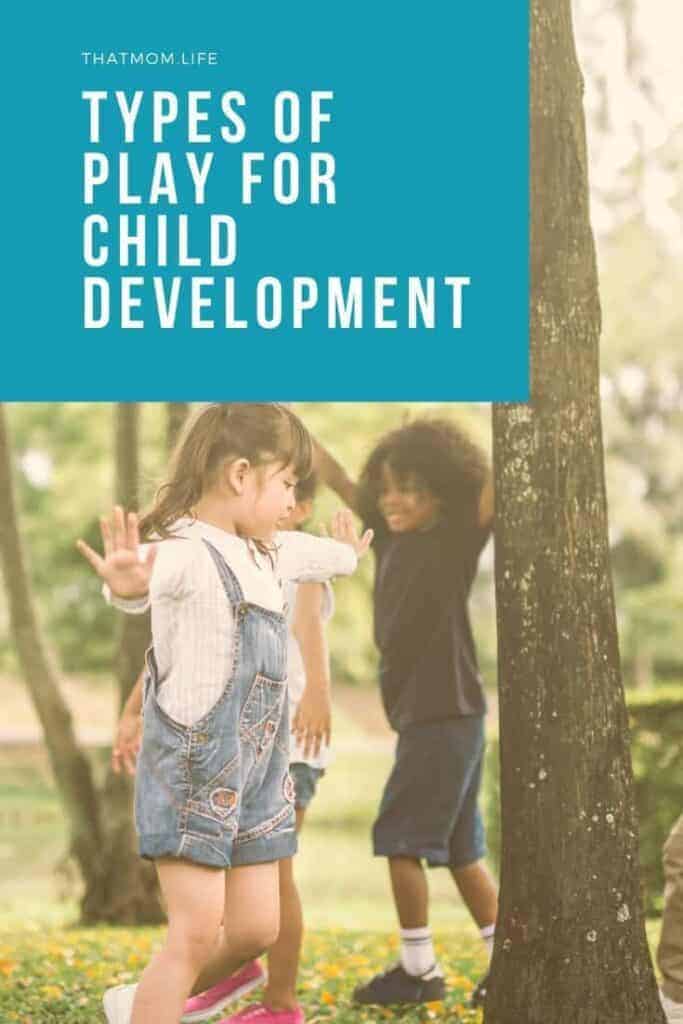
  • Types of Play and Child Development

    This article is an excerpt from my upcoming book Simply Play: Everything You Need To Know About The Most Important Part of Childhood.

    Click here to purchase!
    The Concept of Play

    At its core, play is one of the most important needs of a child. In fact, play is so important that it is recognized by the United Nations as a right, similar to shelter and education.

    Play is loosely defined as intrinsically motivated, child-directed, spontaneous, voluntary, enjoyable and often with no intended outcome.

    Dr. Peter Gray explains it best when he says, “Play is a concept that fills our minds with contradictions when we try to think deeply about it. It is serious, yet not serious; trivial, yet profound; and imaginative and spontaneous, yet bound by rules. Play is not real, it takes place in a fantasy world; yet it is about the real world and helps children cope with that world. It is childish, yet it underlies many of the greatest achievements of adults.”

    Most importantly, play is how kids learn. It is how they develop the cognitive, social and emotional skills that allow them to succeed in all things.

    From an evolutionary perspective, play is how animals and humans practice skills needed for them to survive and thrive in their environment. German philosopher and naturalist, Karl Groos, wrote a book discussing play in animals and humans, and he notes that humans have more to learn and, as such, naturally spend more time playing than any other species.

    Play is also not only defined by the activities that are involved, but also by the underlying attitudes of the people involved.

    Unfortunately, our society today has shifted in such a way that children have been slowly guided away from having enough time for real play or coerced into “playing” in ways that do not spark joy.

    Categories of Play

    Experts often talk about six categories of play that are universal to all kids no matter their location or culture. It is important to note that these categories are not bound by sharply defined lines, and as such you will likely witness more than one type of play happening at once.

    Physical Play

    All mammals need to develop fit bodies and have the ability to move in a coordinated way. Physical play is when kids are using and developing gross motor skills by doing activities such as running, jumping, wrestling, spinning and climbing. This type of play is what allows children to develop control of their bodies, physical coordination, proper muscle tone, core strength and courage.

    Constructive Play

    Given our opposable thumbs it’s no wonder why constructing and building is a type of play that human children gravitate towards. This type of play can include anything that involves building, creating, constructing and often includes creation of tools and shelters (think digging with sticks or making a fort out of couch cushions).

    Language Play

    You can witness this type of play when you hear a cooing baby who is playing with making different sounds, or with the toddler who is laughing hysterically as they begin to play with rhymes or make up funny nonsensical words. Eventually this play allows them to fully understand their native language

    Dramatic or Pretend Play

    This is when children are experimenting with different social roles, including dress up, make believe and imaginary play. Dramatic or pretend play is unique to humans as we are capable of thinking beyond what is actually present–this quality is what allows us to invent and reason. This type of play also encourages language development.

    Games with Formal Rules

    This is one of the more common types of play witnessed in U.S. culture. These are games with explicit rules that can be explained in words to others. They can be competitive in nature like organized sports, or games like chess.

    Social Play

    Social play is two or more children playing together and can span across any other type of play listed above. Children often gravitate towards social play. This is where kids begin learning to negotiate and compromise. In this type of play they start to learn about other’s needs and wants, and how to navigate a variety of situations involving people other than themselves. Social play is how kids learn to get along with others. A crucial skill that cannot be taught, only learned through experience.

    Types of Play Especially Relevant to Our Current Society

    Adding to these overarching types of play, it is important to note a few other types of play that need to be explained and encouraged, especially in our society today.

    Sensory Play

    Children develop cognitive skills by using their senses. Ideally when kids play they are combining the sense of touch with other senses such as vision, hearing, smell, and taste. Experiences and toys that provide kids with multi-sensory feedback are best for development.

    This doesn’t mean toys that are overstimulating to the senses–toys that light up, talk, sing, flash, or move on their own are very often overstimulating.

    It’s important to understand that overstimulation is NOT good for kids, no matter the age. Overstimulation of the senses causes things like sleep issues, crankiness, withdrawal from face to face interaction, crying, tantrums, aggression, and hyperactivity. It’s literally that the senses are on overload and don’t know what to do.

    Keep in mind the 90/10 rule for toys. Your child should be doing 90% of the work and the toy should only be doing 10% of the work.

    It’s important to recognize that all the sensory play posts and ideas for sensory bins that are sweeping Facebook mom’s groups and blasted all over Instagram accounts, while nice, are a symptom of a larger issue.

    Have you ever considered why the emergence of sensory bins or focus on sensory play? We have whole social media accounts, followed by thousands, solely dedicated to showing parents different sensory bin setups.

    This is, in part, due to the lack of time spent in play, especially in outdoor play. Outdoor play is one of the absolute best multi sensory experiences you can provide your child, and yet, kids today are spending significantly less time outside. Due to this, children need to specifically be exposed to “sensory play” because they are missing out on natural multi-sensory experiences found in nature.

    Risky Play

    Children have an innate need for risk taking–and research indicates that children who are encouraged to take risks at a younger age are able to better manage risk once they have gained more independence. It also shows that lack of ample opportunity to take risks may increase fear and inappropriate aggression, as well as limit the ability to cope with stress. All of which translate into an increase in physical and mental health issues.

    Dr. Peter Gray writes in his book Free to Learn that “Over the past 60 years we have witnessed, in our culture, a continuous, gradual, but ultimately dramatic decline in children’s opportunities to play freely, without adult control, and especially in their opportunities to play in risky ways.  Over the same 60 years we have also witnessed a continuous, gradual, but ultimately dramatic increase in all sorts of childhood mental disorders, especially emotional disorders.”

    Some ways you may see kids engaging in risky play are playing at heights, running at high speeds, using things in ways that aren’t intended (climbing the couch, going up the slide instead of down), rolling down hills, climbing rocks, walking on anything that requires balance, spinning in circles, jumping off anything and everything.

    These days parents are often seen hovering over kids at the playground, or even worse, following them up into the playground equipment. Children aren’t scaling rocks and climbing trees. They aren’t jumping from heights that are *just* a little too high.

    Funny enough, injuries haven’t decreased–quite the opposite. Why? Because children are not testing their bodies enough, and are therefore more likely to get hurt because they are grossly unaware of their physical limits.

    We need to shift our mindset. These are things we should be encouraging our kids to do. Take a breath, step away from the top of the slide and let them take healthy and age appropriate risks.

    Understanding the Difference between Structured Play and Unstructured Play

    An important point for parents and caregivers to understand is that not all play is the same. Kids need to participate in both structured and unstructured play, with unstructured play often being the goal.

    Structured Play

    Structured play is often adult led (especially at the younger years) and it can include a goal that requires problem solving or critical thinking of some sort.  Some examples would be putting together a LEGO set using the directions, attending an enrichment class, playing a team sport, engaging in a card game or working on a puzzle. Even a game of tag or hide and seek would be considered structured play.

    Overall, this is often where children in our society end up the most. This is due to an increase in parental supervision and a gross lack of completely free time for kids today.

    Unstructured Play

    Unstructured play or sometimes called free play, is not directed by an adult, and ideally should be away from direct adult supervision. This type of play is completely centered around, and led by, the child. This type of play is really where the magic happens. Engaging in unstructured free play allows for the development of creativity, imagination, emotional regulation, and problem solving skills.

    If you like this post and want to read more like it then check out these posts:

    Toy for Toddlers: Encouraging Active Play

    7 Essential Playroom Spaces (and why you need them)

    The Power of Play

    Top 10 Art Supplies for Kids

    3 Steps to Declutter Your Play Space

    Read More

  • A Parent’s Guide to the Special Education Process

    A special thank you to Michelle DiMiceli, owner of Meaningful Education Support, for her help with this article.

    Parents are their child’s number one advocate. Being involved with your child’s education will not only encourage success, but it will give you the knowledge and power when your child needs additional help.

    The special education process can be daunting and confusing and having an understanding of the process helps parents be the best advocate you can be for your child.

    Birth to Age Three

    Up to the age of three, special education services are provided by the Department of Health of the state in which you live, through early intervention services.

    If you suspect there is an issue with your child the first step would be to speak to your child’s pediatrician. They can help you better understand any issues you may be seeing, and guide you to the next step.

    However, keep in mind YOU, as the parent, are able to make a direct referral for an evaluation by your state’s Department of Health.

    Transition to the School System

    Once the child is three, the home district (school district where you live) is responsible for special education services.

    For families that have a child who has been receiving services from birth to three, the transition to public school support can be scary. There is now a whole new set of people taking on your child’s case and you may feel that you have to start over.

    But this isn’t the case.

    In order to make the transition to school more seamless, it is important that you have an organized file that has all related information pertaining to the disability and needs of your child. Ask questions, stay informed and listen to your instincts. You know your child best.

    Kindergarten Through Highschool

    If you have a child in grade school or later and are concerned about their progress, there are steps that need to be taken to ensure they are being properly monitored and supported.

    The first step is identifying that there may be a problem. However, do understand that not all struggles equate to a disability. Children are all different and while standards indicate general guidelines of where a child should be academically and when, there is a wide range of acceptable milestones.

    It is imperative that there is communication between you and the school about how your child is doing and what concerns you’re having.

    General education supports are available. These supports need to be exhausted before a referral to the special education department can be made.

    If these supports have been tried, with fidelity, and there are still issues, then a referral can be made for special education support.

    Step by Step Guide for the Special Education Referral Process

    Below is a general guideline that parents can expect once a referral is made.

    Step One: Referral

    A referral may be made by parents or guardians, school personnel or outside agency (physician, social worker) with parental consent. This is the starting point for all special education services. You must receive written notice of referral within five school days of the referral being made.

    Step Two: Planning and Placement Team (PPT)

    Once the referral is received a group of school personnel and parents or guardians will meet to discuss concerns and reason for referral.

    If it is deemed that your child needs initial testing, this team will discuss what types and the process will continue.

    If the team determines that your child’s needs can be met with general education services, you still maintain the right to request a referral in the future if you feel their child is not making adequate progress with the general education supports being provided.

    Step Three: Testing

    If the PPT determines that your child needs to be tested for special education services, a team will be identified. That team will then test, interview (both child and parent) and discuss the child’s needs.

    These tests will be done by any, or all, of the following service providers;

    • School Psychologist
    • School Social Worker
    • Special Education teacher
    • Speech Pathologist
    • Occupational Therapist
    • Physical Therapist

    All of these specialists will conduct testing in their area of expertise and determine strengths and weaknesses of the child. The information will be gathered to make an informed decision about what the child needs.

    Step Four: IEP Meeting

    Once all the testing is done, another meeting will be called. It is very important that you be a part of this meeting, as all reports will be discussed and school personnel will make their suggestions and give their impressions of the students and their needs.

    Parents are an integral part of this process. They are considered committee members and not just spectators. Parents are permitted to bring anyone they feel will help support them through this process, which could be a friend, family member or professional advocate.

    If it is determined that a child meets the criteria for special education services, an Individual Education Plan (IEP) will be developed and a classification of a disability will be identified. If the committee determines that a child does not meet criteria for an IEP, the committee will find that child ineligible for services through special education.

    It is important to note that the parents maintain the right to request a referral in the future if they feel their child is not making adequate progress and the process will start over.

    Schools have 45 days from the day of referral to implementing the IEP.

    Step Five: Annual Review

    Every year an IEP meeting will be scheduled to review the IEP. The meeting will consist of all parties involved in servicing the child, including the parent or guardian.

    It is a meeting to discuss progress and make changes where they may be needed.

    Parents should be prepared to discuss how they feel their child is doing. They are also free to make suggestions for IEP changes. If a child is mature enough (usually middle school and up), they are encouraged to be a part of the meeting and have a voice at the table.

    There is nothing more powerful than a child taking charge of their own education and verbalizing what they feel has worked and what hasn’t. 

    Step Six: Reevaluation

    Every three years (or earlier if deemed necessary) the child will go through testing to determine if they are still eligible to receive services.

    Another PPT meeting will be held and changes can be made to the child’s program.

    This meeting can also determine that a student no longer needs special education services and will be declassified.

    Advocating For Your Child

    Parents are the most important advocates for their children.

    Your voice is the one that should be heard the loudest and your concerns are the most important. You know your child best and staying involved will allow you to see the gains and notice any areas of concern quickly.

    Keep a line of communication open with your child’s teacher(s). A partnership between teacher and parent is the best way to make sure your child is getting what he/she needs.

    If you feel you need more support and one on one coaching through the process, please reach out to a special education advocate–they are there to help you navigate this very complex process!

    For more specific information related to your state, check your states education department website.

    About Michelle: Michelle is a certified Special Education teacher who has been working with special education students for more than 24 years. She has taught every subject in grades K-8 in many different settings. Michelle has been an advocate since she began working with students. She is also the founder of Meaningful Education Support, where she is a student advocate, parent supporter and parent coach. Find out more information at yourmes.com.

    Read More