parenting

  • Learning at Home When School is Closed: 5 tips

    5 Tips For Learning at Home When School is Closed

    Right now many parents are taking on the role of continuing their children’s learning at home when school is closed.

    Many public school districts are nowhere near ready to provide adequate online or distance learning. That, in and of itself, is a serious issue considering it’s 2020. But that discussion is better left for another day.

    Right now, we are witnessing the biggest homeschooling social experiment the U.S. has seen since our country started compulsory schooling in the state of Massachusetts in 1852. 

    The hardship that parents will feel is going to be brutal. Our country is inadequately prepared to help already disadvantaged families who will bear the brunt of this pandemic.

    School District are Worried

    Schools are worried about closing because of the amount of homeless and food insecure children they serve. Districts are scrambling to find ways to continue providing basic necessities to children in their school community. That is sickening.

    Finding childcare when you have to work in order to get paid, is going to be near impossible. People are going to go to work sick because they can’t take time off–for lack of paid sick time. It’s going to be an utter ❤️ show.

    All this said, we must try to find the positive and continue to practice gratitude.

    You are Where it Starts

    We have parents who are now home with their kids and who have a unique opportunity to re-engage in their children’s education–Not a teacher? Have no clue how you can support your child in learning? Remember that YOU are where it all began. Take this time to re-connect.

    Learning doesn’t mean schooling.

    There are so many ways you can support your child’s learning when school is closed. The most important thing is to step back and follow their lead and find a rhythm.

    Kids do thrive on predictability so try to think about how you can structure your day. You don’t have to be rigid about it, but it might make life easier for everyone if you come up with a rhythm that keeps you moving forward.

    You can download a free printable block schedule here.

    1. Ask them what excites them about school

    Is it art? Science? Reading? Gym? Start there.

    Pinterest up some art or science projects. Let them make their own creation with whatever art materials you have laying around. Watch what they create and build on it. Did they draw an animal? Find something to read about that animal.

    Did they create something abstract? Look up a Youtube video about abstract art.

    Let them come up with an experiment you guys can conduct at home. Talk about it. Have them write about it. Read about it.

    Do they love to read? Let them read and when they are done ask them questions. Have them draw the main character and write about the character’s personality. Look up graphic organizers for characterization, plot, theme (based on your child’s age) and you will find tons of activities for them to do relating to literacy.

    Read non-fiction. Check out Newsela for articles that allow you to customize by reading level. Do some research with them related to any content found in the article. Look at related pictures and talk through what you’re reading. Model engaging in content.

    Use phrases like “I wonder” and “What do you think….”

    Do they love physical education class? Do you have a backyard? Kick them outside for a few hours. Make an indoor obstacle course with couch pillows, step stools, boxes, painters tape. Get them doing something active. Have them shoot paper balls into a basket. Set up empty bottles as pinballs and let them do some house bowling. Do a workout together. Try yoga or pilates. There are tons of free videos online and you don’t need any real equipment.

    Are they budding mathematicians? Direct them to Khan Academy where they can do self-paced lessons online (just don’t let them sit online for hours on end).

    2. Involve them in your day to day

    You don’t have to do anything particularly academic if you don’t want to. Forget worksheets, learning apps and memorizing information. You can simply involve them in your day to day and talk to them about some of the tasks involved in being an adult (age appropriate of course).

    Learning at home is the perfect time for them to learn life skills.

    Have them help with laundry, or unload the dishwasher, or help fold clothes….let them make a grocery list and look up prices online. Give them a budget and see if they can add everything up and stay within that budget. Bake something from scratch and have them figure out converting measurements.

    Sit down and eat together. Drag out the meal to talk about the shape, size, color, texture or taste of different foods. Do a blind taste test or try out a new recipe and sample ingredients along the way.

    3. Get them outside

    Get. Them. Outside. Here is a list of 100 things to do outside with your kids  Some may not apply considering we should be trying to practice social distancing.

    4. Embrace boredom 

    It’s important, regardless of age, to allow your kid(s) time and space to be bored. Let them sulk. Let them complain. Give them encouragement to figure it out. Let them play, build, imagine, write, and create. Let THEM figure out how to spend their time with NO input from you. Figure out a particular time of day that works best for your family and keep it consistent. One of the best parts of learning at home is that children will have more time, and more space.

    5. Keep screens to a minimum

    It might be VERY easy to let screens take over. If you’re not used to limiting screen time in the afternoon when your child is home from school, or you’ve never had to because they are always in after school extracurriculars, then this might be especially difficult.

    Maybe your child has online school work to do. Or you’re having them do Khan academy math work. Maybe they are doing a coding app on an iPad. All fine.

    Just make sure you set limits and engage in these other activities that allow you to re-connect and re-engage in your child’s education in a meaningful way.

    How are you coping with learning at home? What activities do you have planned to help pass the time? Head over to our Facebook group to chat with like-minded families.

    If you like this post and want to read more like it then check out these articles:

    30 Ideas to Get Your Kids Playing Outside

    100 Outdoor Activities to Do with Your Kids

    Elderberry Syrup Recipe

    Top 10 Natural Medicine Cabinet Must Haves

    Top 10 Must Have Art Supplies

    Type of Play for Development

    Toy for Toddlers: Encouraging Active Play

    Read More

  • Raise a Child Who Loves to Learn

    5 Must Read Books To Raise a Child Who Loves to Learn

    Are you interested in how you can help promote curiosity, independence, and self-motivation in your child? Do you want your child to actually love to learn?

    We know that so many children these days are losing this innate love of learning. But it doesn’t have to be that way.

    Read these five books to help you understand how to raise a child who loves to learn.

    #1 The Montessori Toddler: A Parent’s Guide to Raising a Curious and Responsible Human Being

    This book is great for anyone who is not familiar with the Montessori teaching approach and for people who have or work with younger children.

    It has tons of practical advice and ideas that are all based on the Montessori idea that teachers and parents are meant to be guides that follow the child’s lead. This book talks about trusting the child and fostering a sense of wonder and curiosity. The Montessori method seeks to develop a life long learner who is self-motivated and inquisitive. Children taught using the Montessori philosophy are often children who love to learn.

    #2 Free to Learn: Why Unleashing the Instinct to Play Will Make Our Children Happier, More Self-Reliant, and Better Students for Life

    In this book Peter Gray writes about the decline in free play and emphasis on structured education and activities directly contributes to the rise in stress-related mental disorders and depression in young people.

    I recently published a more in depth book review here if you want to read that instead of the full text. I would, however, still encourage reading the book because it is incredible and will change your views on how children really learn.

    #3 Balanced and Barefoot: How Unrestricted Outdoor Play Makes for Strong, Confident, and Capable Children

    In this book the author, who is a pediatric occupational therapist, discusses how children benefits from having unstructured play outside. She explains how children are experiencing a record amount of cognitive difficulties, such as attention deficit/hyperactivity disorder (ADHD), emotion regulation and sensory processing issues, and aggressiveness–all of which are impacting their ability and motivation to learn.

    #4 Unschooling Rules: 55 Ways to Unlearn What We Know About Schools and Rediscover Education

    Written by a global education thought leader this book will help you to understand how traditional schooling is going against what we know about how children learn and the best way to build on their natural curiosity.

    He touches on ideas such as:

    • Learning to be, do and know.
    • Tests don’t work. Get over it. Move on.
    • What a person learns in a classroom is how to be a person in a classroom.
    • Animals are better than books about animals.
    • Internships, apprenticeships, and interesting jobs beat term papers, textbooks, and tests.
    • The only sustainable answer to the global education challenge is a diversity of approaches.

    #5 The One World Schoolhouse: Education Reimagined

    If you are really interested in the future of education then this is the book for you. This book was life changing for me as an educator (along with Laura Sandefer’s book Courage to Grow). Our public education system is struggling in more ways than one, and this book discusses how we can capitalize on students innate drive to learn (that are discussed more deeply in some books listed above) and deliver a world class education to anyone, anywhere all while following the child.

    If you’re looking for more information about how play to connected to learning check out my e-book:Simply Play: Everything You Need To Know About The Most Important Part of Childhood which you can buy here for only $4.99.
    If you like this post and want to read more like it then check out these articles:
    Types of Play for DevelopmentGuarding our Children’s Mental Health

    The Ever Growing Importance of Outdoor Play

    Toy for Toddlers: Encouraging Active Play

    7 Essential Playroom Spaces (and why you need them)

    The Power of Play

    What I’ve Learned about Early Childhood Education

    100 Things to do Outside with Your Kids

    30 Ideas to Get Your Kids to Play Outside

    Read More

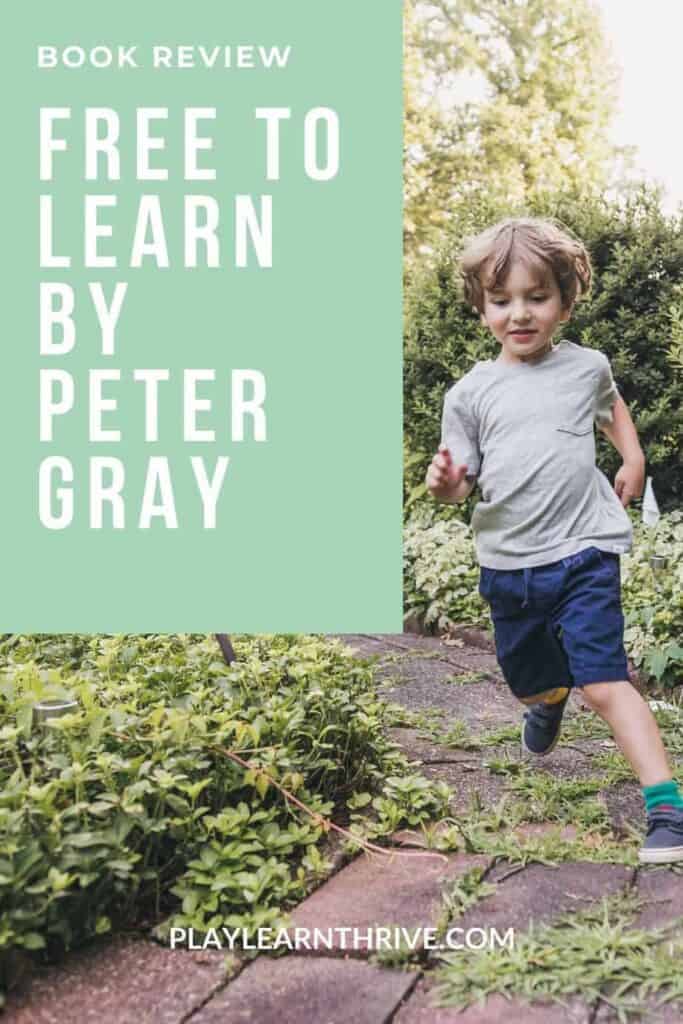
  • Free to Learn by Peter Gray: A Book Review

    Free to Learn by Peter Gray: A Book Review

    As a public school educator and a parent, I am constantly reading topics about education, inquiry, and play. I love public schools, but there is no secret that time for play has been replaced with standardized test preparation in schools. At home, structured activities in the form of sports, dance, music, and more often take priority over free play. These activities are also important, but freedom to learn through unstructured play is something I am passionate about, both in school and at home.

    In my doctoral studies, I came upon the book, Free to Learn: Why Unleashing the Instinct to Play Will Make Our Children Happier, More Self-Reliant, and Better Students for Life by Peter Gray, a research professor and scholar from Boston College. Although some of Gray’s ideas when it comes to education may seem extreme, there is a lot parents and teachers can learn from this book.

    Gray writes that the decline in free play and emphasis on structured education and activities directly contributes to the rise in stress-related mental disorders and depression in young people. It comes down to this. When our children are able to make their own decisions regarding the when, where, why, and how of learning, they are more likely to learn and be motivated to learn.

    Gray’s research draws on an anthropological study of hunter-gatherer children, a historical study of the impact of agricultural mores, feudalism, and monotheistic religion in the eventual rise of formalized, compulsory education. The historical context is an important review of the history of compulsory education, although not a comprehensive study. Gray’s focus goes beyond education itself and looks at learning.

    Students Responsible for Their Own Learning

    Sudbury Valley first operates on the principle that “adults do not control children’s education; children educate themselves”. In effect, learning is a uniquely personal experience. The student is part of the community. Students are not only responsible for decisions regarding their own learning but the decisions regarding the existence and responsibility of the school community as a whole.

    The Seven Sins of Compulsory Education

    In Free to Learn, Gray addresses the seven sins of our system of forced education. Whether you are homeschooling or your children are attending traditional school, these are important concepts to look at. Through extensive case studies of a private, radical constructivist school, Gray uses research to support the claim that formalized education guilty of the seven sins causes many students not to enjoy school. Gray addresses the need for students to be at the forefront of decisions when it comes to not only what they learn, but where, when, how, and even whom they learn from.

    In the book, Gray focuses on the sins in our current system of compulsory education.

    • Denial of liberty without just cause and due process
    • Interference with the development of personal responsibility and self-direction
    • Undermining of intrinsic motivation to learn (turning learning into work)
    • Judging students in ways that foster shame, hubris, cynicism, and cheating
    • Interference with the development and cooperation and promotion of bullying
    • Inhibition of critical thinking
    • Reduction in diversity of skills and knowledge

    In addressing these “sins”, Gray studies Sudbury Valley School, a privately funded school founded in 1968 on the principles of self-directed, student-held responsibility of learning. Students and staff have a vested democratic say in the community through a “School Meeting” model.

    The Denial of Liberty Without Just Cause and Due Process

    Each of Gray’s “seven sins” have student ownership of learning as the focus. First is the denial of liberty without just cause and due process. The way to reinstate liberty is by allowing play. Gray said, “Play is always accompanied by the feeling of this is what I want to do right now”. Yes, play has rules, but the rules should be agreed upon by the group. This also allows for a democratic community.

    Interference with the Development of Personal Responsibility and Self-Direction

    Next, Gray focuses on the second “sin of our system of forced education”. This is interference with the development of personal responsibility and self-direction. Gray explains that the forced nature of schooling stifles curiosity that children are born with. Compulsory schooling turns learning into work, something to be avoided. When teachers take control of children’s learning and tell that work must come before play, then learning no longer becomes an act of joy but becomes work. Comparing student learning and work with other children not only becomes work but a source of anxiety which inhibits learning.

    Undermining of intrinsic motivation to learn (turning learning into work)

    The third sin of compulsory education, undermining of intrinsic motivation, starts when students enter formal schooling. No matter how engaging and fun teachers attempt to make class activities, learning tasks are traditionally referred to as “work”. Gray mentions that teachers often say, “you must do your work before you can play”. Using anthropological studies of hunter-gatherers and evidence of modern pre-school-aged children, Gray is able to assert that children are naturally playful and curious, and school, is ultimately what kills their desire to learn.

    Judging students in ways that foster shame, hubris, cynicism, and cheating

    The fourth sin is focused on the sins of grading by judging students in ways that foster shame. One of the most shameful parts of education, according to Gray, is the way we teach children that their worth is determined based on others’ judgments through class rank or grades. Overall, when the value is placed on grading rather than learning, cheating becomes a preferable option for students faced with inferior grades or those competing in the cutthroat system of education.

    Interference with the development of cooperation and promotion of bullying

    Through segregation by age, caging students, and the atmosphere of competition, schools become places that interfere with the development of cooperation and promotion of bullying, the fifth sin. Children that develop at a slower rate physically, academically, or emotionally are placed with peers that may not relate with In addition, when students are allowed to age-mix, which is often seen in free play (think neighborhood children playing outside), the presence of younger children helps older youth develop their nurturing skills. The decline in age-mixed play has aligned with the rise of narcissism among youth. This lack of self-concern, according to Gray’s research, comes from the age-grading.

    Inhibition of Critical Thinking

    Curriculum, standards, and grading relate to the sixth sin of forced education, inhibition of critical thinking. Too often, grading rewards “correct” answers, and what is deemed correct in schools is the information and questions given to students from the teacher rather than students generating the questions.

    The Sudbury Valley School, which serves as Gray’s model for schooling, does not assign grades. Students still report success beyond high school. Seventy-five percent pursued higher education and 82 percent of students reported that their education benefited them by helping them think more critically and take responsibility for their own learning. Gray, using qualitative research methods, studied graduates via surveys, which became additional research studies after Gray’s initial findings.

    Reduction in diversity of skills and knowledge

    Finally, the last sin is reduction in diversity of skills and knowledge through a system that focuses on all children rather than individuals. Standardized curriculum reduces opportunities for students to follow different pathways. In Sudbury Valley, students decide and propose what they will study and learn. Because the diversity of personalities and in knowledge is valued, students at the Sudbury Valley School are ultimately very successful in pursuits beyond secondary education.

    What does this mean for parents and teachers?

    What can parents and teachers learn from Gray’s book? As a teacher, I still have faith in public education. I am not ready to uproot the entire system and disregard all standards and systems of aged socialization. However, there are a few things you can do as a classroom teacher or a parent to negate the seven sins.

    Foster Inquiry

    Kids are intrinsically curious, but too often schools tell them what questions to ask. By implementing Genius Hour or Passion Projects at school or home, your children will be able to explore and learn things that are authentic and meaningful to their own learning goals.

    Give Choice

    Instill elements of democratic learning by giving your children choice in the way they demonstrate their learning through the mode or output when it’s applicable. I’m such a huge fan of Genius Hour in helping students reach their future goals. One of my students once told me that they didn’t enjoy school because they weren’t learning things that were going to help them in the future. That may only be partially true, but letting students explore their passions with specific learning targets and goals is so meaningful.

    Allow Free Play

    There’s nothing that frustrates me more than when I see recess being taken away from young children. Even older children need time to experience “free play, but when our youngest learners are exchanging recess for testing, we’re doing them no favors. Taking a little time away from structured school helps mental health for kids and teachers. Not only does free play help with social-emotional learning, it also increases imagination.

    Embrace Boredom

    It’s more than OK for kids to be bored. Over-scheduling and even unintentional scholastic competition can lead to shame and cheating. Let your children learn for the sake of fun and curiosity and play without it being planned.

    The 21st century child is changing the world. Gray embraces play and student-direct learning, but even if your school or homeschool isn’t curriculum-free or 100% student-led, looking at Gray’s “seven sins” can certainly help you think about what today’s education could be for your child when we bring back curiosity and play.

    Jen Schneider is a middle school public school teacher and PhD student in Omaha, Nebraska. She writes about education at Creative Tech Teacher

    If you’re looking for more information about the importance of play check out my e-book:

    Simply Play: Everything You Need To Know About The Most Important Part of Childhood which you can buy here for only $4.99.

    If you like this post and want to read more like it then check out these articles:

    Type of Play for Development

    Guarding our Children’s Mental Health

    The Ever Growing Importance of Outdoor Play

    Toy for Toddlers: Encouraging Active Play

    7 Essential Playroom Spaces (and why you need them)

    The Power of Play

    What I’ve Learned about Early Childhood Education

    100 Things to do Outside with Your Kids

    30 Ideas to Get Your Kids to Play Outside

    Read More

  • Advice for Mothers Everywhere

    The problem with parenting experts

    So I started writing this blog because I feel like I have a ton of advice to give. I love giving advice. Seriously. Maybe it’s because I love to teach people. Maybe it’s because I find happiness in helping others, especially mamas. Maybe it’s because I just like to hear myself talk? I don’t know. But I do know I happily dish out advice to anyone who will listen. Here’s the thing though. I’m no expert on parenting. I mean I have three kids. I’ve read a ❤️ ton about all things parenting and education related. But I don’t think one can be an expert on parenting nor would I ever claim to be an expert on parenting. I think you can be an expert on trying to be the best possible parent. You can be an expert learner of new information. But you cannot be an expert on parenting because it’s ALWAYS changing. So yes, you may become an expert on having a two year old, but then guess what? Your two year old turns three (which is a beast of an age–but please reference my recent post about reframing our perception) and now you’re royally screwed because you aren’t an expert on having a three year old….or you have one kid, and you’re killing it. Then kid two comes along and it’s all over.

    We ALL struggle

    Over the past few weeks I have been trolling moms groups. Reading posts (sometimes responding) and just trying to get a better feel for what other moms, especially newer moms, are struggling with. And honestly, what I’m seeing makes me pretty sad. I see so many mamas posting about feeling anxious, ashamed, overwhelmed, or not confident about their abilities as a parent. It isn’t always an overt expression of these feelings. It often comes out subtly–in the way they phrase a question or how they caveat their post with “please excuse the messy couch in the background.” It makes my heart hurt.

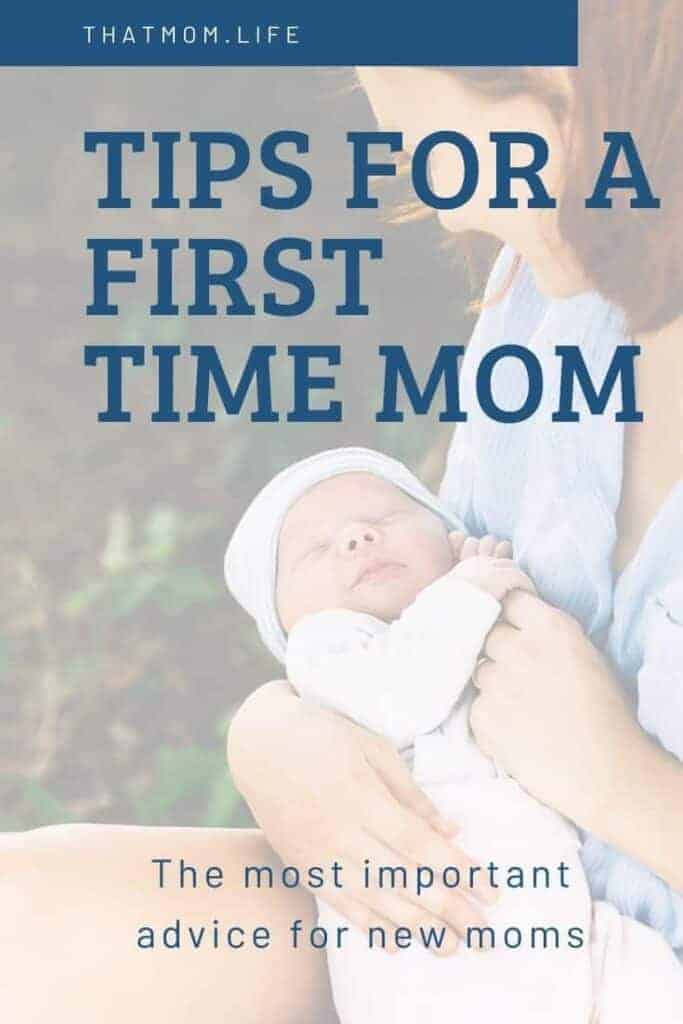
    Top 5 pieces of advice for new mamas

    Vocalize your accomplishments

    One of the best things I did as a new mom was tell myself something I did well every single day for the first few months. Sometimes I was literally like “I made time to brush my teeth today!! Whoop!” and sometimes it was a little more deep. I had to talk myself up because after the first few weeks of maternity leave, there wasn’t that constant support of people cheering you on or lending a helping hand. **And I FULLY recognize that many people don’t even have that. If that rings true to you, and you’re still keeping on with a smile on your face then you are a better mom than I am….I don’t know what I would do without the help that I have–so you all are the real rockstars**

    Take a freaking shower and a nap

    Seriously. Let someone hold the baby for a few minutes or bring the little baby bouncer and stick it on the floor in the bathroom while you shower (we love the BABYBJORN bouncer for it’s slim footprint and portability). Let the sink sit full of dirty dishes while you take a nap. I know it’s hard. You feel like you have to do all the things, but you don’t. And the people that care about you won’t give two ❤️ about the way your house looks.

     Accept that you’re going to hate your significant other for a while

    I’m talking loathe. Like you’ll be nursing at night, while staring at your sleeping partner, and be secretly plotting how to suffocate them with your pillow. It’s NORMAL. It’s hormones. I mean unless you actually hate your significant other, that’s a whole different story. Express your feelings to other mamas and I can guarantee they will chime in with all the ways they have plotted the death of their loved one. It passes. Mostly. I advise you pick up a book called How Not to Hate Your Husband After Kids— it’s a game changer.

    Don’t feel guilty about being constantly annoyed at your pet

    This is one you may not have heard but it happens (and I know other moms who have experienced this). You just have such little capacity to be touched or needed from anyone other than your little one. Your dog being underfoot in the kitchen when you’re trying to make a simple meal for yourself (maybe your only meal of the day), or needing to go out right when you have just sat down after standing and rocking the baby for an hour, or barking and waking you up JUST as you’re falling asleep for a nap (and you know you only have 45 minutes or less before baby wakes up). All these things can drive you up the wall. Again, normal. Give yourself some grace and ask for help in caring for anything and everything that isn’t your new baby.

     Recognize signs of PPA and PPD

    This is a big one. I see so many mamas posting stuff in moms groups that screams that they are dealing with postpartum anxiety or depression. It’s so common and there are so many ways it can present itself. For example, with my first I started using an app to track all his feedings, and diapers, and sleep. I remember sitting up at night nursing him while simultaneously trying to type information into this app. It was ridiculous. I should have been enjoying my baby and observing him for cues and instead I was hyper focused on getting it all down to a science. It wasn’t until a friend mentioned that she had to stop using the tracker because it was giving her anxiety that I realized, holy ❤️ this is causing way more anxiety than it should be. My advice is to RELAX and observe your baby–follow their cues. You will KNOW when your baby is hungry, you don’t need an app to tell you that. Here’s the thing. If you find it hard to relax about anything, then you need to talk to your doctor. Some of it is just first time mom nervousness, but when someone points out that you’re driving yourself crazy doing something and you can’t stop even though you know it’s not healthy, that’s a sign you need to speak with your doctor. I struggled with PPA and PPD without recognizing it, even though I was diagnosed with anxiety disorder a long time ago, so please just be aware of your mental health and check in with someone. Keep in mind not all doctors are on board, and some may try to tell you it just baby blues from your hormones (which definitely could be the case), or that you’re just anxious because you’re a mom and that comes with the territory (I actually had a doctor say this….) so make sure you get a second opinion, reach out to other moms, or flat out ask for a referral to a mental health professional if you need to. ALWAYS feel free to reach out to me here or on social media if you need to vent, rant, ask for help, cry, whatever…. I’m here and available to support you.

    Read More

  • 30 Outdoor Activities for Kids

    Importance of outdoor activities for kids

    We know kids should play outside, right? Right….so what are some great outdoor activities for kids of all ages?

    If you need a refresher on WHY they should play outside you can read this article about the ever growing importance of outdoor play.

    Also, check out one of my absolute favorite movements. The 1000 Hours Outside Challenge which was created to counteract the fact that we are loosing approximately 1200 HOURS of childhood to SCREENS. This challenge encourages us to match screen time with outdoor time.

    But outdoor activities for kids are hard…

    Sometimes they would rather sit inside and watch T.V.

    Or it’s raining.

    Maybe it’s too hot.

    Or you don’t have a backyard so you struggle to find outdoor activities that you could easily enjoy.

    Or you love being outside with your kids, but you can’t, for the life of you, think of anything new to try.

    Here is a list of 30 articles that provide some great outdoor activities for kids (even when it’s raining, too hot, too cold…..)

    1. 100 Simple Things to do Outside with Your Kids
    2. 25 Ideas to Get Your Family Active Outside
    3. Nature Activities for Teens
    4. 30 Simple Spring Outdoor Activities for Kids
    5. The Ultimate Gear Guide
    6. How to Hike with Kids and Actually Enjoy It
    7. Nature Walk Must Haves 
    8. 5 Ways Kids Can Experience Science This Summer
    9. 10 Ways to Bring City Kids Closer to Nature
    10. 20 Super Cool Ideas for Backyard Fun for Kids
    11. 5 Adventurous Play Ideas to Conquer Childhood Fear
    12. Getting Started Foraging With Kids
    13. 10 Tips for Exploring Nature with Toddlers and Preschoolers
    14. Environmental Projects for Kids Who Believe in Better
    15. 7 Ways to Encourage Imaginative Play Outdoors
    16. Outdoor Treasure Hunt for Toddlers
    17. Outdoor Color Match Activity 
    18. DIY Stepping Stones
    19. 10 Ways to Tempt Your Kids to Go Outside and Play
    20. Scavenger Hunt Printable
    21. 101 Outdoor Family Bonding Activities 
    22. Craft: Decorating a Walking Stick
    23. DIY Bird Feeder Craft & Bird Watching Tips for Outdoor Fun
    24. A Backyard Camping Trip – The Best Way To Introduce Kids to the Camping Experience!
    25. Gardening with Kids
    26. 5 Things to Bring for a Day in the Park
    27. How to Create a ‘Yes Space’ Outdoors (When You Don’t Have a Yard)
    28. 25+ Water Play Activities For Kids
    29. 9 Must Have Screen-Free Outdoor Toys to Keep Kids Engaged and Learning
    30. How to Get Kids Outside During the School Year

    If you’re looking for more information about the importance of play and tips to reorganize your playroom check out my e-book:

     Simply Play: Everything You Need To Know About The Most Important Part of Childhood which you can buy here for only $4.99.

    If you like this post and want to read more like it then check out these articles:
    Type of Play for Development
    Toy for Toddlers: Encouraging Active Play
    7 Essential Playroom Spaces (and why you need them)
    The Power of Play
    What I’ve Learned about Early Childhood Education

    Read More