parenting

  • Guarding our children’s mental health

    Rise of mental health issues in children

    Did you know that mental health diagnoses among U.S. children increased 30% between 2011 and 2017 alone?

    That is a scary statistic.

    The Centers for Disease Control and Prevention estimates that 20% of children in the U.S. have a mental, emotional or behavioral disorder.

    Signs and symptoms of mental health issues in children

    Our kids are suffering. Often silently, or acting out in ways that we don’t traditionally associated with mental health issues–as symptoms can present differently for children.

    The Mayo Clinic lists the following as some symptoms to look for when thinking about your child’s mental health.

    • Feelings of sadness that lasts more than two weeks
    • Mood swings that cause problems at home or in school
    • Feelings of overwhelming fear for no real reason
    • Drastic changes in behavior or expressions of violence
    • Difficulty sitting still or trouble focusing on a task
    • Poor academic performance
    • Frequent headaches or stomach aches

    Our perceived safety

    Dr. Peter Gray, research professor at Boston College, and author of one of my absolute favorite books, Free to Learn (which should be on your must read list), explains that there are currently “five to eight times as many high school and college students who meet the criteria for a diagnosis of major depression or anxiety.”

    This increase is significant. But we can do something to change the course.

    I often hear parents arguing that things just aren’t as safe as they used to be. But that’s not true. We likely perceive that due to our unprecedented access to news via television and the internet. Where fear mongering headlines come at us from every angle. It’s absolutely understandable that we begin to believe that we are less safe.

    But the fact is, statistically our world has not gotten more dangerous.

    Why the decline in children’s mental health?

    Gray argues that the rise in mental health issues directly correlates with the decline in free and unstructured play, as well as with the rise of the amount of time kids spend in school and on academic work.

    We know that play is how children learn to solve their own problems, where they begin to develop a sense of control of their bodies and their lives, and when they develop an understanding of their own personal interests. Play is also where children are motivated by intrinsic and self-directed goals.

    Kids now are spending more and more time in areas that are directed by adults. More and more time in settings where everything they do is judged, graded, calculated, timed, punished or rewarded and where adults are seemingly responsible for handling every task, keeping them entertained and holding their hand every step of the way.

    This, according to Gray, is one of the main reasons for the rise in mental health issues among children.

    How can we make a change?

    Think about your own views about play? What does it mean to you? How do you interact with your child when they are playing? Is there a way you can let go and allow for more unstructured play?

    Here are a few questions to consider:

    • Do you often find yourself “hovering” or playing “with” your child? Even with toys you don’t personally enjoy?
    • Do you find yourself narrating what your child is doing? Or talking to them about what they are doing while they are in the process of doing it?
    • Do you find yourself jumping in to show them how to do something?
    • Do you have a variety of open ended toys available for your child to play with? (The goal for a toy is 10% toy, and 90% child)
    • Do you let your child play without your direct supervision?
    • How long is your child able to play independently? Do you with they would play more independently or for longer stretches of time?

    Placing more value on play

    If we value our children’s mental health, then we need to work harder as a society, and as individuals, to provide children more opportunities to participate in REAL play.

    Read More

  • 100 Things to do outside with your kids

    100 Things to do outside with your kids

    If you’ve been following my blog at all, you know how much I value kids spending time outside. As parents it is up to us to choose to lead the way.

    Here’s the thing…

    It doesn’t matter if you live on a huge lot of land or have direct access to a state park in order for your kids to experience nature.

    You can live in an urban area, in a suburban area, or in the country.

    Your home can be a house with a yard, or in a condo or apartment surrounded by skyscrapers–it doesn’t matter.

    Just remember that little people don’t need huge spaces. One tree can feel like a forest to them.

    So find that one tree, that little grassy area in the local park, the weeds growing between the sidewalk cracks and make it a priority for your kids to not just “see” nature but to experience it first hand.
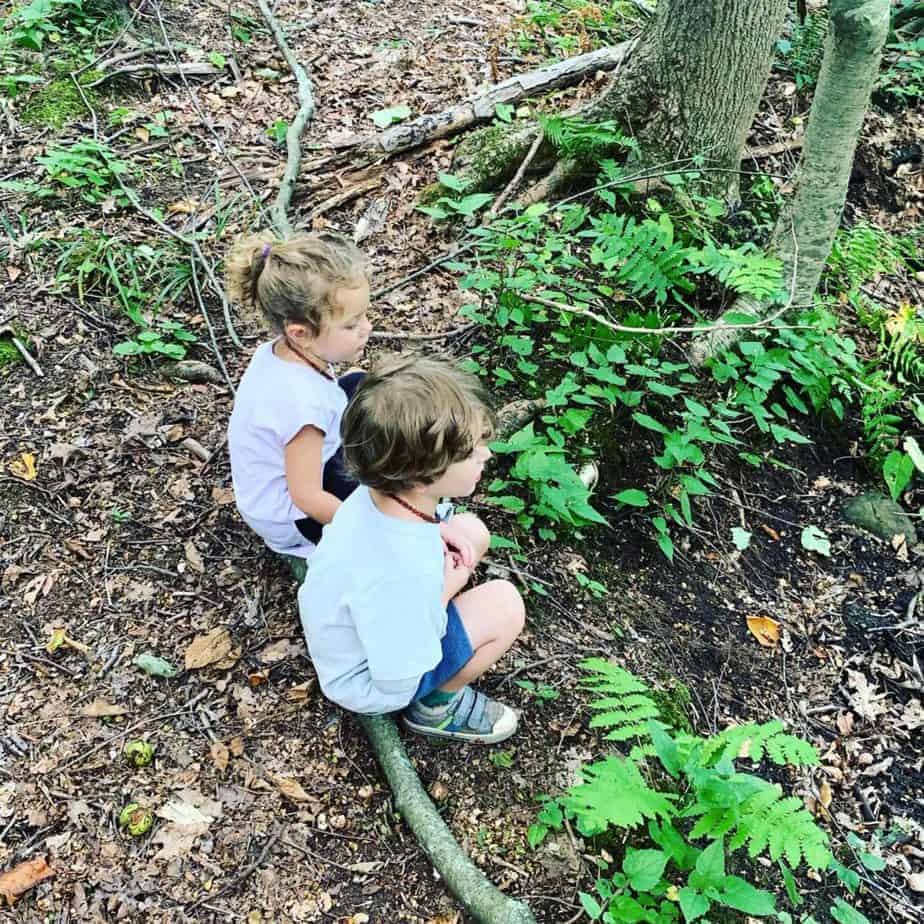
    Here is 100 simple things to do outside with kids

    Most are free or can be done at little cost.

    1.Go for a hike

    2. Spend an afternoon at a playground (sit back and let them play!)

    3. Find a tree to climb in your neighborhood or a nearby park

    4. Have a picnic on the grass, at the beach or find a picnic bench close by

    5. Let baby do some tummy time on a blanket with their hands in the grass

    6. Go for a walk for the purpose of collecting “treasures” (rocks, acorns, pine cones, burrs, twigs, feathers)

    7. Let your little one use their “treasures” to create art

    8. Sign up for a Tinkergarden class

    9. Lay on the grass and watch the clouds (this is a great mindfulness activity)

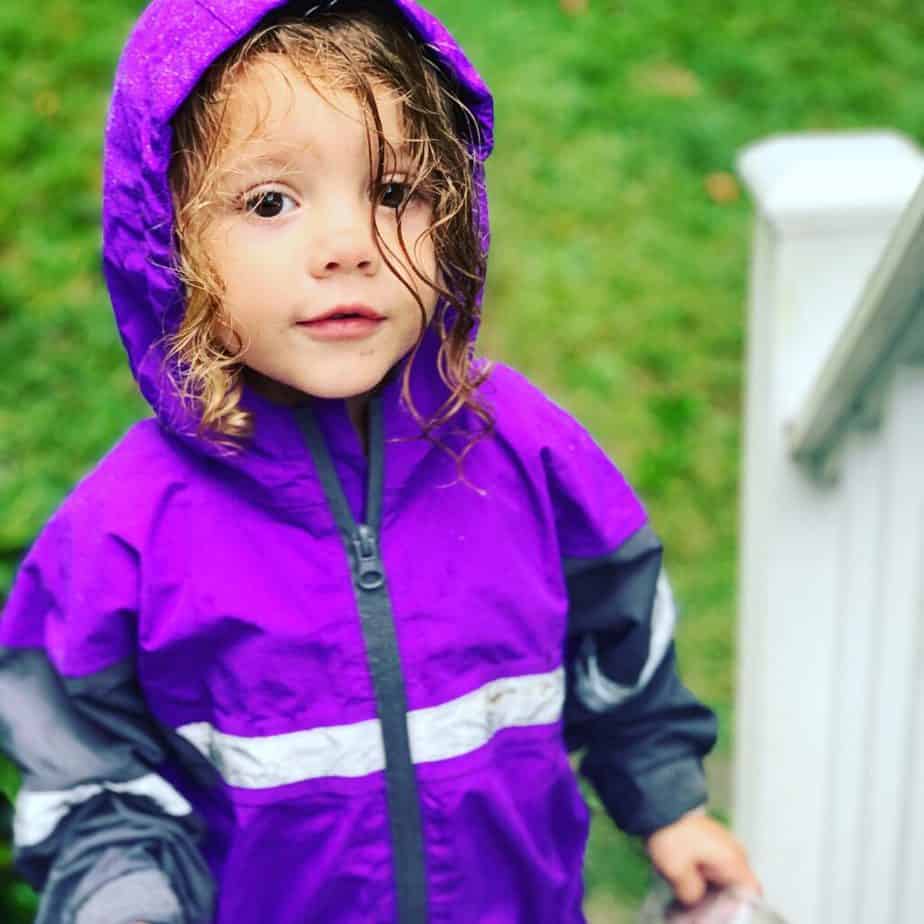
    10. Seek out puddles for splashing

    READ THIS: If you are worried about getting your kids outside in rain or snow then you need to check out this gear guide.
    11. Set up a tent in the backyard for a simple “camping” overnight

    12. Purposely go barefoot in a mud puddle

    13. Collect berries, leaves and fallen pedals or leaves and make “soup” (just bring any old pot and wooden spoon outside with a little water–you’ll be surprised at how long this entertains kids)

    14. Roll down a grassy hill

    15. Sit outside at night and listen for sounds. Talk about the sounds and what kinds of animals come out at night.

    16. Draw in the dirt with a stick

    17. Go on a scavenger hunt looking for specific things–things that start with a specific letter or things that are a specific color

    18. Use binoculars to bird watch

    19. Skip rocks in the ocean, lake or stream

    20. Build a fort outside (either with natural materials or bring some blankets and pillows out if you aren’t feeling as adventurous)

    21. Paint magic sticks (find a large stick, let the kids paint it and decorate it any way they want)

    22. cGarden (plant wildflowers, easy to grow veggies, let your kids weed)–we love this real garden set for our kids

    23. Go outside and see if you can figure out the direction of the wind

    24. Go outside during the different seasons and make a list of what makes each season (have them describe what they see, smell, feel, hear)

    25. Set up a tent outside, no need to sleep there just use it as an invitation to play

    26. Make a bird feeder

    27. Catch rain drops in your mouth

    28. Go to a local farm to learn about the farm animals

    29. Take a few of your favorite books outside and read on a blanket

    30. Collect rocks and use them to build something

    31. Eat a meal outside

    32. Go for a walk and just talk about what you see

    33. Go for a clean up walk and use sticks to pick up litter

    34. Throw rocks into a river to see how big the splash can be (find rocks of all different sizes, make guesses on how big the splash will be, throw the rocks in and talk about the outcome)

    35. Have your child do school work outside (even just bringing their computer and sitting on a blanket or in a chair outside is a simple way to reconnect with nature)

    36. Go outside when it’s super cold and take a few deep breaths–talk about how it feels to breath cold air (you can also do this when it’s humid out)

    37. Visit a nearby mountain or nature preserve

    38. Go for a walk around your neighborhood in the rain (you close enough to home so getting wet isn’t a big deal)

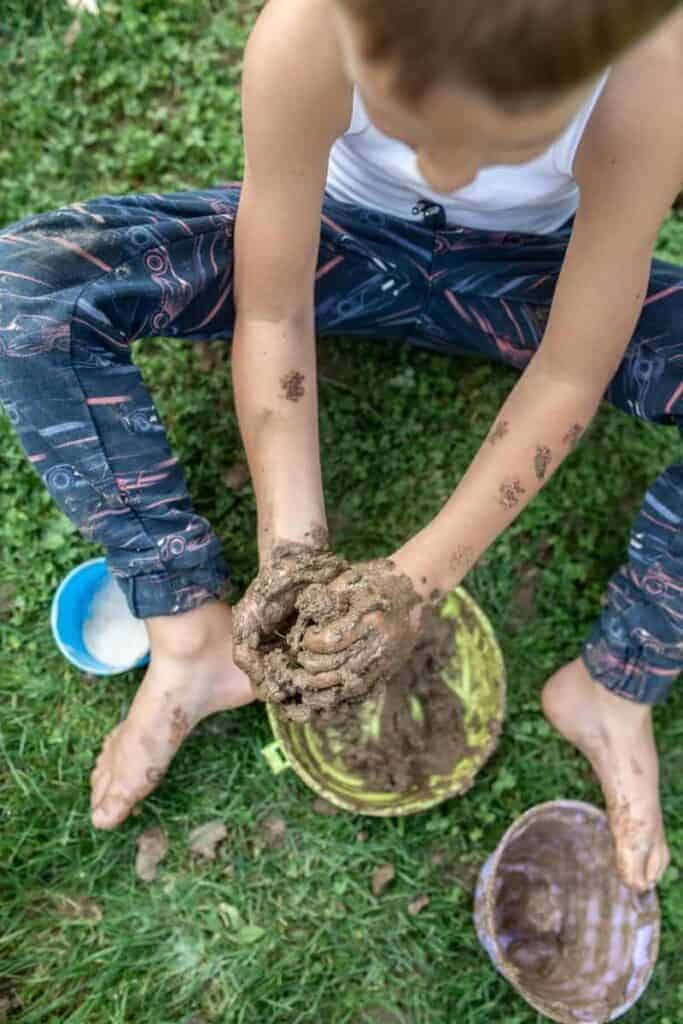
    39. Make mud pies

    40. Use sidewalk chalk to draw outside
    41. Paint rocks

    42. Play in a creek

    43. Walk or bike to a destination nearby versus taking a car

    44. Collect bugs

    45. Help rake leaves

    46. Make a pile of leaves and roll around in the pile (then rake them back up!)

    47. Help shovel snow

    48. Play hide and seek outside

    49. Finger paint using mud

    50. Make bark or leaf rubbings (put paper over tree bark or leaves, use crayons to rub the paper leaving the markings of the leaf or bark)
    51. Go outside to look for butterflies, bumblebees, dragonflies

    52. Hunt for rocks with moss (my kids love moss!)

    53. Find fallen logs or big rocks to climb

    54. Make a collection of different colored leaves (see how many they can find)

    55. Bring a sensory bin outside and fill it with water or dirt

    56.  Build a snowman or make a snow angel

    57. Go sledding (even if it’s only a small hill!)

    58. Look for wild berries and use them to make “magic potion” (don’t let them eat unless you are certain the berries are edible)

    59. Ride a bike or a scooter somewhere local

    60. Make a flower crown
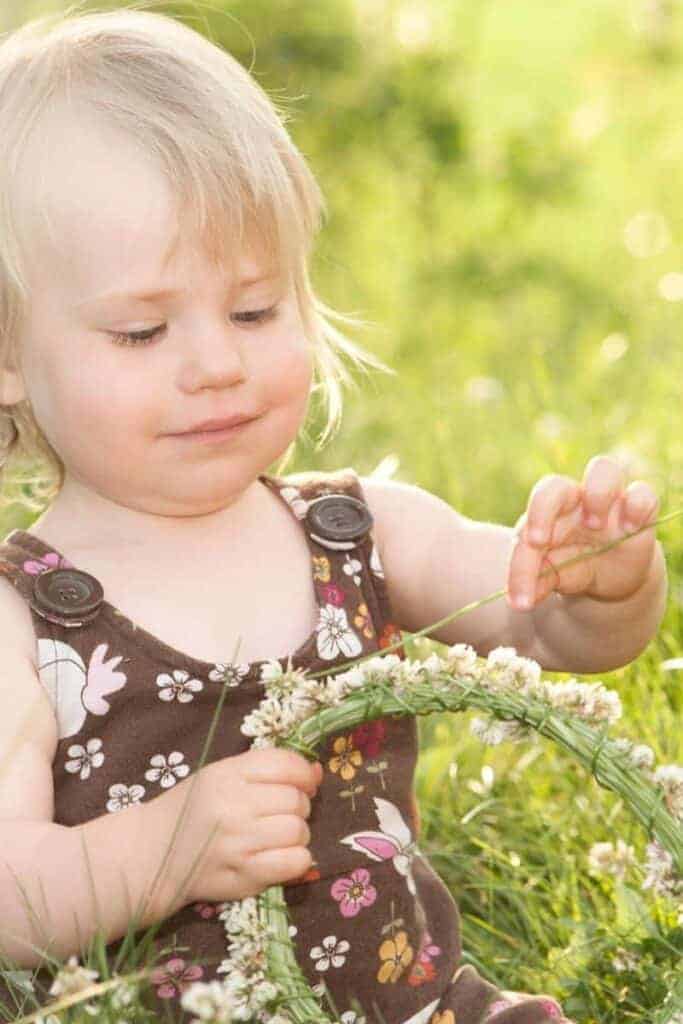
    61. Make a nature tic tac toe board with four long sticks–use pine cones, acorns or rocks as the pieces

    62. Use a magnifying glass to identify bugs

    63. Wash toys–bring a bucket of soapy water and a sponge outside and let the kids wash toys (and whatever else they can find)

    64. Fly a kite

    65. Play tag

    66. Play catch or kick a soccer ball around

    67. Go for a swim

    68. Build a backyard fire (make sure to do this safely!)

    69. Fill some water cans and water plants

    70.  Build a fairy house with anything you can collect outside
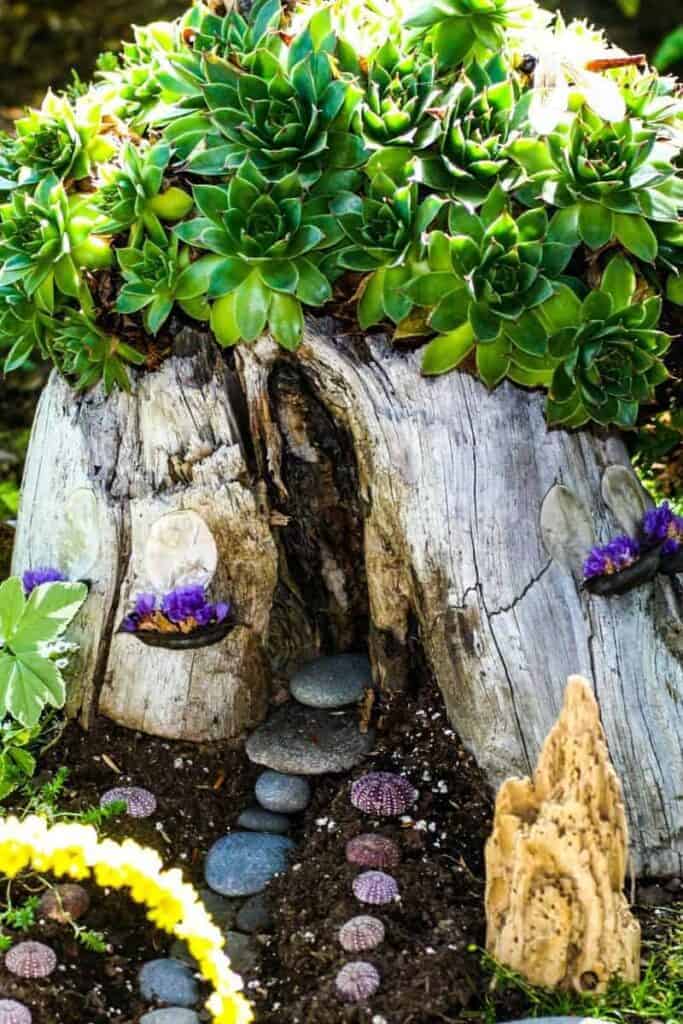
    71. Go to the beach and build a sandcastle

    72. Star gaze and talk about constellations

    73. Look for large rocks or logs to lift up and see what’s underneath

    74. Dig a hole and bury some treasures (anything small like acorns, leaves, small rocks)

    75. Make a leaf boat with large green leaves and sticks–set them to sail on a river or even in your sink

    76. Pick flowers and practice arranging them in a vase

    77. Catch fireflies

    78. Build an obstacle course with natural elements (rocks, logs, trees)

    79. Make a DIY pulley system–throw a rope over a tree branch or post and tie it to a bucket. See how much they can pile into the bucket

    80. Flatten a cardboard box and use it to slide down a hill
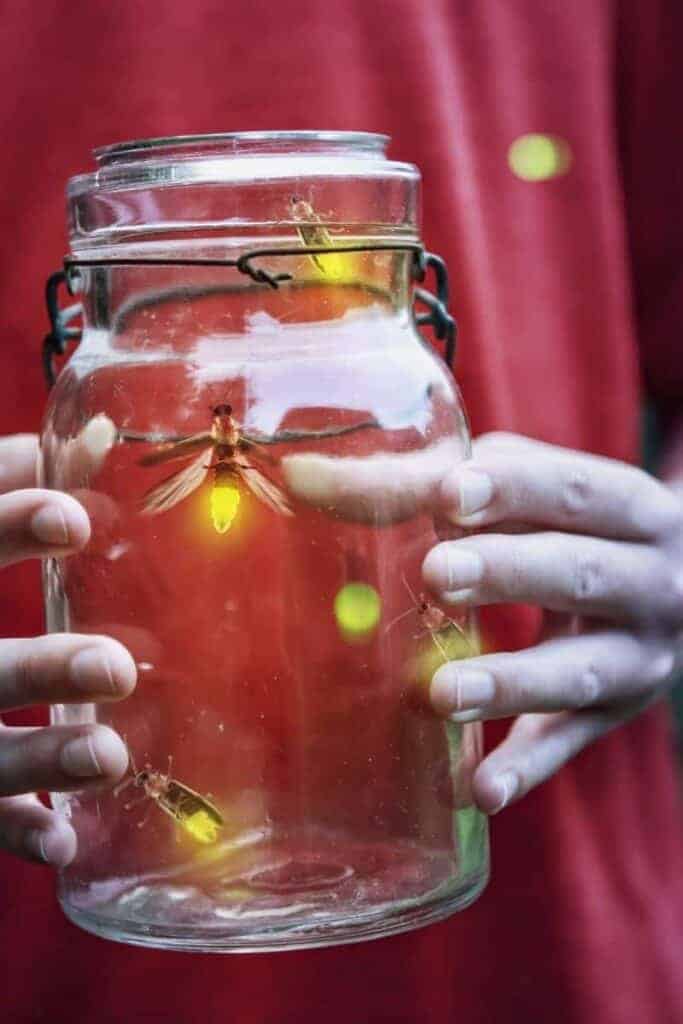
    81. Examine an ant hill with a magnifying glass

    82. Find a Free Forest School nearby

    83. Make or buy a mud kitchen (we love ours from Etsy)

    84. Visit a local farmer’s market

    85. Take a nap outside (in a hammock, on a trampoline, in a lounge chair, on a blanket)

    86. Take some pots and pans outside to use as drums

    87. Make a mandala out of leaves, sticks and pebbles

    88. Bring paint or crayons and paper outside and use nature to inspire art

    89. Collect different natural materials in mason jars and see if you can guess what they are by smelling them–(try fresh cut grass, lilacs, dirt, mint) close the lid and leave out in the sun for a little while to help maximize the smells

    90. Lay on the ground and listen to sounds–try to make a list of all the sounds you hear

    91. Dig for worms

    92. Go for a walk at night and “chase the moon”–just allow your little one to follow the moon and see where it leads you

    93. Make a nature collage

    94. Paint your driveway with washable paint using your hands and feet

    95. Run through a sprinkler

    96. Practice cutting grass or weeds with scissors

    97. Harvest garden veggies or fruits (help pick and put into a basket)

    98. Find a local place to pick apples, pumpkins, berries

    99. Plan a camping or “glamping” vacation.

    100. Let your little one take you on an adventure outside–just let them lead the way
    If you’re looking for more information about the importance of play and tips to reorganize your playroom check out my e-book:

     Simply Play: Everything You Need To Know About The Most Important Part of Childhood which you can buy here for only $4.99.

    If you like this post and want to read more like it then check out these articles:
    The Ultimate Outdoor Gear Guide
    The Ever Growing Importance of Outdoor Play
    Type of Play for Development
    Toy for Toddlers: Encouraging Active Play
    7 Essential Playroom Spaces (and why you need them)
    The Power of Play
    What I’ve Learned about Early Childhood Education

    Read More

  • Newborn Checklist Simplified

    Being a new mom is one of the most overwhelming things you’ll ever experience. But preparing yourself for the journey doesn’t have to be. Babies NEED very few things and the best advice I can give you is to find someone whose parenting style you admire, and ask them what they found helpful and what they could have done without. You can always pop on Amazon or send someone to Bed Bath and Beyond for a “nice to have” so don’t stress about having all of it because more stuff doesn’t make things easier–more stuff makes things more overwhelming.

    Here is my list of MUST HAVES as well as a few NICE TO HAVES (and even a few things you absolutely don’t need.)

    New born Must Haves

    Feeding

    For breastfeeding: This is one thing you NEED to prepare for to set yourself up for success. Breastfeeding is natural but it doesn’t come naturally. It’s hard at first, especially if you don’t have support. So getting your thoughts around what it’s going to take, having all the essentials, and knowing how to get help is crucial to success. Make sure you check out your local La Leche League and often hospitals will have a lactation consultant on staff. Don’t be afraid to ask for help. 

    The Haakaa: this amazing little silicone breastmilk collector will be your best friend. Seriously. You literally just suction it to one side and while you nurse on the other side it collects the milk that is let down during the process. It’s incredibly helpful to have on hand for when your milk comes in (which isn’t until day 3 or 4 post partum). You can get super engorged and it can painful AF (like I didn’t take any meds after delivery but HAD to take something when my milk came in). The goal is to get milk out to lessen the pain BUT you don’t want to pump because that will just tell your body to make more milk. In comes the Haakaa–it doesn’t actively pump milk out so it will allow for your boob to drain just enough milk to make you comfortable without making engorgment worse.

    Manual breast pump: Yes, you should have an electric pump (I love the Spectra2 over the Medela for many reasons–see if your insurance covers a pump and go from there). But you also NEED a manual pump. It’s so much easier to sit and pump a few ounces of milk if needed vs hooking up to an electric pump. It’s also helpful for engorgement if you need to relieve the pressure and the Haakaa isn’t getting enough out and you’re still uncomfortable. Manual pumps are often a lot more effective than electric pumps–but nothing is more effective than a baby (so don’t freak out about how much you pump and think you’re not making enough milk!)

    A nursing pillow: A ton of people recommend that Boppy. I’m going to tell you the boppy is NOTHING compare to a pillow called My Brest Friend. The boppy is great for tummy time and for generally having a pillow to rest on while you (or someone else) holds baby BUT it is not the best for actually breastfeeding. My Brest Friend clips around your waist and can actually support baby while you walk around (you’ll appreciate this feature, I promise). It is more structured so it helps position your arms and therefore baby much better than the boppy, and it has a little holder in the front for nipple cream, nursing pads or whatever else you think you need to keep close while nursing.

    Nipple Cream: Have lots of this on hand–it’s better to have it and not need it than to need it and not have it. I like this one by Earth Mama and this one by Motherlove. I prefer not to use lanolin. Also, have your doctor call in a prescription for APNO (all purpose nipple ointment) because this is something that’s better to have just in case. Your OBGYN or midwife should know what this is and where to call it in for you.

    For some great breast feeding tips check out this article.

    For bottle feeding: I would highly recommend you use glass or stainless steel bottles. Even BPA free plastic is not ideal, especially if you are using it for warm liquid. I like the Pura Kiki stainless steel bottles and the Dr. Browns glass ones.

    You do NOT need a bottle warmer…

    Cleaning and drying bottles (and beyond): Having a dedicated place for bottles and eventually cups is a nice to have, and a bottle brush is a must. I love this one by OXO–it has lasted us through three kids and is still going strong and used every day for holding cups, reusable straws and pouches.

    Burp cloths: I mean regardless you’ll probably get baby spit up pretty much everywhere but on the actual burp cloth, that said, it’s good to have a few for good measure. These are the only ones we have and I love them. They are super absorbent, big and drape nicely over your shoulder.

    Sleeping

    My first piece of advice is to do some reading about infant sleep PRIOR to having baby. You will have way more time now then you do once baby arrives AND it will give you time to process and prepare to help set your little one up for healthy sleep habits from day one. There is a science to sleep and knowing a little about that can help you in the long run. A good book to have on hand for baby’s first year is The Science of Mom by Alice Green CallahanBassinet, Crib, or Playard: I am obsessed with the Halo Bassinet. It swivels to basically rest on your bed, you can gently rock baby to sleep by literally jiggling the bassinet with one finger, it has a built in little light which makes feeding and changing in the middle of the night super easy–it’s awesome. If you would rather a multi function playard I would stay away from the pack and play–I hate them. They are heavy, bulky and a pain to open. I would get either the 4Moms version (if you want to use for very small infants because it has a bassinet space) or the Guava family Lotus which is made from all non-toxic materials. We kept our babies in our room for a little while and then moved them to a crib (Pottery Barn is my go to for all things kids furniture).

    Swaddle: Babies have spent the past nine months squished up in a warm dark space with limited mobility. Then they come into the world and it’s overwhelming AF. They crave closeness and the security of pressure. Hence the swaddle. You should have two types of swaddles. Some babies like arms in and some like arms up. Some people say their baby hated being swaddled but it’s often because they just wanted to have their arms up. The Woombie is hands down the best swaddle for arms in. Don’t even bother with anything else. No velcro, no wrapping. Just put baby in and zip that straight jacket up. It unzips from the bottom to make night time changes easier (yes you should keep them swaddled while you change and feed–this will make it easier for them to fall back to sleep afterwards). If you find that baby is really trying to get their hands by their face, then they may prefer hands up. We will only use the Love to Dream–it allows baby to have “access” to their face but still stops their moro reflex (a big reason why babies have a hard time sleeping if not swaddled)

    Playing

    Babies don’t really need toys. The best thing you can do is to carry your baby in a wrap or carrier to allow them to feel day to day motion and see things around you. Keep in mind that little babies are very quick to become overstimulated which can lead to sleep issues. Narrate everything you’re doing during the day. Lay them on a flat surface for them to begin exploring their body and own movements. We love the DockaTot for lounging, our Ruggish play rug for a soft place to put baby down.

    In general I try to stay away from stuff that contains babies–but it is nice to have one spot to put them aside from the floor. We got rid of every single “bouncy seat” except for the Baby Bjorn mesh bouncer and toy bar. I like this because it’s soft enough to not cause a flat spot and is super easy to move around–I would often shower with this in the bathroom and could move it one handed with ease.

    You do not need exosaucers, bumbos, walkers, sit me ups or ANY type of thing that puts babies in an unnatural position (a position they can’t get into themselves). Being in these types of gadgets hinders development, costs extra money and take up tons of space. The best thing for your baby to develop properly is to be worn and to be on the floor. Learning to sit, crawl, walk…it ALL starts from the floor.

    Play gym: I love wooden toys for many reasons and this Haba one is beautiful, or this one from Plan Toys, I also love this one by Skip Hop.

    Teething toys:

    Grasping toys:

    Rattles:

    Traveling

    Infant car seat and Stroller: We love our Uppababy Cruz stroller and have used the Mesa car seat and the Nuna Pipa infant seat. I prefer the Pipa car seat but it requires an adaptor for the stroller–both of which can be purchased at Nordstrom. We also found having the infant insert for the stroller was helpful so we could lay the seat all the way back and use the insert vs having to buy the bassinet attachment. Ideally you don’t want baby in the car seat more than they need to be, so being able to use the stroller in multiple ways was great.

    Carrier: The more you can avoid having baby in a “container” like the car seat, stroller, bouncy seat, the better for their development. So having a carrier is crucial to being able to hold them but still be hands free. I have a Tula, an Ergo 360, a Sakura Bloom ring sling, a K’tan and a Lillebaby. So I’m pretty well versed in carriers. If you are new to carrying babies, I would recommend the K’tan for the early months, because it’s a wrap without actually having to wrap. Then I would suggest the Lillebaby as a soft shell carrier for when baby is a few months and big enough for the carrier. I would NOT recommend the Baby Bjorn–it does not position baby in the best way, the wider base of the Tula, Ergo and Lillebaby are preferred and I found the Lillebaby to be the most comfortable for myself and for my husband.

    Diapering

    Diapers: If you choose to use disposable diapers please consider using diapers that are made from more sustainable materials and are more biodegradable than traditional disposable diapers. Each diaper you use takes 500 plus years to biodegrade–you’ll use hundreds, possibly thousands of diapers while diapering your kid(s). And if you’re even remotely interested in cloth diapering (it’s not your grandma’s cloth) read this and feel free to reach out with any questions.


    You do NOT need a diaper pail or those little baggies to tie up each individual diaper. Please save the plastic, your planet will thank you.

    Wipes: You need these. Lots of these. People love the Water Wipes but I felt they just pushed poop around–maybe it’s just me. I actually love the wipes from Costco because they are thicker (we mostly use these for on the go) and we make our own for around the house.

    Bum cream: We never had any real diaper rash with any of my kids (one benefit of using cloth) but I pretty regularly use the Natural Boudreaux’s Butt Paste to keep them nice and moisturized.

    Bath and Body:

    Medicine Cabinet:

    For a list of other medicine cabinet must haves you can read this article.

    Read More

  • Top 10 Natural Medicine Cabinet Must Haves

    Fall is here and that means sickness season is back in full swing. As much as we try to keep our kids healthy during cold and flu season it’s inevitable that they will get sick at some point. Below are my top 10 must haves for your medicine cabinet.

    Top 10 Natural Cold and Flu Must Haves

    Elderberry syrup: This is something we try to give the kids daily–as often as we can remember. You can read all about it here. It’s an amazing immune boost, very simple to make (if you choose) and PROVEN to help the body fight cold and flu. If you want to buy it I would recommend this one.

    Dye and alcohol free pain medication: Dye and alcohol are two things kids just don’t need. So when you feel like they need medication choose something that doesn’t contain unnecessary ingredients. For acetaminophen I like Little Remedies and for ibuprofen I get the berry Motrin. Acetaminophen last 4-6 hours and ibuprofen last 6-8 hours. Make sure you only use ibuprofen (the active ingredient in Motrin) for children over 6 months of age. Also, always consult with your pediatrician before giving any medication to your little one.

    Chest rubMaty’s chest rub is my go to because it’s made with all natural ingredients vs the standard Vick’s. We use this on the chest and throat, and also the feet (and then cover with socks).

    Snot sucker: You can either get the popular Nose Frieda (I can’t handle that–too much of a gag reflex) or my favorite the OCCObaby I like the OCCOBaby because it’s battery operated so I don’t have to actually suck out snot and it does seem to get way more gunk out than the Nose Frieda.

    Saline nasal spray: I recommend getting the value pack! This stuff isn’t just for congestion. It’s amazing for coughs too. It helps move everything along. Our pediatrician recommended doing it 5-6 times per day during a virus that presented with a nasty cough. I thought it was excessive but it worked! We usually spray this stuff, wait a few seconds and then do our snot sucker.

    Stomach remedies: Ginger tea, probiotics and Activated charcoal!! All these are medicine cabinet necessities. Stomach viruses are my biggest fear. And it’s almost inevitable that someone (and likely all of you) will come down with a stomach virus during sick season. They are SO ridiculously contagious and just literally the devil.  Ginger tea helps calm the stomach and is great to give kids if they are having trouble keeping fluids down (add some honey, try it iced if they are wanting something cold–sometimes cold drinks are best when the stomach is upset). Probiotics help bump up the good bacteria in your gut to help fight the bad stomach viruses/bacteria making you sick. I do like Mary Ruth’s spray but it is pretty expensive so if you are looking for a less expensive option try this one. Activated charcoal may absorb the bacteria or virus that is causing stomach issues .

    Sore throat relief: Propolis Throat spray for dry cough and sore throats or good old honey–especially if you have Manuka honey–are my go to things for sore throats. I also make my kids a “medicine water” that is 2-3 ounces of hot water, a pinch of cinnamon and a big squeeze of honey. They love it and it helps soothe their sore throats.

    Ear infection relief: Ear infections are often caused by viruses and thus will not respond to antibiotics (antibiotics are strictly for treating bacterial infections). The standard of care USED to be to automatically prescribe antibiotics for ear infections but it not anymore because we are over medicating and developing resistance. Often times ear infections go away “after antibiotics” because they would have gone away anyways on their own. Remember it takes a few days for antibiotics to work, and it takes a few days for the body to natural fight off viruses….That said, Garlic drops for ear pain and infection will go a long way to speed up the process. We also use a warm compress on the ear and take the kids to the chiropractor (no they don’t adjust their necks….).

    Epsom salt: Baths are so relaxing for kids (and adults!). I love to give the kids baths to help them relax, if they are having a hard time going to the bathroom, if they are sick or cranky. Really warm water is an amazing–and underrated–healing treatment. Epsom salt helps rid the body of toxins and relaxes muscles. I love Dr. Teals for myself and they have a kids version that is made with lavender essential oil to help soothe and promote sleep.

    Magnesium: Getting good sleep is one of the BEST ways to allow your body to fight illness. Most of us are lacking magnesium so we give a magnesium gummy and if they are having trouble sleeping or feeling sick we also use magnesium lotion.

    Other medicine cabinet favorites (that aren’t necessarily cold and flu related)

    “Antibiotic” cream made from Manuka honey–great for cuts, scrapes, burns, and splinters.

    PATCH Bamboo bandaids— bandaids made from a natural material that are compostable and biodegradable. I love that they have multiple versions based on the type of boo boo you’re dealing with.

    Read More

  • Nature inspired art created by Matthew Gallo


    Written By Matthew Gallo

    I have been painting, drawing, sketching, doodling, scratching, and scribbling since before I can remember.  Some of the earliest pieces I created as a young artist were heavily inspired by nature and history–my dad likes to brag that I was three and drawing dogs with detailed fur.  Still to this day, two of my favorite places are The Bronx Zoo and The Museum of Natural History in NYC.

    As I grew older my artistic inspirations shifted to subjects like sci-fi and fantasy (5/4 is a holiday in my heart), ancient history, folklore, and anthropology.  I quickly fell in love with the field of illustration. The fact that a single image can tell a complex story mesmerized me. So as a youthful teenager I knew that this was what I wanted to do with my life…

    …So I went to college and received a degree in illustration and design.  Unfortunately, not only did I graduate with a degree in a field that is ridiculously competitive with no income stability, I graduated in 2006, more or less on the eve of one of the greatest financial collapses of our time.  When companies and employers are forced to tighten their belts, by several notches in this case, art is typically the first thing to get axed from the budget.

    Things were tough going. I was commissioned for odd jobs here and there, but nothing steady. In other words, art and illustration was a pretty good side gig for a while, but wasn’t enough. I was an adult now, doing adult things like getting married and growing a family (one wife, three kids, two dogs and counting at this point), and I decided that a career shift was in order.

    So I did what needed to be done, sold my soul and started working in the finance and insurance industry.  Even though I’m a creative, I actually have a great mind for numbers and statistics. However, no matter what I do for a living nothing will soothe the itch that a natural artist feels when thoughts and ideas need to be put on paper.  After what seemed like a very long time, I started painting again…this time for my children.

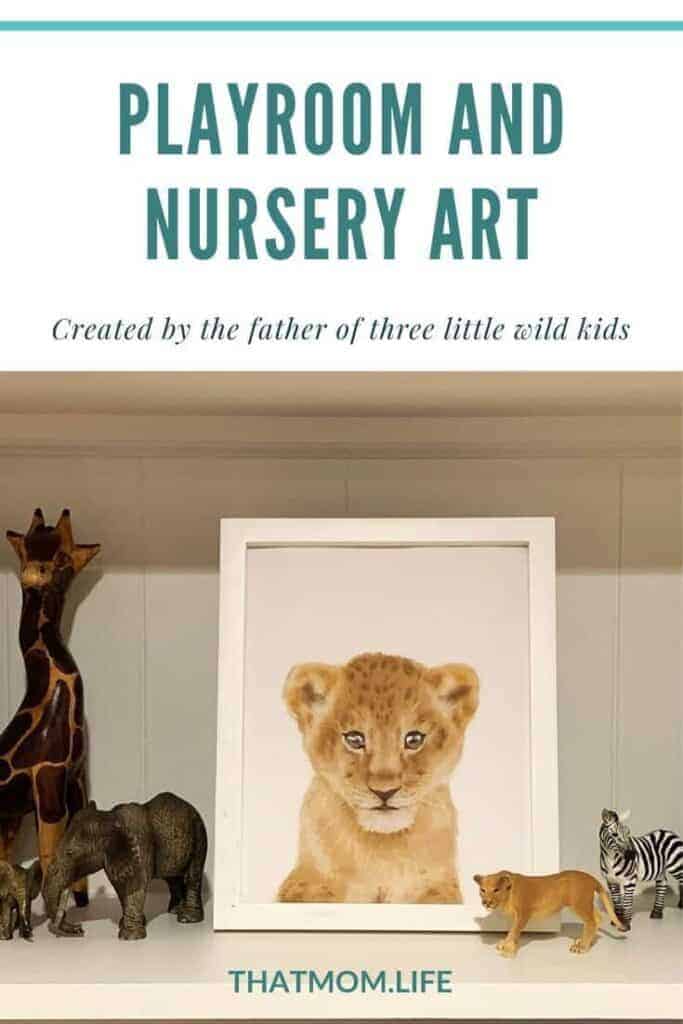
    My children inspire me every day.  I am so thankful to have children that want to be outside exploring and adventuring regardless of the temperature or the weather.  They are fascinated by the natural world that surrounds them. This has re-energized me and sparked the young artist from my youth to create nursery and playroom art that is a natural extension of our parenting philosophy.

    I hope that these images inspire curiosity and encourage your little ones to develop a deep love and appreciation of our natural surroundings.

    Matt

    Visit ThatMomLifeStudio on Etsy.

    Read More