play

  • 10 Must Have Art Supplies for Kids
    Importance of Art for Kids

    With the shift towards academics in the early years and the rise of Pinterest worthy crafts, moms often feel they have to be setting up elaborate projects or doing worksheets. Neither of which are really all that helpful in early childhood.

    Children need freedom to create. They need to get messy. Mix colors. Smash play dough. All the things.

    Providing them with a variety art supplies and letting them lead the way is the best way to foster creativity. And not to mention take the pressure off of yourself!

    You can present them with inspiration and even lay out specific materials for them to use, but try not to have an end goal in mind.

    Art is often something that can be weaved into learning of other content areas too, which is a great way to encourage more holistic learning at home.

    10 Must Have Art Supplies for Kids
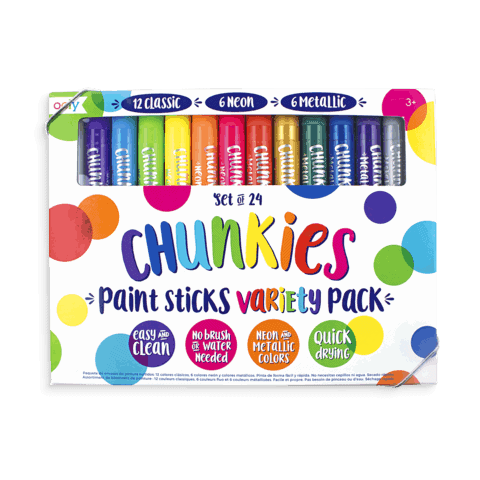
    1. Tempera paint: We love regular tempera paint for finger painting or using traditional paint brushes, but my kids are obsessed with these paint sticks. These Chunkies from Ooly make painting a little less messy for days when you just aren’t up for a full painting extravaganza. Which is most days….
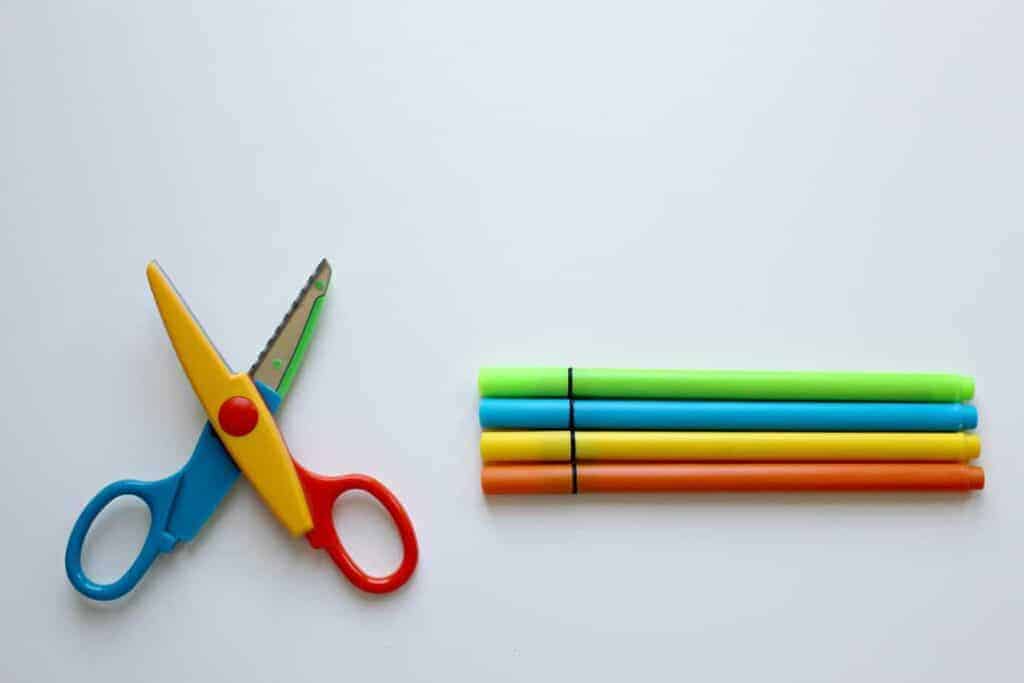
    Scissors: Another great tool for building hand strength, coordination, and fine motor skills. I also love that it offers the chance for a little risk taking. My kids like using these scrapbooking ones.

    Crayons: Crayons are a staple for kids art supplies. We tend to lean towards beeswax crayons for the bold and vibrant colors. They are also more natural than your standard crayon. Our favorites are the Ooly Brilliant Bee Crayons.

    We also recently got these sparkle gel crayons and my kids are OBSESSED. They glide so easily and have a touch of sparkle–so you get the glittery effect, without the glitter….
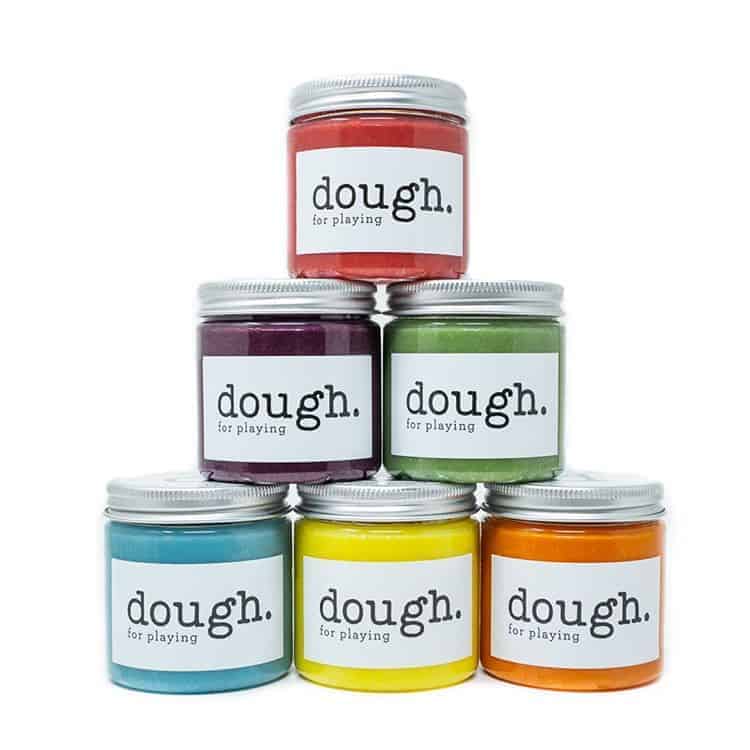
    Play dough: Did you know play dough is an amazing tool for developing hand strength and fine motor skills that are both pre-writing skills?

    Little hands benefit so much from this type of manipulating, moulding, squishing, and rolling.

    Our newest obsession is The Dough Project. You can buy them here. They make 100% all natural play dough out of all non-toxic ingredients. They also have “dough it yourself” kits where they send you all the ingredients, directions and even jars! Hello! This is such an amazing idea for birthday parties.
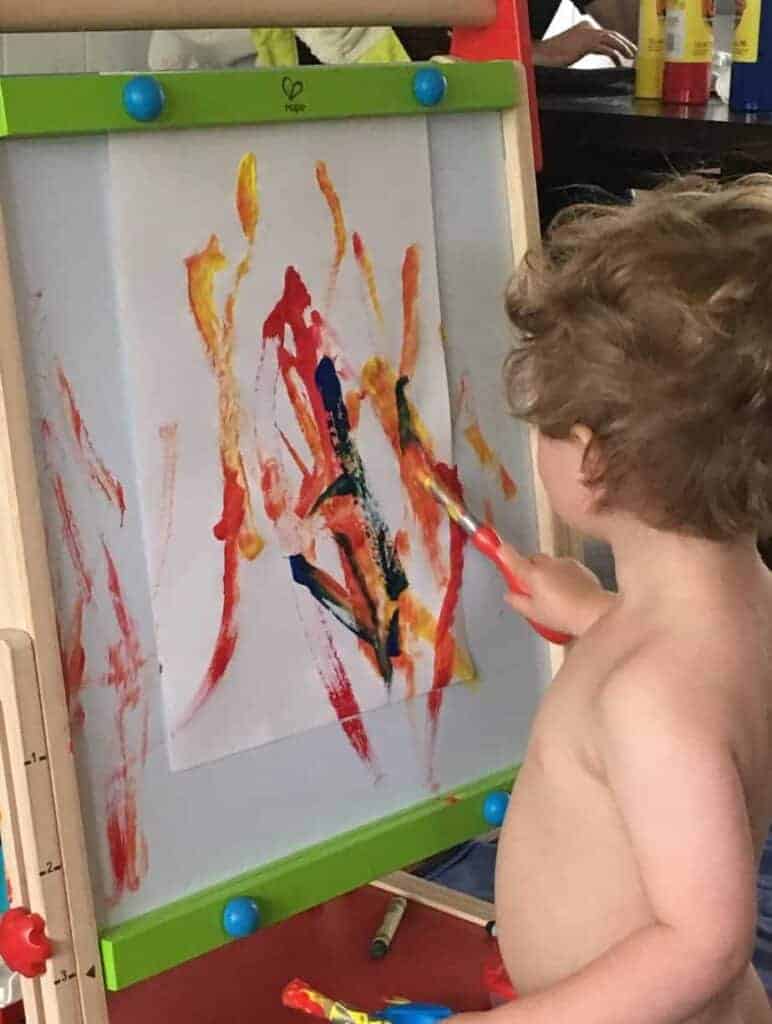
    Easel and paper: I just recently read and shared this great article about how beneficial it is for kids to work on vertical spaces. According to the article, written by a pediatric physical therapist, working on vertical spaces helps with coordination, crossing the midline, pencil grip, posture, core strength among other things.

    We have the Hape easel and typically just buy the Melissa and Doug easel paper and then have their regular drawing paper for table work.
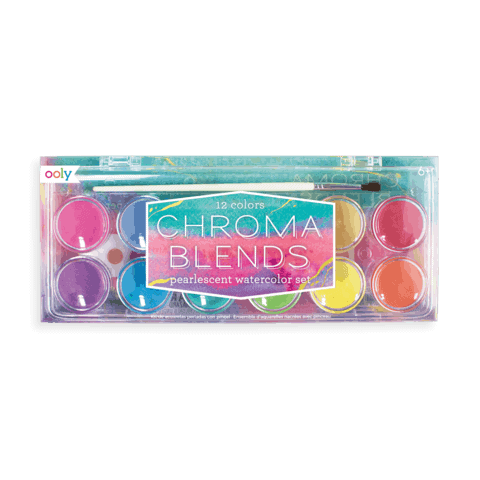
    Watercolors: My kids really enjoy watercolor paints. I don’t know if it’s because it involves dipping something in water or what, but they are very different from “regular” paint and therefore we do like to have both options for them. They will routinely ask to do watercolors and this set is beautiful! I’m blaming this on my artist husband.
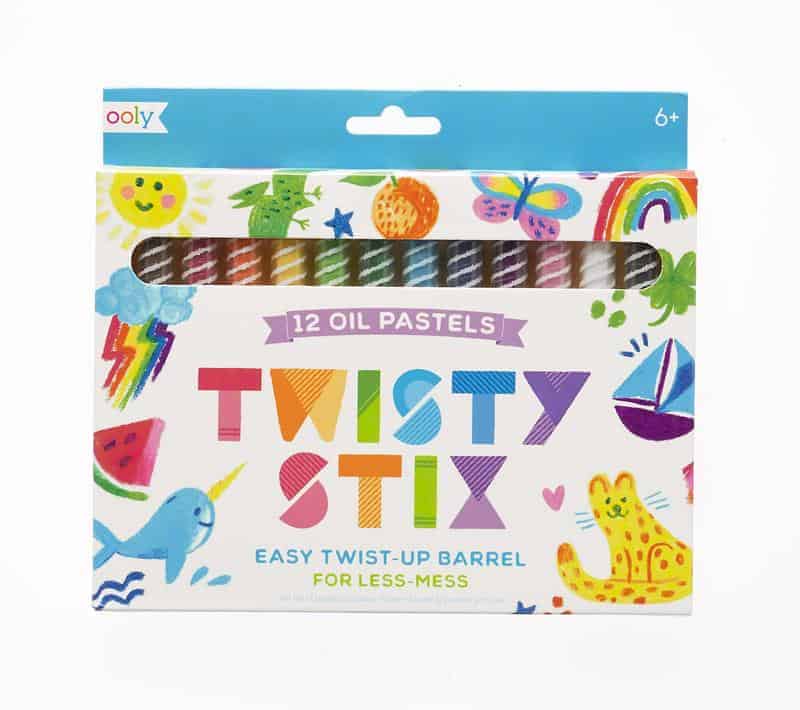
    Oil pastels: Oil pastels are another one of our top kids art supplies. We love these because kids can use their hands to smudge, make finger prints, mix colors and generally get messy creating. They are sort of a mix between painting and drawing. I love the Ooly Twisty Stix because they are much less messy than your average oil pastel.

    Colored pencils: My four year old is really starting to get into learning how to write, and he is working on his “pencil grip” so having colored pencils around is now my go to for when he wants to practice “writing” (I despise markers).
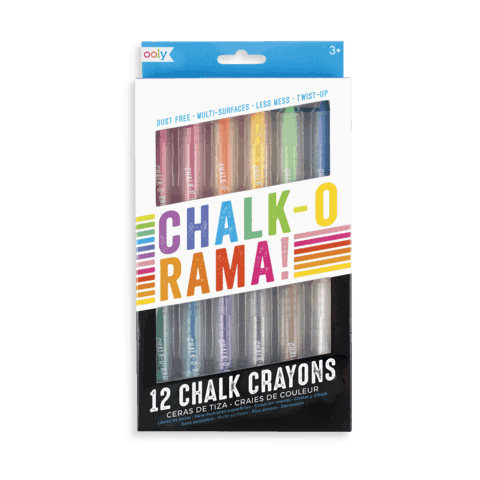
    Dustless Chalk: Chalk is a staple and these Ooly dustless chalk crayons are awesome because you can use them on a chalkboard, glass, wood or whiteboard! Hello versatility!
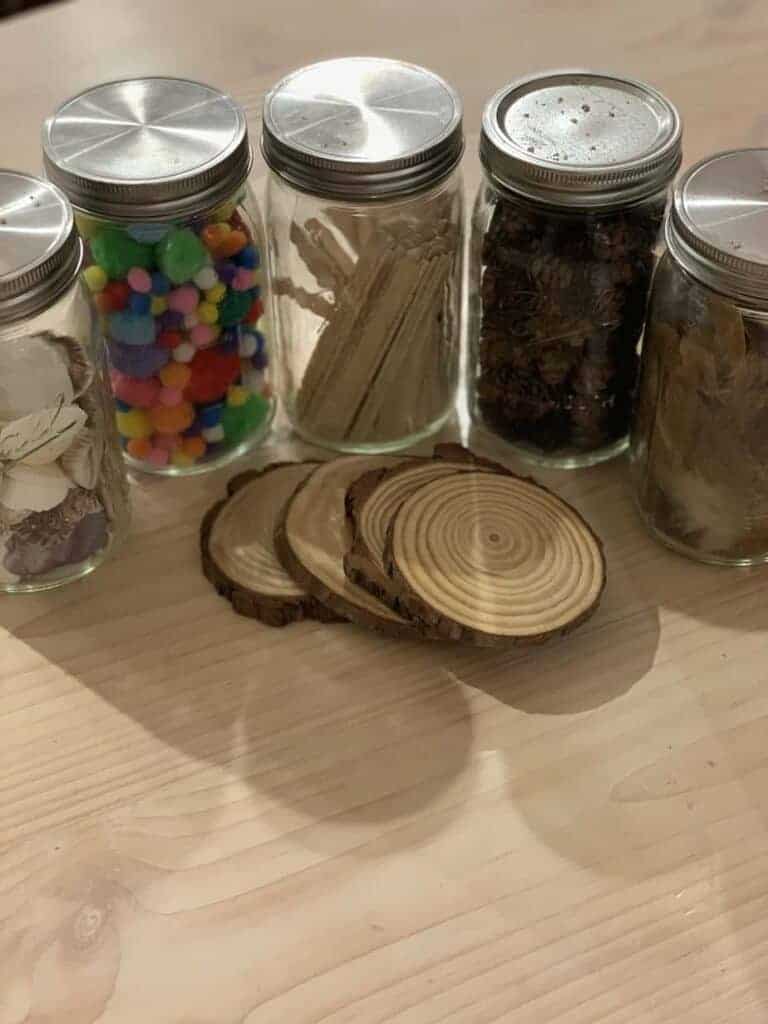
    Loose parts: We have a bunch of different loose parts that the kids use for arts and child led crafts. We have a stack of wood slices that my kids love to paint and glue things to and I have mason jars of the following:

    One day, when I’m feeling brave, I will go live in our art room while my kids are busy creating.

    I typically have to just walk by it and look the other way because it’s full of half completed projects and markers without tops (told you I despise markers and can’t wait to throw them all away).

    Any art room must haves that you find your kids absolutely LOVE?

    Overwhelmed by your playspace?

    What if you could….

    Have a dedicated space in your house where your children actually want to PLAY… For an extended period of time, without you. 

    Have LESS toys, but see your children MORE engaged in play. 

    Have a space for your children that is SIMPLE, functional and promotes learning and development.

    Purposeful Playspace is an e-course designed to teach you how to create a space for your children that invites them to play in ways that are more engaging, purposeful and independent.

    Click here to learn more.

    For more playroom tips check out my e-book:

    Simply Play: Everything You Need To Know About The Most Important Part of Childhood which you can buy here for only $4.99!

    If you like this post and want to read more like it then check out these posts:

    3 Steps to Declutter Your Play Space

    Toy for Toddlers: Encouraging Active Play

    7 Essential Playroom Spaces (and why you need them)

    The Power of Play

    Types of Play Important for Development
    The Importance of Early Childhood Education

    Read More

  • Every Playroom Needs Toy Blocks

    Take a look around your playroom – what do you see? Balls, puzzles, dolls, electronics ……. toy blocks? I hope you have them, because toy blocks are a powerhouse when it comes to quality playtime for children! 

    Every playroom needs blocks.

    These flexible toys come in a variety of shapes, sizes and materials. Indeed, there is something for virtually every child out there to enjoy in the world of blocks.  

    The Value of Blocks

    What might seem like a simple, old, reliable toy might surprise you with its options and merit. Playing with blocks is time well-spent – that’s why every playroom needs blocks. Here are just some of the skills and abilities addressed by block play:

    Motor Skills

    Exploring and building with blocks encourages both fine and gross motor exercise. Imagine a toddler using his whole body, and all the balance he can muster, to stack blocks – it’s not an easy task for a little one! Now picture a seven-year old doing the same thing – the precision involved in manipulating the blocks into just the right position is impressive! This gross motor exercise aids in overall body strength, balance, and the ability to bend and lift.

    Fine motor skills really blossom when working with blocks. Children perfect the skill of bringing hands together and also hone the pincer grip, which is used in coloring, writing, painting, etc. Children will transfer this fine motor strength to life skills such as buttoning, zipping, and tying. 

    Eye-Hand Coordination

    When the brain imagines something, it is no small feat for the fingers and hands to make that vision into reality. By manipulating blocks, children are perfecting this process – getting the eyes to communicate with the brain and the brain to relay directions to the hands and fingers.

    The value of eye-hand coordination cannot be overestimated. Besides being essential for throwing and catching, eye-hand coordination is also instrumental in the visual tracking process involved in reading.

    Problem-Solving Skills

    Through block play, children have endless opportunities to solve problems. What do you do when your tower falls down? How can you carry several blocks at once? Which blocks should you use to build a bridge? These are just some examples of problems that might present themselves during a typical session of block play. Through trial and error, your child will build competence every day.

    Creativity

    Anytime a child uses an open-ended toy such as blocks, he is exercising creativity. The builder can create whatever his imagination dictates – a skyscraper, fortress, or castle. Architects-to-be will never tire of creating.

    In pretend play, a block can be a cell phone or a hot dog. There is no ‘right’ way to use blocks! A block wall can provide shelter from a thunderstorm or the big bad wolf. Playing blocks with a peer only increases creativity and imagination.

    Language Skills

    Another reason every playroom needs blocks is for the growth of language skills. Anytime a child is using his or her imagination, language is a natural connection. Offering questions and concepts can enhance the play experience.

    Playing alongside your child? Block play is the perfect time for narrating your child’s actions and exposing him to language. Be sure to use positional words like ‘over’, ‘under’, ‘through’, ‘on top’, etc., to encourage spatial awareness, too.

    Types of Toy Blocks

    Every playroom needs blocks – but which kind? Toy manufacturers have responded to consumer demands by creating blocks of seemingly every type. Whether made of wood, plastic, foam or cardboard, each variety has its virtues. Blocks can be smooth, bristly, and even magnetic.

    Each sort of block has something important to teach a child.

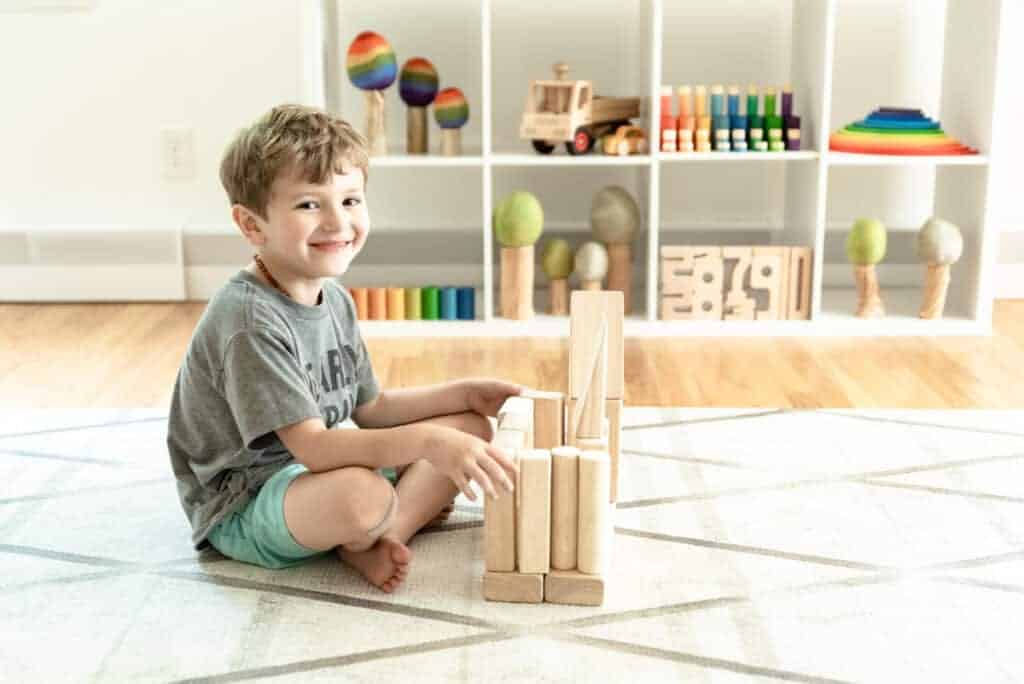
    Wooden Toy Blocks

    From as far back as 1811, wooden blocks have been admired as an ideal toy for learning. Friedrich Froebel, known as the inventor of Kindergarten, developed a series of wooden toys for exploration in the year 1837. 

    Decades after their development, these wooden toys underwent a transformation with the work of Maria Montessori, Italian physician and educator. Montessori found that wooden blocks helped develop motor skills while also exploring the laws of physics.

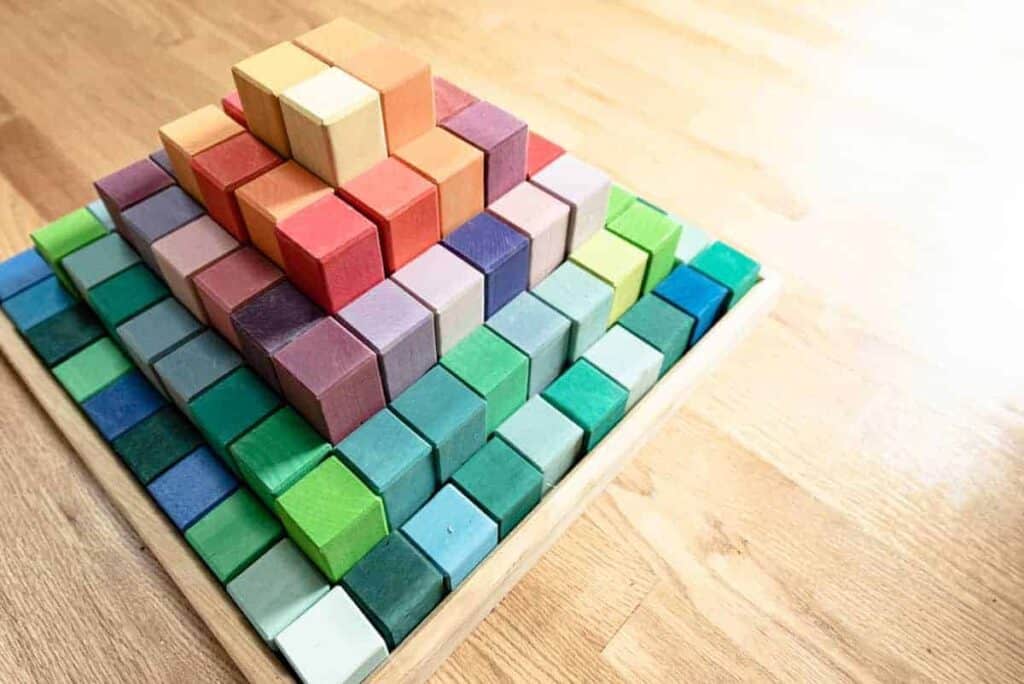
    Wooden blocks are available painted or unpainted, and come in a variety of sets. Sets including only colorful square cubes are as valuable as larger sets with more shape variety – both are engaging for young children.

    Foam Toy Blocks

    A lighter (and safer if being thrown) version of the standard wooden variety, foam block allow children to explore shapes and experiment with stacking and building. These blocks come in a variety of colors, and some blocks even fit together like puzzle pieces.

    Jumbo Cardboard Blocks

    There is something magical for a small child to be able to manipulate a relatively large item – these blocks are in the shape of big bricks, perfect for building a fort or just stacking one atop the other. Best of all, it doesn’t hurt when they fall on your head!

    Duplo Toy Blocks

    The precursor to Legos, these blocks are the perfect thing to fit into the chunky hands of toddlers and preschoolers. For younger children, large Duplo blocks provide the challenge of building without the danger of chocking on small parts.

    Magnetic Toy Blocks

    Completely different from wooden blocks, these building materials are 3D, translucent and magnetic. School-age children will especially enjoy the possibilities with magnetic blocks, which add another dimension to play.

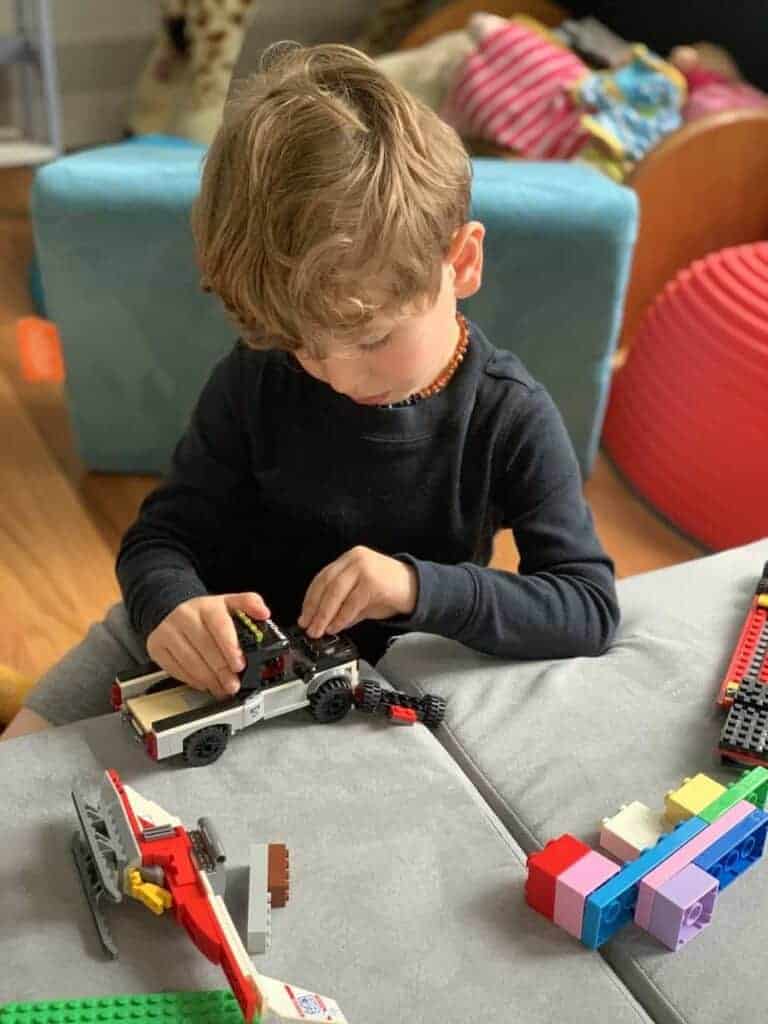
    Legos

    Preschoolers on up will have hours of productive and imaginative fun creating whatever they can think of with Legos. Then they can take their creation apart and begin again!

    Legos can be purchased in large general kits, which is the most open-ended choice. Lego manufacturers also make ‘kits’ (Star Wars, for example) so that children can create favorite movie scenes. 

    The great news is that, regardless of when you bought your Legos, they all fit together flawlessly.

    Now is the Time!

    Regardless of your current block status, now is the time to take action! Already got blocks? Rotate them! Put the old ones in a cupboard for a month or so while introducing a new variety. Don’t have blocks yet? Choose a variety to use with your child – and get ready to have some fun!

    Need more toys recommendations? Check out this article about our top must haves for every play space.

    Want to create a more purposeful play space? I invite you to join us with our purposeful play space course.

    Get ready to transform your play space, gain back your own time, and help your kids play independently!

    If you want more individualized help you can set up a free 15 minute consultation to chat about your play space design needs.

    Want more information about the importance of play and tips to reorganize your playroom check out my e-book: Simply Play: Everything You Need To Know About The Most Important Part of Childhood which you can buy here for only $4.99.
    Do you like this post? If so, check out some of these related articles.
    Make Organizing Your Play Space a Priority
    Outdoor Play: Why Does it Matter?
    Type of Play for Development
    Toy for Toddlers: Encouraging Active Play
    Top Toys to Encourage Outdoor Play
    The Power of Play


    Read More

  • The Best Toys for Kids of All Ages

    The Best Toys for Kids of All Ages

    Are you a parent of more than one child? There are plenty of houses out there just like yours, with children running around cheerfully with their many playthings. TOO MANY playthings, it seems. In order to reduce the number of toys and create some organization in your home it makes sense to have toys for kids that can span multiple ages.

    Children need toys for growth and development. Plus, toys KEEP THEM BUSY – which is no small thing! But enough is enough, right? You have MORE THAN ENOUGH toys!

    Reducing the number of toys is not only possible, but can result in just as many happy, contented children actively engaged in productive play.

    The key to getting the right result is choosing a multi-age toy that meets the needs of more than one child.

    The Right Multi-Age Toy for Many Developmental Stages

    Children progress through many developmental stages as they mature. The important takeaway is that while children develop skills and abilities in roughly the same order, the timeframes are not exact. These are the commonly held developmental stages:

    • Baby: Birth to twelve months
    • Toddler: One year to three years
    • Preschooler: Three to five years
    • Grade schooler: five to twelve years
    • Teen: Twelve to eighteen years

    Thinking about age spans versus baby, toddler, etc., will help you see toys from different perspectives. For example, toddlers and preschoolers are different ages. But if you consider that a thirty-month-old toddler is on his way to becoming a preschooler, it can change your perspective about toys that might work for both a toddler and a preschooler. Multi-age toys are the way to go!

    A Note About Infants

    Infants do not need toys, and are unable to grasp until about two months. Save your money and purchase toys sparingly for your newborn. He or she will learn from listening to voices and looking at things (but can’t focus until around eight weeks of age).

    Beyond two months, babies do well with rattles, black and white pictures (high contrast), and things to drop and take out (bowl or bucket with balls).

    Your Kids Should Have This Multi-Age Toy!

    Blocks

    The ultimate multi-age toy, blocks make almost every child happy. These open-ended toys are versatile, durable and satisfy the developmental needs of a variety of ages. Additionally, blocks come in a variety of forms: wood, plastic, magnetic, foam, bristle, and more. Blocks can vary in size from quite small, like traditional LEGO or to enormous like one of our must haves, the Nugget Play Couch.

    See our list of must haves here.

    What do children learn by playing with blocks? Blocks help develop visual and spatial awareness, fine motor skills, and imagination. Your toddler may bang two wooden blocks together, while your preschooler and school age child will stack and build to their heart’s content. There’s no ‘wrong’ way to use a block (unless you’re hitting someone).

    Vehicles

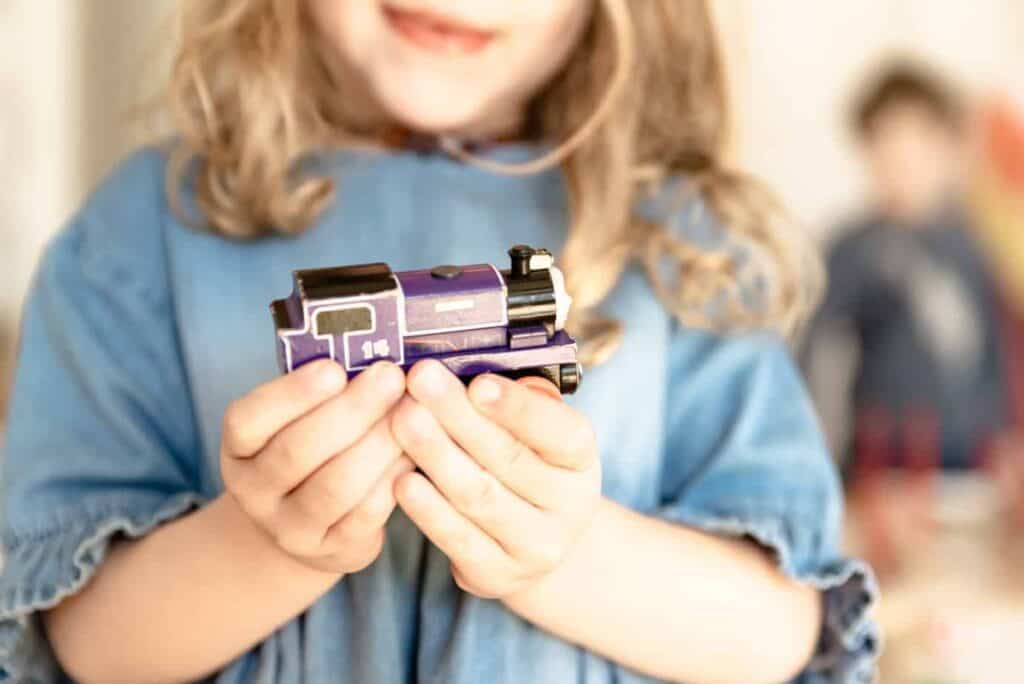
    Vehicles are a big hit with children of all developmental stages and a great example of a multi-age toy! Cars and trucks are obvious choices, but remember to include buses, trains, boats, and more.

    Pretend play begins around eighteen months, and vehicles are a perfect prop for this stage! Little ones will make lots of sounds as they push and pull their boats or cars around. Fine and gross motor play? You bet!

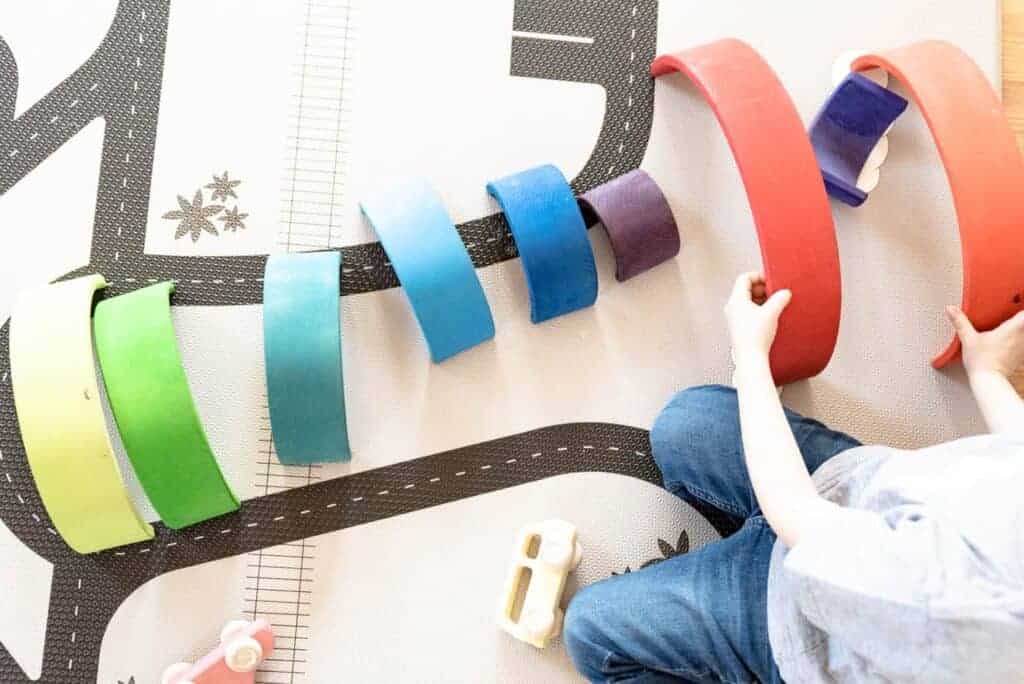
    Besides pretending, though, vehicles are great toys for exploring mathematical and science concepts. Got a wooden block handy? Make ramps! Children can see how quickly and how far a car might travel when it goes down a short ramp versus a long one.

    Is there value in a train set? Absolutely! Putting the track together provides a puzzle aspect to play. If the train is magnetic – wow – what fun is that! Children will learn that these two ends attract while those two ends repel!

    Pretend Play

    This category of toys includes everything from dress up items to dollhouses. Don’t project your notion of what toys are appropriate for a particular gender. If your child gravitates to a particular toy, chances are he’ll find some value there.

    Which toys will last with your kids? Dress up items are a popular multi-age choice. Versatile items of clothing, like aprons and capes, will stay on during active play and can work for a variety of roles (cape: think superhero and princess).

    A dollhouse can be a magical place for a child to make sense of his or her world. Get ready to hear your own language parroted as your child acts like ‘mommy’ or ‘daddy’.

    Sidewalk Chalk

    This colorful, chunky chalk fits perfectly in the hands of toddlers, though their work or art may not be all that impressive. Still, what POWER they feel when allowed to draw on the driveway and actually leave a mark!

    Older children will enjoy creating art, writing letters and doing math on the sidewalk with chalk. The fact that it disappears with the first rainstorm is a win for moms and dads – and kids can create a whole new masterpiece.

    Games

    When considering a multi-age toy, games can be endless family fun. You needn’t wait until everyone is able to read, do math, etc. There are many games that children of any age can enjoy. Hint: getting hung up on the ‘rules’ may not be in your best interest!

    Connect Four is a classic game of making for in a row. Toddlers will enjoy stacking the pieces or putting them in and out of containers. Though toddlers might be able to put the pieces into the rack, preschoolers definitely have the fine motor skills for this task. Another great thing about Connect Four is that if you lose a few pieces, you can still have a successful game.

    Does your family like to play cards? Although younger children may not have the patience for Rummy, there are other card games that are perfect for them. Blink is a card game in which players match numbers, colors, or shapes. It can go very slow for beginners, and lightning quick for adults.

    Don’t Wait

    Why wait? Get started today. Take a critical look around your home and find those toys that only work for one child. Quietly put them on a shelf somewhere and put one or two of these toys in their place. Then sit back and watch the quality of your kids’ play transform, while your house stays just a little bit neater.

    Want to create a more purposeful play space? I invite you to join us with our purposeful play space course.

    Get ready to transform your play space, gain back your own time, and help your kids play independently!

    If you want more individualized help you can set up a free 15 minute consultation to chat about your play space design needs.

    Want more information about the importance of play and tips to reorganize your playroom check out my e-book: Simply Play: Everything You Need To Know About The Most Important Part of Childhood which you can buy here for only $4.99.
    If you like this post and want to read more like it then check out these articles:
    Make Organizing Your Play Space a Priority
    Outdoor Play: Why Does it Matter?
    Type of Play for Development
    Toy for Toddlers: Encouraging Active Play
    Top Toys to Encourage Outdoor Play
    The Power of Play


    Read More

  • Make Organizing your Play Space a Priority

    Why You Need to Make Organizing your Play Space a Priority

    You’ve probably heard the words, “I’m bored” or “Please play with me!” more times than you can count from your child. It’s not that I don’t love to play with my three little wildings, but sometimes mama has to get her stuff done too! How we organize a playroom (or play space) should be a priority. It will save you time in the long run! 

    When you see how much “stuff” your kids have to play with, you may wonder how they can possibly be bored or need you to facilitate their play.

    Chances are their play space isn’t organized to facilitate purposeful play. We know that the environment is a teacher and that we must organize a playroom in order to maximize learning through play.

    What is purposeful play?

    First, what do I mean by purposeful play. Purposeful play is how children develop the cognitive, social and emotional skills that allow them to succeed in life! Although play is open-ended, your kids can still participate in purposeful play when you have an organized playroom or play space with the right toys and tools. 

    What areas should I have in my play space to promote purposeful play?

    Encouraging your children to play independently and in a way that promotes their learning, you’ll want to have areas in your play space that focus on both cognitive and social and emotional learning. Here are some spaces I recommend. Note that you do not have to have a giant room to make this work.

    You can organize these play spaces in different rooms, such as your child’s bedroom, the living room, or the dining room table. For example, when we’re not using it for eating, my kids often find the dining room table to be their designated art space. 

    Calm down space:

    First, the calm down space promotes social and emotional skills. Your kids should have a cozy space to relax, meditate, and think. This space may have pillows, bean bags, or even a fun tent!

    Reading area:

    Make sure your child has access to books to help their cognitive development. Reading encourages imagination and is a form of play! The reading area should be comfortable. I know my kids would rather sit on a comfy pillow than read at a desk and hard chair. 

    Physical play space:

    Your kids need room to run, tumble, and get moving! Have an open area with a play mat and/or things to climb on. Let go. Your kids may fall and get a few scrapes, but this purposeful, risky play also improves gross motor skills. Let your kids get moving!

    Sensory space:

    This is of course important if your child has sensory issues, but a place to explore the senses is essential for all kids! Check out toys like kinetic sand, rice, pebbles, and the ever popular slime. Teach your little ones how to clean up the mess, and you’ll be thankful for the purposeful, independent sensory spot.

    Building space:

    Bring on the blocks! There are so many toys you’ll find online or in stores that are deemed as “educational”. Often, those toys are anything but. However, blocks and Legos that are often considered “toys” are more beneficial than most of the so-called educational toys. Blocks not only help with fine motor skills, they also encourage imagination. Get your little engineer imagining and building! The building space is ideal for a flat surface.

    Here are some of our favorite building toys and other open ended toys that encourage play.

    Pretend play area:

    Why not get a trunk or a plastic container and fill it up with costumes and props? Your kids will love to pretend that they are princesses, police officers, animals, doctors, different characters from books and movies, and more! Even if you are working or doing something else, make sure you listen to your kids as they pretend play. Some of my best memories are from the stories and scenarios I hear my imaginative kids come up with!

    Art space:

    Let the art space get messy! It’s simple enough to have newspaper or a plastic covering accessible for your creative kid. Cover a dining room table or usable space, and give them access to paint, crayons, markers, paper, and more. Unrestricted creativity leads to imaginative kids.

    Invitations to Play

    Organizing your play space in a way that invites play will help your children find materials and engage in purposeful play. Inviting your kids to play doesn’t mean that you are participating in the play. Invitations to play simply means that you are organizing a play space and giving them access to materials where they can see and use them. Your kids are more likely to play independently if they don’t have to interrupt to ask where things are. Let them explore, play, and learn!

    I know you are excited to organize your play space! This is a quick overview, but to really create a purposeful play space, I invite you to join us with our purposeful play space course.

    Get ready to transform your play space, gain back your own time, and help your kids play independently!

    If you want more individualized help you can set up a free 15 minute consultation to chat about your play space design needs.

    Want more information about the importance of play and tips to reorganize your playroom check out my e-book: Simply Play: Everything You Need To Know About The Most Important Part of Childhood which you can buy here for only $4.99.
    If you like this post and want to read more like it then check out these articles:
    Outdoor Play: Why Does it Matter?
    Type of Play for Development
    100 Simple Things to do Outside With Your Kids
    Toy for Toddlers: Encouraging Active Play
    Top Toys to Encourage Outdoor Play
    The Power of Play
    What I’ve Learned about Early Childhood Education

    Read More

  • How Many Toys Does a Child Really Need?

    How Many Toys Does a Child Really Need?

    I’ve got a question for you: what shape is your family room/living room/play room in right now? Come on…stand up and walk over….take a look.

    Can you safely and easily walk from one end to the other? Is there a path? Or is the room littered with various toys from Fisher Price? Are you in danger of stepping on blocks, balls, and baby dolls by the dozens? It’s time. It’s time to take a look at your toy situation.

    Why the Amount of Toys Matters

    Why are we assessing our toy inventories? Toys are great for kids, and also a way for friends and relatives to show their love on birthdays and holidays. So what does it matter if my toddler has five, twenty-five, or seventy-five toys?

    First off, does your mental health matter? Yes? Oh, good! There are many reasons that support reducing the number of toys in your play environment, one of which is directly connected to your stress level. Did you know that clutter is connected to stress and anxiety? It’s true.

    Unless you’ve been on a media/culture diet, you’ve probably heard of Marie Kondo, the organizational guru who coined the phrase ‘spark joy’. She’s a pretty big deal, if only for her meditative method of folding shirts. Kondo maintains that we should cull our possessions regularly, only keeping those things we truly love. So is Marie Kondo responsible for urging us to downsize our toy collections? Nope.

    Minimizing our toy collection isn’t just a fad organizational strategy.

    Research Shows Number of Toys Influences Quality of Play

    The reason we’re counting toys is because of recent research. Many studies have explored the relationship between the number of toys a child uses and the quality of play he or she exhibits. Experts of late have found that, once again, less is more. One study, in a 2018 edition of the journal Infant Behavior and Development, noted that the quality of toddler play decreases as the number of toys increases.

    What exactly is ‘quality of play’? This phrase refers to a few aspects of play, including how long a child plays with a toy, and what the play is like. Does the child get into a state of ‘flow’ with the toy, where his focus is solely on the toy? Or is he only minimally interested for a short time? Fewer toys can cause the child to focus more and engage in more creative, imaginative play for a longer period of time.

    Read about the importance of play here

    So besides reducing mess and clutter, limiting the amount of toys in your environment can help your child reap more cognitive benefits from the toys he uses. And that’s a good thing! (By the way, the word ‘environment’ is used to communicate the idea that you can have hundreds of toys in the house, but perhaps only make five or ten toys at a time available to your child.)

    How Many Toys Should We Have?

    When it comes to specifics, experts don’t have a particular number as a goal, they simply encourage parents to be mindful in reducing the number of toys available. So what if you made a radical choice and eliminated ALL toys from the environment? Would your relatives call the authorities because of your cruel neglect? Would they haul you off in restraints? Probably not.

    Turns out many have tried this strategy. A British Nursery has seen nothing but positives after removing all conventional ‘toys’ from its school. And the idea isn’t new – some Nursery Schools in Germany have shunned toys since the 1990’s, with great success. How can this be? It’s simple! Children don’t care about toys!

    Children Want to Explore Their Environment

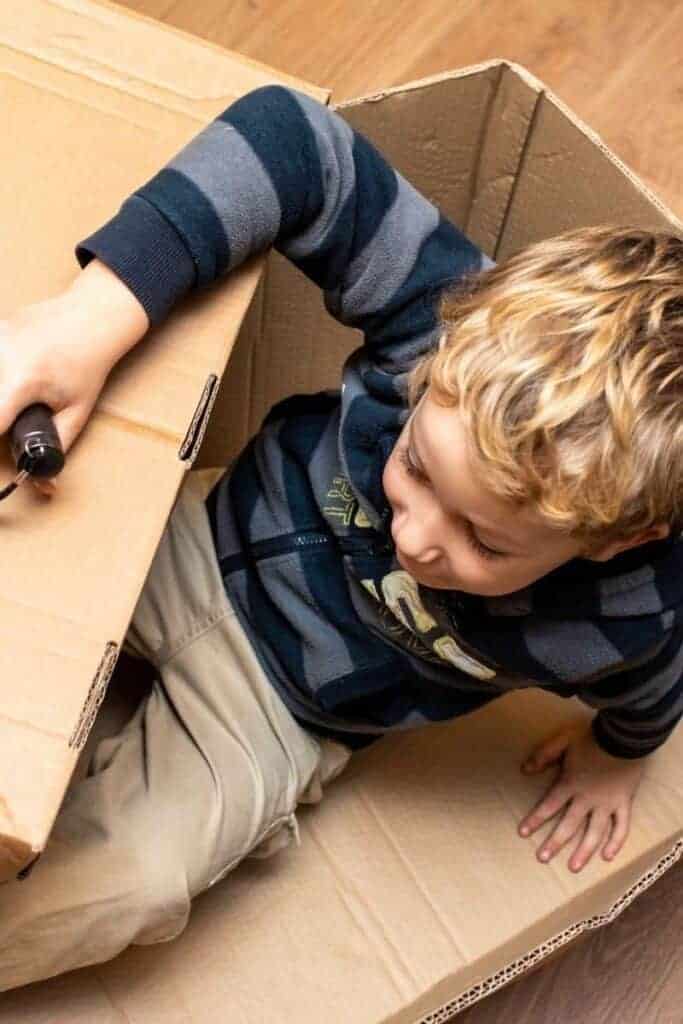
    You’ve seen it yourself! When your one-year-old unwraps the gift and protests when you throw away the paper…when your toddler takes the new toy out of the gift box and promptly crawls inside the same box, ignoring the toy.

    Children don’t care what we categorize as a ‘toy’ – it’s all semantics. Kids are interested in exploring their environment! That’s why pots and pans are such a big hit. And plastic bowls and spoons. It’s really all about how we as parents set up the environment for our kids. If we fill it with shiny, noisy, battery-operated objects, that’s what our children will come to expect.

    ‘Objects’ Instead of Toys

    Think of the things your child is interested in or observe the schemas they play in – the aforementioned pots, pans, bowls and spoons. Would your child spend time in a laundry basket? Probably! Odds are you probably don’t need to purchase much of anything in order to help your child learn and grow.

    Older children (those who aren’t mouthing everything) enjoy recyclables – toilet paper tubes, paper towel tubes, cotton balls, etc. The ‘dump and fill’ stage is easily (and inexpensively) managed and encouraged with water, sand, and even uncooked rice.

    Click here for get our FREE Guide to Schema Play

    Open-Ended Toys

    What about the gift-givers in your life? We know you want to buy something – and so does everyone else! Grandparents, aunts, uncles, godparents, etc., are just dying to put a new toy in a box to see the delight on your child’s face. And who can fault them? They are well-intentioned, just in need of some advice.

    Instead of going the ‘shiny’ route, why not suggest a few engaging, open-ended toys? Examples of these types of toys include wooden blocks, puzzles, pretend-play props (plastic food for a grocery store or costumes for dress-up), art paper and supplies, and yes, empty boxes.

    Read more about the benefits of open ended play here.

    Generous friends and relatives can also be encouraged to purchase experiences instead of toys. Family memberships to the zoo, children’s museum, or children’s theater will provide hours of engagement and wonderful memories! How about lessons? Your child can explore his inner Picasso with art lessons, or learn how to walk the balance beam with gymnastic lessons.

    What should you do when those wrapped boxes keep showing up? For one, you can rotate toys.

    Staying with the five-to-ten number range, introduce new toys as your child tires from the current collection. Put the alternates in a cupboard for a month or so – when they come out again, they’ll seem brand new! Your child will be happy – and so will you!

    Check out our YouTube video below for more information about open ended toys.

    If you’re looking for more information about the importance of play and tips to reorganize your playroom check out my e-book: Simply Play: Everything You Need To Know About The Most Important Part of Childhood which you can buy here for only $4.99.
    If you like this post and want to read more like it then check out these articles:
    Outdoor Play: Why Does it Matter?
    Type of Play for Development
    100 Simple Things to do Outside With Your Kids
    Toy for Toddlers: Encouraging Active Play
    Top Toys to Encourage Outdoor Play
    7 Essential Playroom Spaces (and why you need them)
    The Power of Play
    What I’ve Learned about Early Childhood Education

    Read More