play

  • How to Support Learning Through Play
    How to Support Learning Through Play

    Italian physician, innovator and educator Maria Montessori said, “Play is the work of the child”. As parents, caregivers, and teachers, we believe this to be true. So what is our role in this process? How can we make the experience of play meaningful to the child while not overstepping?

    There are many ways adults can support learning through play.

    Read more about the early childhood learning philosophy, Montessori here.
    Offer Open-Ended Toys

    All toys are not created equal. Despite the loud, colorful claims of marketing experts everywhere, a great toy is not about bells and whistles. On the contrary, the simpler the object of play, often, the better. 

    Keep in mind that an ‘object of play’ is not always a commercially-available toy. Parents can support learning through play by supplying items such as fabric, felt, stones, rice, water (the hose or a watering can), and sand for hours of inexpensive, tactile engagement.

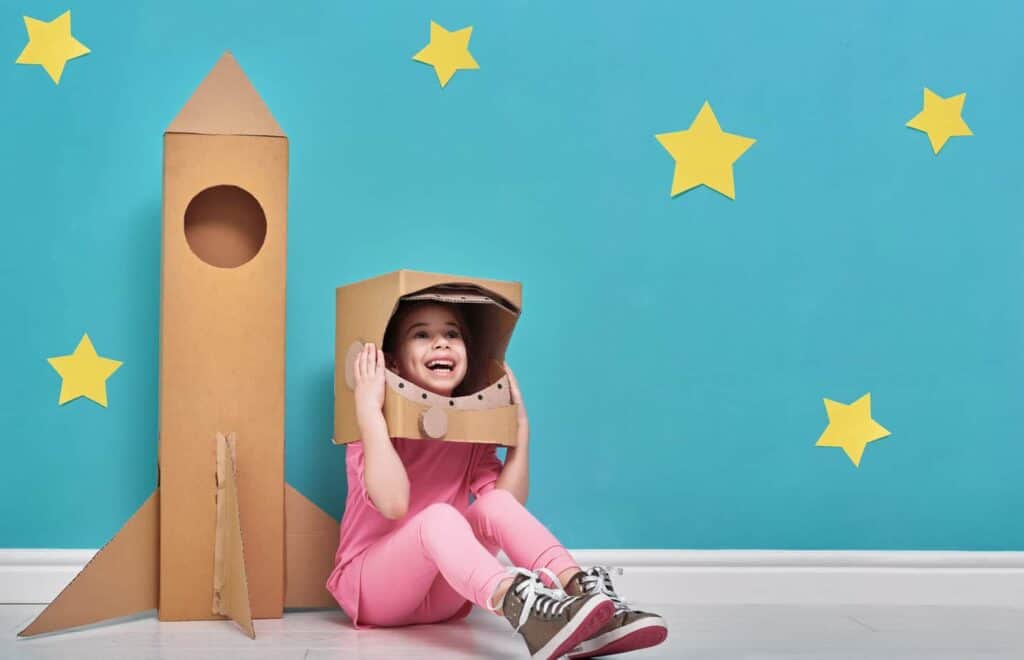
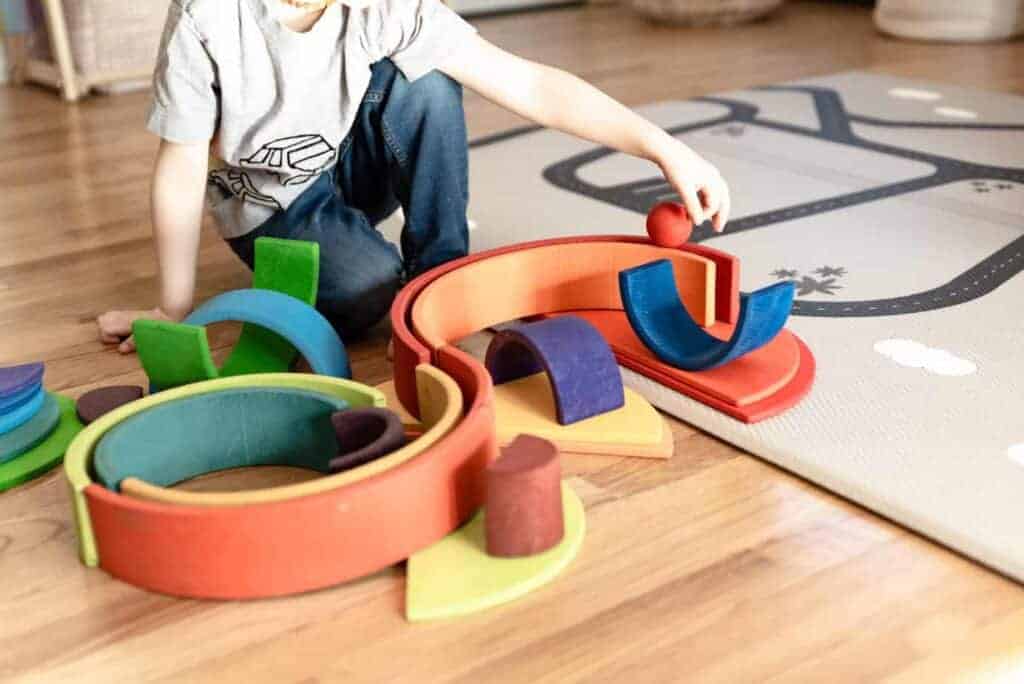
    Open-ended toys also lend themselves to deep, long-term involvement. An ‘open-ended’ toy is a toy that can be used by the child in many different ways. Examples of open-ended toys include blocks (wooden, magnetic, bristle, foam etc.), art supplies, puppets, costumes, and boxes (large cardboard boxes inspire wonder).

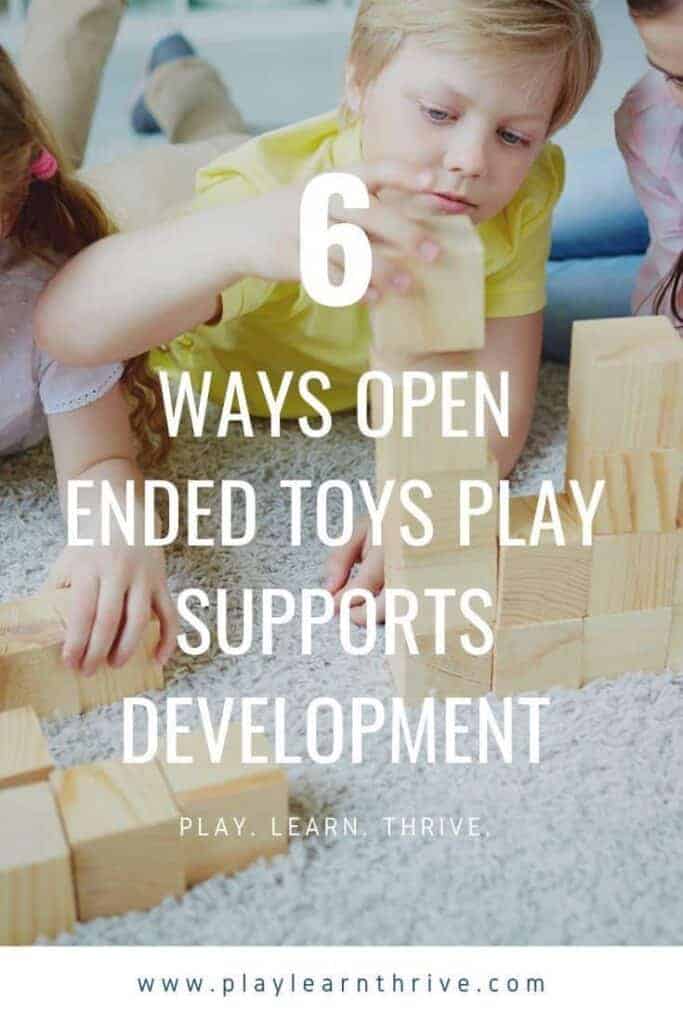
    In playing with a box, for example, the child can imagine it to be a fort, a bus, a restaurant, or a pirate ship! The possibilities are endless. Similarly, wooden blocks can be used to construct anything the child imagines.

    Read more about open ended toys here.
    Lose the iToys

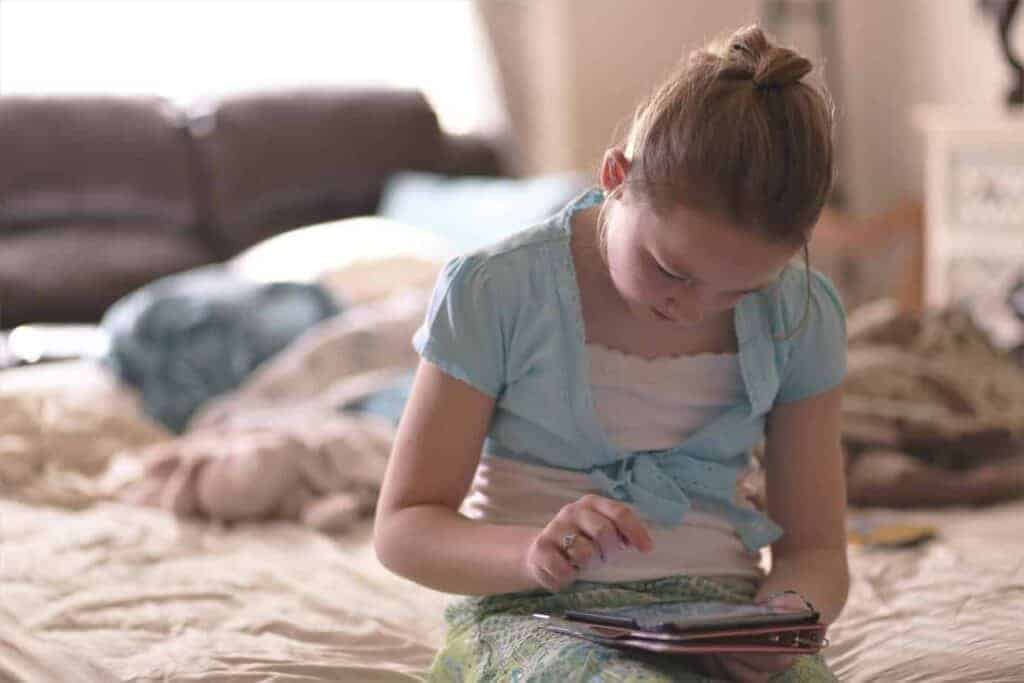
    Electronic toys, iPads, computers, gaming systems, etc., are the opposite of open-ended. Although there are many options on a tablet in terms of games, the tablet is only used by the child in one way – and that way is mostly passive.

    Overall, the cons largely outweigh the pros when it comes to electronic devices. 

    We want children to be curious, imaginative, active learners who can adequately express their needs, wants, thoughts and opinions. Many parents think technology will help support learning through play, but tablets, laptops, and smartphones will not help children become active learners. 

    Particularly from birth to three, known by physicians as ‘the critical period’, children’s brains are developing very quickly. These changes become the permanent foundation upon which later brain development is built. If children are not exposed to the right stimuli (which is NOT found on a screen), his or her development may become stunted. According to the AAP, screen time should be limited to one hour of high-quality content for children aged five and younger.
    Let Children Be in Charge

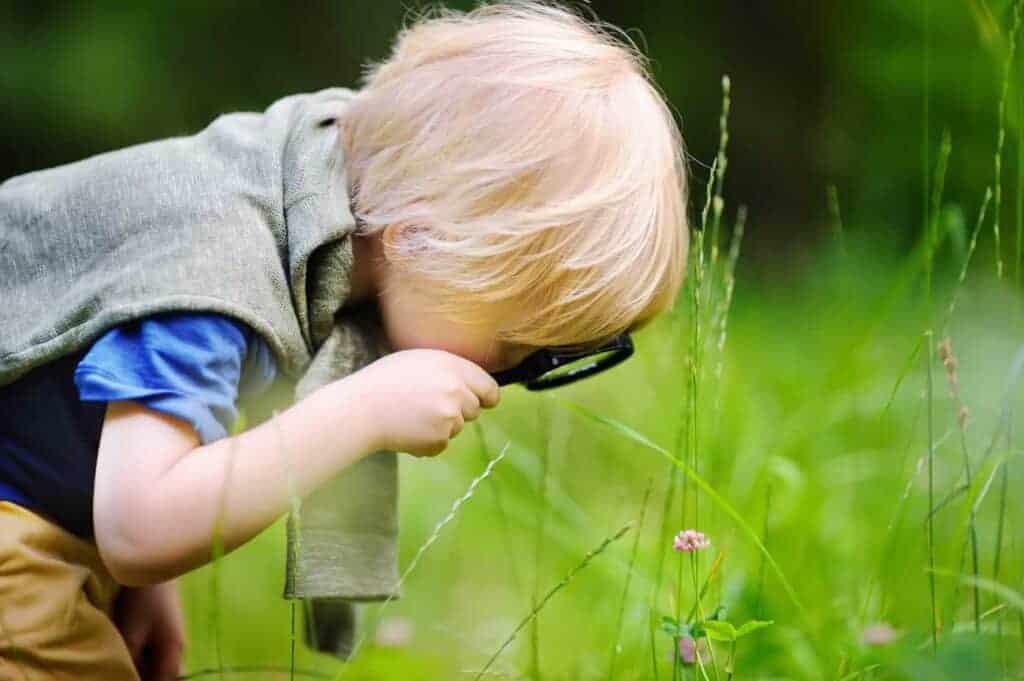
    As long as conditions are safe, children should make their own decisions during play. Choosing for themselves contributes to skills of independence and helps them see the connections between choices and consequences. It helps them know what is really meaningful to them – not just important to their parents or caregivers.

    Because children are intrinsically motivated, they will make choices during play that will keep them playing. Or they won’t! When the child makes a bad choice, he’ll be removed from play, and then NEXT time will make better choices. Each time this happens, the child learns more about choices and consequences.

    Allow Spontaneity 

    Children change their minds – have you noticed?

    Sometimes the toy doesn’t work the way they want it to and they lose interest. Or the child gets a better idea and moves on to investigate.

    This sense of the unknown allows the child to develop flexible thinking and adaptability. Spontaneity can be seen by some as impulsivity, but is totally normal in early childhood development.
    Encourage Immersion

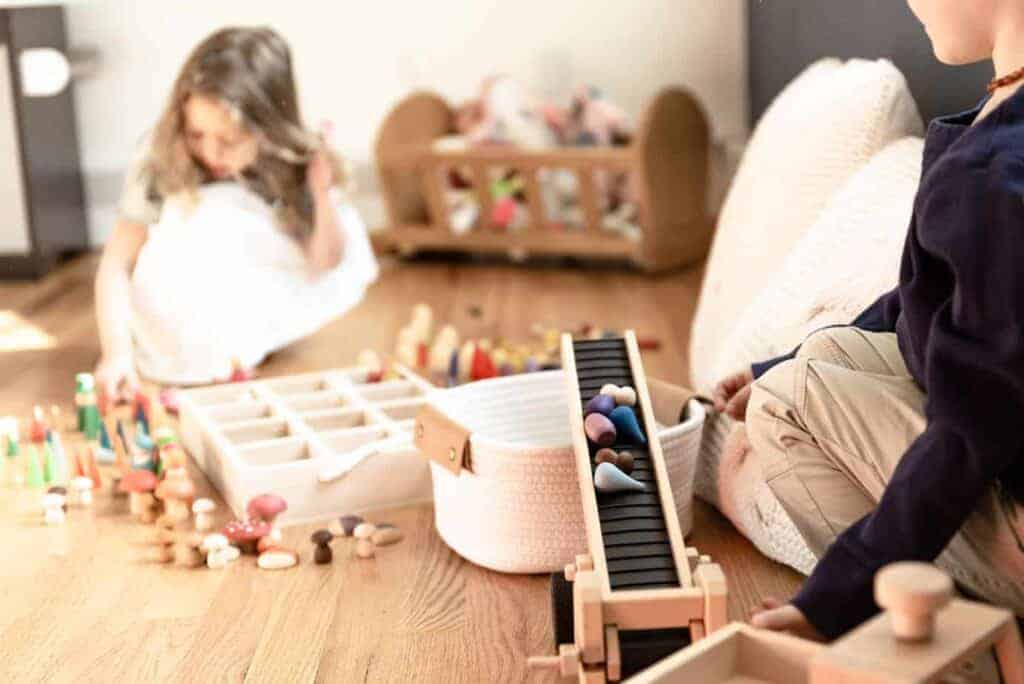
    When children are immersed in the activity and lose track of time, they are in a state of ‘flow’.

    Overscheduling disrupts this flow. A child in the middle building a pirate ship with a cardboard box doesn’t want to stop playing to go to soccer practice. Or Karate. Or Irish Dancing. 

    Obviously, we all have schedules to keep. To the extent it’s possible, though, children should be allowed to play uninterrupted, especially when in a state of ‘flow’. How can you measure flow? During a state of flow the child will be heavily involved, focusing, and not distractible. 

    Play With Them

    There are all kinds of play.

    Sometimes children play independently, other times with a friend or sibling. Particularly in the early years, parents can support learning through play by participating.

    Younger children are drawn to adults because adults have so many skills – children can gain a great deal from interacting with us. It’s helpful for a child to know letters and numbers when entering Kindergarten, but even more important is to have a solid approach to learning. Parents and caregivers can extend play by sitting with the child, encouraging curiosity and supporting pretend play.
    Say What You See

    An imperative role parents have in supporting learning through play involves language reception and acquisition.

    Asking questions and narrating play helps children master many aspects of language, including learning the names for objects, hearing appropriate syntax, and understanding the cadence of speech. 

    Parents, grandparents and caregivers must take advantage of the time with children to expose them to language. 

    Here are four ways to do this:

    Learning by cooking together

    Point to each item as you teach your child the names of your ingredients (tomato, rice, hamburger). Talk through how you measure ingredients. Ask them to help your chop, pour, or stir. Taste test foods and talk about how they smell and feel in your mouth.

    Learning during your morning or evening routine

    Talk kids through the process of your routine. Label everything, explain why you do what you do before bed, and what sleep does for the body. Say words like brush, teeth, toothpaste, spit, washcloth, soap, scrub, clean when washing up and brushing teeth. Talk about dreams and sleep helping your body grow. Sing songs and read books.

    Learning through practical life experiences

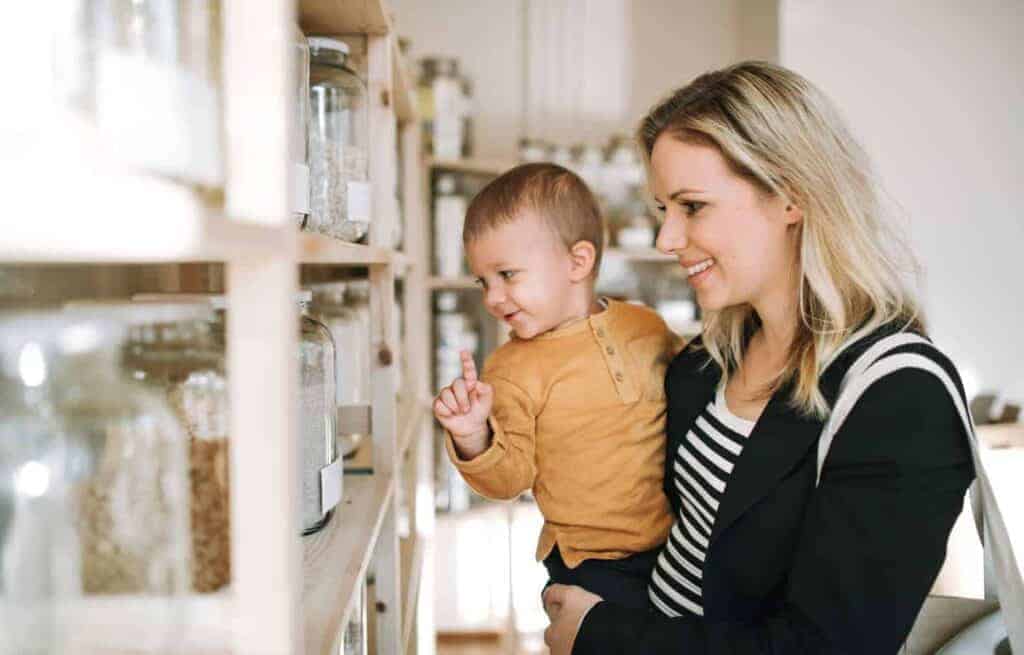
    Instead of handing over your phone to your child when you run errands, talk to him while cruising the aisles at the supermarket. Ask them to name the items you’re putting in the cart. Have them look for certain color items or items that start with a particular letter. Talk about what you plan to make with what foods you bring home from the store.

    Learning in the car

    Rather than turning on a movie for a short trip, talk to your child. Read signs aloud and point out big trucks and motorcycles. For longer trips bring books, and a few small toys. Try to only use screens during travel is absolutely necessary. There is so much to talk about when you are traveling to new environments.

    Helping them learn through play is the absolute best way to get them learning. You don’t need workbooks, classes or educational games and toys.

    Overwhelmed by your playspace?

    What if you could….

    Have a dedicated space in your house where your children actually want to PLAY… For an extended period of time, without you. 

    Have LESS toys, but see your children MORE engaged in play. 

    Have a space for your children that is SIMPLE, functional and promotes learning and development.

    Purposeful Playspace is an e-course designed to teach you how to create a space for your children that invites them to play in ways that are more engaging, purposeful and independent.

    Click here to learn more.

    If you’re looking for more information about the importance of play and tips to reorganize your playroom check out my e-book: Simply Play: Everything You Need To Know About The Most Important Part of Childhood which you can buy here for only $4.99.

    If you like this post and want to read more like it then check out these articles:
    Types of Play for Development100 Simple Things to do Outside With Your KidsToy for Toddlers: Encouraging Active Play7 Essential Playroom Spaces (and why you need them)

    The Power of Play

    What I’ve Learned about Early Childhood Education

    Read More

  • How Children Learn

    How Children Learn

    Have you ever stopped to think about how a child’s brain works? It may look like your child is just sitting there doing nothing, but in reality, the brain is a hum of activity.

    Our brains never stop firing, whether the child is awake or asleep. 

    Children are constantly learning. As science has continued to progress, there have been many theories about what it means to learn. Here are five of the most importance theories of how children learn.

    Top Five Theories of How Children Learn

    1. Behaviorism

    In the 1900s, Behaviorism became a popular way to explain how children learn. This theory sees the learner as passive, merely reacting to outside stimuli.

    Behaviorists believe that learning is shaped through reinforcement and punishment. Reinforcement (either positive or negative) encourages a behavior to recur, while punishment discourages the behavior. 

    Much of early behaviorism research was done with animals (Pavlov’s dog, for example) before John B. Watson launched the Behaviorist School of Psychology in 1908.

    2. Cognitivism

    Around 1960 Cognitivism become the prevailing notion of how children learn. It was seen as a popular response to Behaviorism.

    The basis for this theory focuses on cognition, problem solving and language acquisition. It de-emphasizes observable behavior. This theory also views the learner as an active participant in the learning process.

    3. Constructivism

    This learning theory suggests that, rather than being an empty vessel or blank slate, children actively construct knowledge through social interaction. Meaning that past experiences as well as cultural factors greatly influence learning, and one person’s learning can differ greatly from another’s.

    Piaget (1972) and Vygotsky (1978) were pioneers in Constructivism which is a theory that recognizes the value of social interaction in the learning process. 

    Russian psychologist Lev Vygotsky noted the importance of the MKO (More Knowledgeable Other) as a hugely influential partner in how children learn. The MKO might be the parent, teacher, friend with more knowledge, or even a non-living resource like a book or a website.

    Vygotsky’s theory includes the Zone of Proximal Development, which is where Vygotsky says learning occurs.

    The Zone of Proximal Development is the difference between the learner’s independent abilities and his abilities when coached by a MKO. 

    When children are learning you want to make sure that lessons and information given is not too difficult, or too easy. This is the Zone of Proximal Development. The zone where kids are capable of taking in information without getting too overwhelmed or frustrated. 

    4. Schema Theory

    Swiss psychologist Jean Piaget heavily influenced Constructivism. He introduced the concept of schema into the fields of psychology and education.

    Schema theory explains that all knowledge is organized into units within the brain and these units are called schemas.

    According to Piaget, schema is not only a category of knowledge, but also the process of acquiring that knowledge.

    As new experiences happen and new learning occurs, existing schemas are modified and new schemas are developed.

    Schema is also known as ‘background knowledge’, and is a big piece of the puzzle of how children learn. 

    For example, if I have never seen the ocean, I will have no schema for the ocean. When learning about whales, I need to learn the background knowledge that allows me to understand whales.

    So this may include developing an understanding how the ocean looks, smells and sounds. I should see pictures and be able to visit the ocean, exploring it first hand to ensure I have a solid understanding. The more background knowledge I have, the easier it is for me to make connections between concepts within the schema.

    Piaget’s Stages of Development

    Piaget’s theory suggests that all children move through four stages of increasingly sophisticated intellectual development. His theory addresses fundamental learning concepts such as object permanence, causality, and justice.

    There is an age range listed for each stage rather than a definite number because all children are on their own developmental journey.

    Stage One: Sensorimotor – Birth -18/24 months

    One of the biggest milestones of this age is object permanence which means that something still exists even though it is hidden. In order for a child to reach this stage, he or she must form a schema (mental representation) of the item.

    Click here for our FREE Ultimate Guide to Schema Play

    Stage Two: Preoperational – Ages 2 to 7

    One marker of this stage is symbolic thinking. This is the notion that an object or symbol can represent something else. 

    Stage Three: Concrete Operational – Ages 7 to 11

    This stage marks the beginning of operational (logical) thought where a child has the ability to work out a problem in his or her head rather than using concrete objects.

    The concept of conservation also occurs during this time – the fact that something can stay the same even though its appearance may change.

    Stage Four: Formal Operational Stage – Age 11 and over

    The ability to think in the abstract is what marks this particular stage.

    5. Multiple Intelligences

    Harvard Professor, Howard Gardner, proposed the theory of multiple intelligences in 1983. This theory challenges the notion of IQ – a single number that tells how ‘smart’ someone is.

    We also know that our emotional intelligence, or EQ, is much more important than our IQ.

    Gardner claims that there are eight ways individuals express their intelligence.

    • Verbal-Linguistic: analyzing information and producing work involving oral and written language (speeches, books, papers, etc.)
    • Logical-Mathematical: developing equations, making calculations, and solving abstract mathematical problems
    • Visual-Spatial: comprehending maps and other graphical information
    • Musical: producing and make meaning of different types of sounds
    • Naturalistic: identifying and distinguishing among different types of plants, animals and weather formations found in the natural world
    • Bodily-Kinesthetic: using one’s own body to solve problems
    • Interpersonal – recognizing and understanding the desires, moods and intentions of others
    • Intrapersonal – recognizing those same things in one’s self

    Bottom Line–Children learn through play

    Despite the variety of learning theories, most experts will agree that children learn best by being happily and actively engaged in play.

    The way that kids play will look very different in a two-year-old child than a fourteen-year-old child. Hands on experiences and activities that allows kids to actively engage in their learning are the best ways for kids to learn. 

    Learning will not take place if survival needs go unmet or the learner is feeling unsafe. Teachers often reference Maslow’s Hierarchy of Needs when citing learning difficulties.

    We must take the time to know our children, invite them into the process, and provide them with a safe space to explore and lead themselves to new knowledge.

    This is how children learn.

    f you’re looking for more information about the importance of play and tips to reorganize your playroom check out my e-book:Simply Play: Everything You Need To Know About The Most Important Part of Childhood which you can buy here for only $4.99.
    If you like this post and want to read more like it then check out these articles:
    Types of Play for Development
    Encouraging Independent Play
    Toys to Encourage Active Play
    7 Essential Playroom Spaces (and why you need them)
    What I’ve Learned about Early Childhood Education
    Understanding Schema Play


    Read More

  • Encouraging Independent Play – When Your Kids Aren’t Used to It

    Encouraging Independent Play – When Your Kids Aren’t Used to It

    “Hey mom, wanna play Legos?” your son calls to you one morning. Truthfully, you don’t want to play Legos. You have other things on your to-do list, and even if you didn’t….you don’t want to play Legos! Shouldn’t he be able to play by himself? He’s five years old – are you asking too much of him developmentally? The simple answer is no, but let’s dig a little deeper.

    What Does ‘Play’ Really Mean?

    ‘Play’ can mean many things – experts divide it into three categories:

    • Social play – children play with one another or with an adult – throwing a ball, for example
    • Independent play – children play by themselves – pretending, doing a puzzle, etc.
    • Guided play – children play using props set up by adults, usually with an end goal in mind

    How Does Play Help With Child Development?

    Play is invaluable when it comes to child development; here are several tangible benefits:

    • influential in healthy brain development
    • critical part of fine motor and gross motor development
    • necessary for learning to negotiate and solve disagreements
    • helps children discovering new interests
    • essential for both expressive and receptive language development
    • crucial for social-emotional learning

    Encouraging independent play is important! The value of solo play specifically is rooted in skills of independence and imagination. A child playing in a self-directed way feels competent and capable – and isn’t this the end goal of raising children? 

    When Can I Begin Easing My Child Towards Independent Play?

    Short answer: sooner than you think! 

    It’s important, first and foremost, to consider the age and developmental stage of your child. Older children can be expected to play alone for longer periods of time than younger children. A six-month-old child, for example, may be able to play independently for about five minutes, while a one-year-old might play for fifteen minutes. 

    Obviously, these times refer to children who’ve been ‘trained’ for independent play. If, with no indoctrination, you tell your five-year-old one day to ‘go play’ and you’ll come check on him in an hour, he will likely have a problem meeting your expectations.

    Getting Started with Independent Play

    There are several variables to consider when guiding your child towards independent play, including environment, toys, routine and monitoring. 

    Step One: Check Your Environment

    To encourage independent play, the environment will be a safe space for children to explore. This area will not include breakable chachkies or pointy-cornered glass tables. It’s difficult to encourage independent play when a parent is hovering and constantly telling the child ‘no’. 

    The bedroom, living room, family room and even kitchen can be suitable play spaces as long as safety comes first. Think of all those pots and pans in the kitchen just waiting for little hands!

    Will I Need to Buy All New Toys?

    Not only are fancy toys unnecessary for independent play, they’re actually detrimental to the whole process. Open-ended toys breed success in independent play. Wooden blocks, balls, Legos, magnets, and more are good examples of open-ended toys.

    Open-ended-toys can be used in many different ways. A block can be stacked as part of a building, or it can be used like a cell phone or a microphone. There’s no ‘wrong’ way to use a block (as long as you’re being safe). 

    When considering whether a toy is suited for independent play, consider how your child might use it.  If there is only one way to use the toy (an electronic keyboard, for example), save it for a session of guided play.

    Although one might say an iPad or smartphone has many uses, and is therefore suitable, electronics are not appropriate for independent play. Electronic devices may encourage boredom in children, as they are an ongoing source of stimulation. 

    When children become accustomed to blinking lights and lots of activity, it can make it difficult for them to transition to coloring or playing with blocks.

    Step Two: Time IN

    What is ‘Time In’? It is intentional time spent playing with your child with no distractions. Put away your cell phone or device and set a timer based on the age of your child. For an infant, start with five minutes, and if your child is five years old, set the timer for about twenty minutes.  

    Tell your five-year-old child, “I’m yours for twenty minutes – what should we do?” Then simply follow their lead. Don’t correct, coach or teach. Go with their ideas, and be present.

    When the time is up, tell them what fun you had, and how you need to go do your work now. Tell them you’ll be back a little later. Then, twenty or thirty minutes later, check on them. You may need to stay in the same room initially.

    When using this routine with an infant or toddler, you must stay in the same room. That being said, as your child is playing independently, be sure to busy yourself with another task. It’s not ‘independent play’ if you’re still involved.

    An Independent Play Routine

    Like anything you teach your child, independent play must be practiced over time. Don’t expect to try it once and have your child be an expert right out of the gate. 

    Additionally, don’t expect a three-year-old to acclimate to this practice immediately. Independent play is a quicker success story the earlier you begin the routine.

    Monitoring

    You will be observing and checking on your child during independent play. What are you looking for exactly? Flow is the ultimate goal – that state of mind where you’re so involved in something that you forget yourself. 

    Flow is a wonderfully gratifying state of mind for all ages, and it’s certainly possible for a preschooler to attain. 

    Final Thoughts on Independent Play

    Independent play is a worthwhile goal for you and your family. It may take a while to become comfortable in this routine, and there will undoubtedly be stops and starts along the way.

    Give yourself, and your child, lots of grace along the way, and keep in mind that the ability to be alone and entertain one’s self is a lifelong skill. Most of all, enjoy the journey!

    If you’re looking for more information about the importance of play and tips to reorganize your playroom check out my e-book: Simply Play: Everything You Need To Know About The Most Important Part of Childhood which you can buy here for only $4.99.
    If you like this post and want to read more like it then check out these articles:
    Outdoor Play: Why Does it Matter?
    Type of Play for Development
    Toy for Toddlers: Encouraging Active Play
    Top Toys to Encourage Outdoor Play
    7 Essential Playroom Spaces (and why you need them)
    The Power of Play
    Risky Play for Kids

    Read More

  • Open-Ended Play: Its Value and Characteristics

    Open-Ended Play: Its Value and Characteristics

    Open-ended play

    “Go play!” Have you ever spoken these words to your child? Turns out you’re not being selfish – indeed, by urging your child toward open-ended play, you are looking out for his best interest. According to Jean Piaget, “Play is the work of childhood.” 

    Swiss scientist and developmental psychologist Jean Piaget, who died in 1980, educated the world as to the cognitive development of children. Piaget believed that children take an active role in the learning process, essentially performing experiments all day long.

    Like little scientists, they interact with the world, making observations as they go about their days.

    Children continually add to their knowledge of the world via these interactions, sometimes building upon existing knowledge or adapting previously held beliefs. Piaget held that, rather than being ‘little adults’, children have inherently different methods of thinking than adults.

    Furthermore, there are both qualitative and quantitative differences in the thought processes of younger versus older children.

    Based on Piaget’s theory of child development, and knowing that children learn EVERYTHING from their environment, what, exactly, should parents put in that environment? What should children play with?

    Toys Matter

    There’s certainly no shortage of toys available to purchase. Go to WalMart or Target, and you’ll be inundated with loud, colorful playthings at every price point.

    How about a doll? Or a drum set? What will your child learn from that – how will a doll impact your child’s development?

    Let’s talk about the best choices in toys.  This article isn’t a resource for buying specific toys, but rather it’s an explanation of open-ended toys, their purpose and value.

    We’ve all been the parent cleaning up after our preschooler’s birthday party. Gathering wrapping paper and packaging, plastic silverware and half-eaten, frosting-heaped cupcakes.

    Surveying the room, now filled with new playthings, we see our wondrous, already-gifted child, playing……..inside a box. THAT – that box – is an open-ended toy.

    Open-Ended Toys are Ideal

    How on earth, you wonder, could a cardboard box, whether open-ended or not, have more inherent play value than a scientifically-researched, state-of-the-art, $50 toy? WHY is my kid more attracted to that BOX than he is to this top-ten-parent-recommended plaything?

    Great question. The answer is perhaps less complicated than that cardboard box. One word: options.

    Open-ended toys have limitless options, while that $50 electronic keyboard has exactly one function – to play music. Valuable? Of course! What fun it is to play music! A keyboard will produce hours of melodic (read:noisy) fun…until it doesn’t.

    Either it breaks, the batteries wear out, or the child gets just plain tired of it. Or someone (not you – of course, not you) hides it.

    But the box? You will have to wrestle that box out of your kid’s hands.

    As in, literally have to throw it out when your child is out of the house.

    You may even resort to taking that box to your mother-in-law’s on trash day so that your kid doesn’t ‘rescue’ the box and bring it back into the house.

    So we’ve established that this box has lots of value as a plaything. What, exactly, is your child learning, developmentally, while playing with a box? What does open-ended play mean, anyway?

    Fine Motor Skills

    Ripping off the remaining wrapping paper and tape is great exercise for small fingers and hands. Perhaps your child will decorate the box using crayons or markers – maybe even paint. All of these activities strengthen those muscles that enable a child to hold a pencil, tie shoes, grasp a crayon, move a bubble wand, and zip a zipper.

    Gross Motor Skills

    Crawling, jumping and running through and around the box improve your child’s gross motor skills, as does balancing and mastering an obstacle course. Every time he climbs into or out of that box, he is getting stronger and more proficient at moving his body!

    Social-Emotional Development

    Your child might have siblings, and they might play with that box together. What a great opportunity to build social-emotional skills like working together, sharing, compromising, negotiating, empathy, sympathy, etc. It’s a BIG job to manage your own feelings! Inevitably, conflicts will arise – how will your child get through these conflicts? Will he talk, cry, whine, hit, or something else? Each time he navigates a disagreement, he learns tools for the future!

    Language/Literacy Skills

    Deeply connected to social-emotional skills, language skills are necessary for all of us to get through the day. We communicate verbally as well as non-verbally. Has this box suddenly turned into a bus? Through pretend play, your child will use language to test out new words relating to buses! Drive, horn, honk, exit, money, seat, etc. – what fun he will have trying out this new vocabulary! Language and literacy also refers to the written word, which might involve making tickets for the bus, or writing the name of the bus on the side of the box. Maybe your child will need a name tag because he’s the bus driver!

    Cognitive Skills

    Your child will be solving problems and making decisions in his own head before you hear one word of it! Where does his bus go? What’s that one song people sing about a bus!? Oh, yeah! ‘the wheels on the bus go round and round…’

    Does your child focus on creating his bus? Is he busy for thirty minutes solid before coming up for air? Or maybe he’s distracted by so many ideas at once. Open-ended play can be changed immediately by your child – with no adult help!

    Imagination

    This is where a box beats out a keyboard every time. On Tuesday, your child is ‘driving a bus’ with that box. By Thursday, the box has turned into a castle, and your child is the king. Your dog is a knight. Imagination has no limits.

    THAT is the value of a box – or, really, any open-ended toy. No amount of technology can do for the developing child’s brain what a box, a pile of clay, or a tub of wooden blocks can do.

    Tell your gift-giving friends, and remember this on your next visit to the toy aisle. You don’t need expensive toys – nor do you need a lot of toys. For engaging, self-directed learning to happen in your home, you need toys to encourage open-ended play.

    If you’re looking for more information about the importance of play and tips to reorganize your playroom check out my e-book: Simply Play: Everything You Need To Know About The Most Important Part of Childhood which you can buy here for only $4.99.
    If you like this post and want to read more like it then check out these articles:
    Outdoor Play: Why Does it Matter?
    Type of Play for Development
    100 Simple Things to do Outside With Your Kids
    Toy for Toddlers: Encouraging Active Play
    Top Toys to Encourage Outdoor Play
    7 Essential Playroom Spaces (and why you need them)
    The Power of Play
    What I’ve Learned about Early Childhood Education

    Read More

  • Top Outdoor Toys to Encourage Play


    Top Outdoor Toys to Encourage Play

    The sun is finally shining where I live and I couldn’t be more pumped to share our top outdoor toys to encourage play!

    Yes, my kids go outside in all types of weather but it’s certainly easier to get them to stay outside without me for extended periods of time when the weather is more mild, the birds are singing and the hose is available for water play.

    Getting kids outside is so important for their physical, social and emotional health and making sure to have some awesome open ended and engaging toys specific for your outdoor playspace is crucial. 

    Here is a list of some of our top toys for outdoor play. Some are a little less traditional, but I promise you they allow for hours of fun.

    15 Must Have Outdoor Toys for Kids

    1. Mud Kitchen

    Our number one must have outdoor toy is a mud kitchen. What is a mud kitchen you ask? It’s an incredible outdoor kitchen space dedicated for children to play with dirt, rocks, sand, mud, water…

    It’s designed to to invite your children to play for hours–making mud pies or stone soup. You may need access to a hose to clean them afterwards, but the fun is well worth the mess. 

    We absolutely love this one by our friends over at The Monarch Studio. Not only is this a small mama run business, but her values closely align with ours and that makes supporting her even easier.

    2. Sensory Table

    She also makes a sensory table which is perfect for outdoor sensory play. The bins are interchangeable so you can easily switch from sand, to water, to rice, to whatever else you can dream up to throw into a sensory bin. She even sells rainbow colored rice!

    3. Rock play food

    To add to your mud kitchen I recommend these awesome pieces of rock Play Food they encourage imaginative play, are super durable and are the perfect weight for little hands.

    4. Pots, Pans and Cooking Utensils

    Even if you don’t want to get a full on mud kitchen I suggest getting an Outdoor pots and pan set. They are a fun way to bring kitchen play to the outdoors. Kids love to scoop, pour, strain, and bang pots and pans so these are a great outdoor toy to have for all ages.

    5.Real Gardening Tools

    We always include our children in practical life skills. Since we have a yard, that means yard work. We love this set of kids Gardening tools and have one for each kid.

    6. Magnifying Glass

    We recently got our kids this beautiful wooden Magnifying Glass and they love to use it outside to inspect bugs, grass, and flowers.

    7. Wheelbarrow

    A Kid sized wheelbarrow is a great addition for any kid who is interested in cars, trucks and things that go. It’s great for collecting sticks or helping move small rocks. We try to give the kids small jobs within the job we are doing in order to give them a sense of purpose and allow them to actually contribute to the task at hand.

    8. Ride on Digger

    Another great outdoor toy for kids who are interested in trucks and digging is this awesome ride on digger. There is one with and without wheels depending on if you want this thing to be mobile, or not. 

    9. Micro Mini Scooter

    For some serious gross motor play add one of these scooters to your list, the Micro Kickboard with these little streamers is our favorite. It has an easy to adjust height, a break (but my kids still insist on just dragging their feet behind them to stop) and you can get accessories like bells and lights as add ons.

    10. Climbing dome

    Another gross motor toy to grab if you have any yard space at all is this Climbing dome. It does take some time to put together, but not because it’s difficult it’s just tedious. But so worth it.

    Kids can climb, jump, and hang upside down. If you have a large sheet you can let them throw that over the top to make a fort.

    11. Fort building materials

    If you want to actually give them some serious fort builder capabilities then get this Fort building kit there are so many amazing things kids can create with this thing–and added bonus is that building reinforces STEM concepts.

    12. Sidewalk Chalk

    Chalk is a staple of summer. I really love these Ooly ones because they are dustless and they are more similar to the look and feel of crayons. You can use them on such a variety of surfaces.

    13. Rain barrel

    I mentioned this in another article because I think it’s a must have for anyone who has a gutter and wants to keep their kids entertained for HOURS. This Rain barrel can easily collect water when it rains for kids to use for play.

    They love to turn the spigot on and off, and practice measuring and pouring. They use the water collected to make mud so we don’t have to waste water from the hose. It’s also a great way to reduce your water use if you water plants.

    14. Walkie Talkies

    I really love finding unique ways to encourage independence in my kids and these Walkie talkies allow me to do that. The kids love to take them out to talk to each other but it’s also a fun way for them to “call” for me.

    15. Stroller Wagon

    On a related note, if you’re in need of outdoor wheels to cart your kids to the beach, around town, over hilly grassy knolls or whatever other outdoor adventure you’re taking on, consider getting a wagon instead of a stroller.

    The Veer and the Keenz are great options. We can fit all three kids and our puppy in our Keenz. We love it for the beach as a shady spot for the baby to nap, it even has a cooler.

    If you’re looking for more information about the importance of play and tips to reorganize your playroom check out my e-book:

    Simply Play: Everything You Need To Know About The Most Important Part of Childhood which you can buy here for only $4.99.

    Read More