play

  • 30 Outdoor Activities for Kids

    Importance of outdoor activities for kids

    We know kids should play outside, right? Right….so what are some great outdoor activities for kids of all ages?

    If you need a refresher on WHY they should play outside you can read this article about the ever growing importance of outdoor play.

    Also, check out one of my absolute favorite movements. The 1000 Hours Outside Challenge which was created to counteract the fact that we are loosing approximately 1200 HOURS of childhood to SCREENS. This challenge encourages us to match screen time with outdoor time.

    But outdoor activities for kids are hard…

    Sometimes they would rather sit inside and watch T.V.

    Or it’s raining.

    Maybe it’s too hot.

    Or you don’t have a backyard so you struggle to find outdoor activities that you could easily enjoy.

    Or you love being outside with your kids, but you can’t, for the life of you, think of anything new to try.

    Here is a list of 30 articles that provide some great outdoor activities for kids (even when it’s raining, too hot, too cold…..)

    1. 100 Simple Things to do Outside with Your Kids
    2. 25 Ideas to Get Your Family Active Outside
    3. Nature Activities for Teens
    4. 30 Simple Spring Outdoor Activities for Kids
    5. The Ultimate Gear Guide
    6. How to Hike with Kids and Actually Enjoy It
    7. Nature Walk Must Haves 
    8. 5 Ways Kids Can Experience Science This Summer
    9. 10 Ways to Bring City Kids Closer to Nature
    10. 20 Super Cool Ideas for Backyard Fun for Kids
    11. 5 Adventurous Play Ideas to Conquer Childhood Fear
    12. Getting Started Foraging With Kids
    13. 10 Tips for Exploring Nature with Toddlers and Preschoolers
    14. Environmental Projects for Kids Who Believe in Better
    15. 7 Ways to Encourage Imaginative Play Outdoors
    16. Outdoor Treasure Hunt for Toddlers
    17. Outdoor Color Match Activity 
    18. DIY Stepping Stones
    19. 10 Ways to Tempt Your Kids to Go Outside and Play
    20. Scavenger Hunt Printable
    21. 101 Outdoor Family Bonding Activities 
    22. Craft: Decorating a Walking Stick
    23. DIY Bird Feeder Craft & Bird Watching Tips for Outdoor Fun
    24. A Backyard Camping Trip – The Best Way To Introduce Kids to the Camping Experience!
    25. Gardening with Kids
    26. 5 Things to Bring for a Day in the Park
    27. How to Create a ‘Yes Space’ Outdoors (When You Don’t Have a Yard)
    28. 25+ Water Play Activities For Kids
    29. 9 Must Have Screen-Free Outdoor Toys to Keep Kids Engaged and Learning
    30. How to Get Kids Outside During the School Year

    If you’re looking for more information about the importance of play and tips to reorganize your playroom check out my e-book:

     Simply Play: Everything You Need To Know About The Most Important Part of Childhood which you can buy here for only $4.99.

    If you like this post and want to read more like it then check out these articles:
    Type of Play for Development
    Toy for Toddlers: Encouraging Active Play
    7 Essential Playroom Spaces (and why you need them)
    The Power of Play
    What I’ve Learned about Early Childhood Education

    Read More

  • 3 Steps to Declutter Your Play Space

    Decluttering Your Play Space

    Do you need to declutter your play space? One of the biggest complaints I hear from moms is that their house is filled with toys. They have so much stuff–especially after the holidays. They feel overwhelmed and don’t know where to start. I’ve always loved a good purge (thanks mom!) so I started thinking about how I could share my process with you all.

    It’s not rocket science but it does take some time and commitment.

    For ways to re-imagine your play space check out my e-book Simply Play: Everything You Need To Know About The Most Important Part of Childhood which you can buy here ❤️

    If you want more help check out my e-course: Purposeful Play Space: How to Transform Any Space to Promote Purposeful and Independent Play for Your

    3-step process to declutter your toys and play space.

    First and foremost, it’s important to declutter your space and do a purge of toys. This will allow you to see what you have, what you may need or want to add, and how best to organize everything in order to promote active play.

    Step One: ALL toys, ONE spot

    In order to see what’s really up with all things toy-related, you really need to see it all piled in one spot. This will allow you to really evaluate the full picture. I hear all the time how parents feel completely overwhelmed by the sheer number of toys they have in their home.

    If you feel overwhelmed by the toys in your house, imagine how your child feels.

    Purging will not only help minimize the amount of stuff you have but also free up space mentally for kids to engage more deeply in what you decide to keep.

    Step Two: Piles and Categories

    Now it’s time to begin to sort through all the mess. Go through and make piles in the following order. Following this process allows you to purge with intention. The last thing you want is to go through and declutter, only to turn around the next day and still feel overwhelmed.

    Make piles of the following, in this order (there is a method to my madness):

    First, sentimental toys: This could be toys given or made by a special family member or something from your own childhood. Or this could just be a toy that your kids really love for whatever reason.

    Next, broken or abandoned toys: Any toys that are broken, ripped, don’t work, or missing pieces. Also include toys that your kids just don’t gravitate toward. If you are unsure about getting rid of something, put it in a box out of sight for a few weeks and see if your little one notices–chances are, they won’t.

    Then, toys that don’t meet the “90/10” rule: These are toys that do more than 10% of the work for your child. Your child should be doing 90% of the work when playing with a toy. This is often going to include toys that have batteries, light up, talk, or move.

    Lastly, categories: Look at what’s left. Make piles based on categories. So, for example, trucks, dolls, kitchen stuff, puzzles, blocks…each of these would be its own pile.

    Step Three: Make Cuts

    This is, for sure, the hardest part of the process. Your sentimental pile gets to stay. Broken and abandoned toys need to go. Don’t overthink it. Put them in a large garbage bag and keep moving. Now, begin to go through the toys that fall into the 90/10 pile. Is there anything in there that you REALLY think needs to stay? If so, keep it. The rest, put in a separate bag for donation. Take a hard look at your category piles. Do you have 15 trucks? Or 100 pieces of plastic kitchen food? What really needs to stay? Pick the highest quality, most loved, and most open-ended toys from that pile and put the rest into a bag for donation. Done.

    For more playroom tips check out my e-book:

    Simply Play: Everything You Need To Know About The Most Important Part of Childhood which you can buy here for only $4.99!

    If you like this post and want to read more like it then check out these posts:

    Toy for Toddlers: Encouraging Active Play

    7 Essential Playroom Spaces (and why you need them)

    The Power of Play

    Top 10 Art Supplies for Kids

    Types of Play Important for Development

    Read More

  • Types of Play and Child Development

    This article is an excerpt from my upcoming book Simply Play: Everything You Need To Know About The Most Important Part of Childhood.

    Click here to purchase!
    The Concept of Play

    At its core, play is one of the most important needs of a child. In fact, play is so important that it is recognized by the United Nations as a right, similar to shelter and education.

    Play is loosely defined as intrinsically motivated, child-directed, spontaneous, voluntary, enjoyable and often with no intended outcome.

    Dr. Peter Gray explains it best when he says, “Play is a concept that fills our minds with contradictions when we try to think deeply about it. It is serious, yet not serious; trivial, yet profound; and imaginative and spontaneous, yet bound by rules. Play is not real, it takes place in a fantasy world; yet it is about the real world and helps children cope with that world. It is childish, yet it underlies many of the greatest achievements of adults.”

    Most importantly, play is how kids learn. It is how they develop the cognitive, social and emotional skills that allow them to succeed in all things.

    From an evolutionary perspective, play is how animals and humans practice skills needed for them to survive and thrive in their environment. German philosopher and naturalist, Karl Groos, wrote a book discussing play in animals and humans, and he notes that humans have more to learn and, as such, naturally spend more time playing than any other species.

    Play is also not only defined by the activities that are involved, but also by the underlying attitudes of the people involved.

    Unfortunately, our society today has shifted in such a way that children have been slowly guided away from having enough time for real play or coerced into “playing” in ways that do not spark joy.

    Categories of Play

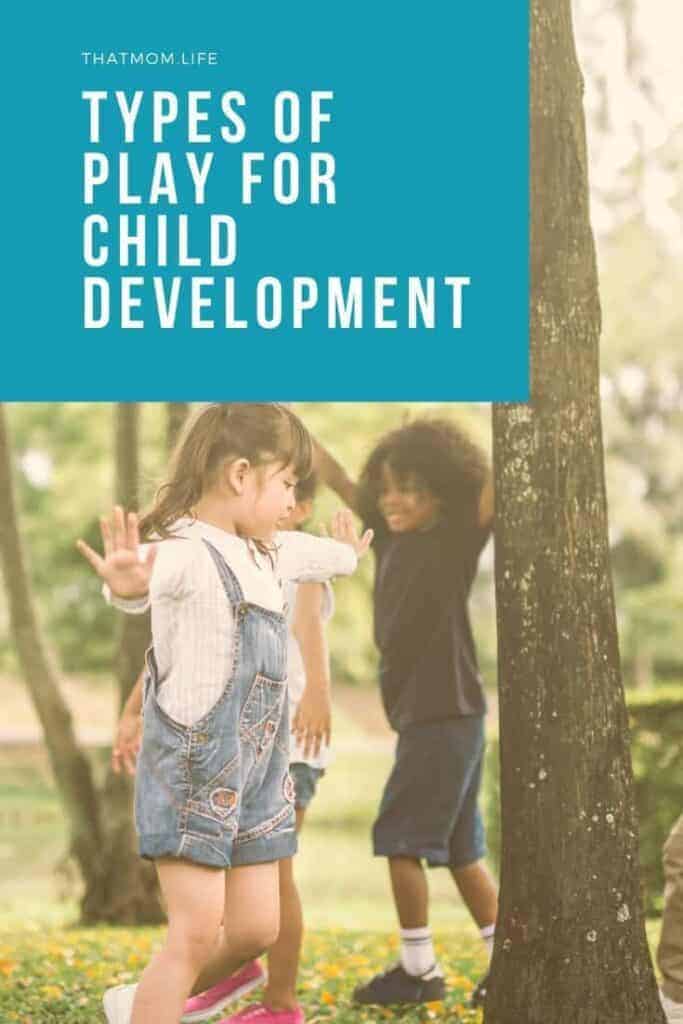
    Experts often talk about six categories of play that are universal to all kids no matter their location or culture. It is important to note that these categories are not bound by sharply defined lines, and as such you will likely witness more than one type of play happening at once.

    Physical Play

    All mammals need to develop fit bodies and have the ability to move in a coordinated way. Physical play is when kids are using and developing gross motor skills by doing activities such as running, jumping, wrestling, spinning and climbing. This type of play is what allows children to develop control of their bodies, physical coordination, proper muscle tone, core strength and courage.

    Constructive Play

    Given our opposable thumbs it’s no wonder why constructing and building is a type of play that human children gravitate towards. This type of play can include anything that involves building, creating, constructing and often includes creation of tools and shelters (think digging with sticks or making a fort out of couch cushions).

    Language Play

    You can witness this type of play when you hear a cooing baby who is playing with making different sounds, or with the toddler who is laughing hysterically as they begin to play with rhymes or make up funny nonsensical words. Eventually this play allows them to fully understand their native language

    Dramatic or Pretend Play

    This is when children are experimenting with different social roles, including dress up, make believe and imaginary play. Dramatic or pretend play is unique to humans as we are capable of thinking beyond what is actually present–this quality is what allows us to invent and reason. This type of play also encourages language development.

    Games with Formal Rules

    This is one of the more common types of play witnessed in U.S. culture. These are games with explicit rules that can be explained in words to others. They can be competitive in nature like organized sports, or games like chess.

    Social Play

    Social play is two or more children playing together and can span across any other type of play listed above. Children often gravitate towards social play. This is where kids begin learning to negotiate and compromise. In this type of play they start to learn about other’s needs and wants, and how to navigate a variety of situations involving people other than themselves. Social play is how kids learn to get along with others. A crucial skill that cannot be taught, only learned through experience.

    Types of Play Especially Relevant to Our Current Society

    Adding to these overarching types of play, it is important to note a few other types of play that need to be explained and encouraged, especially in our society today.

    Sensory Play

    Children develop cognitive skills by using their senses. Ideally when kids play they are combining the sense of touch with other senses such as vision, hearing, smell, and taste. Experiences and toys that provide kids with multi-sensory feedback are best for development.

    This doesn’t mean toys that are overstimulating to the senses–toys that light up, talk, sing, flash, or move on their own are very often overstimulating.

    It’s important to understand that overstimulation is NOT good for kids, no matter the age. Overstimulation of the senses causes things like sleep issues, crankiness, withdrawal from face to face interaction, crying, tantrums, aggression, and hyperactivity. It’s literally that the senses are on overload and don’t know what to do.

    Keep in mind the 90/10 rule for toys. Your child should be doing 90% of the work and the toy should only be doing 10% of the work.

    It’s important to recognize that all the sensory play posts and ideas for sensory bins that are sweeping Facebook mom’s groups and blasted all over Instagram accounts, while nice, are a symptom of a larger issue.

    Have you ever considered why the emergence of sensory bins or focus on sensory play? We have whole social media accounts, followed by thousands, solely dedicated to showing parents different sensory bin setups.

    This is, in part, due to the lack of time spent in play, especially in outdoor play. Outdoor play is one of the absolute best multi sensory experiences you can provide your child, and yet, kids today are spending significantly less time outside. Due to this, children need to specifically be exposed to “sensory play” because they are missing out on natural multi-sensory experiences found in nature.

    Risky Play

    Children have an innate need for risk taking–and research indicates that children who are encouraged to take risks at a younger age are able to better manage risk once they have gained more independence. It also shows that lack of ample opportunity to take risks may increase fear and inappropriate aggression, as well as limit the ability to cope with stress. All of which translate into an increase in physical and mental health issues.

    Dr. Peter Gray writes in his book Free to Learn that “Over the past 60 years we have witnessed, in our culture, a continuous, gradual, but ultimately dramatic decline in children’s opportunities to play freely, without adult control, and especially in their opportunities to play in risky ways.  Over the same 60 years we have also witnessed a continuous, gradual, but ultimately dramatic increase in all sorts of childhood mental disorders, especially emotional disorders.”

    Some ways you may see kids engaging in risky play are playing at heights, running at high speeds, using things in ways that aren’t intended (climbing the couch, going up the slide instead of down), rolling down hills, climbing rocks, walking on anything that requires balance, spinning in circles, jumping off anything and everything.

    These days parents are often seen hovering over kids at the playground, or even worse, following them up into the playground equipment. Children aren’t scaling rocks and climbing trees. They aren’t jumping from heights that are *just* a little too high.

    Funny enough, injuries haven’t decreased–quite the opposite. Why? Because children are not testing their bodies enough, and are therefore more likely to get hurt because they are grossly unaware of their physical limits.

    We need to shift our mindset. These are things we should be encouraging our kids to do. Take a breath, step away from the top of the slide and let them take healthy and age appropriate risks.

    Understanding the Difference between Structured Play and Unstructured Play

    An important point for parents and caregivers to understand is that not all play is the same. Kids need to participate in both structured and unstructured play, with unstructured play often being the goal.

    Structured Play

    Structured play is often adult led (especially at the younger years) and it can include a goal that requires problem solving or critical thinking of some sort.  Some examples would be putting together a LEGO set using the directions, attending an enrichment class, playing a team sport, engaging in a card game or working on a puzzle. Even a game of tag or hide and seek would be considered structured play.

    Overall, this is often where children in our society end up the most. This is due to an increase in parental supervision and a gross lack of completely free time for kids today.

    Unstructured Play

    Unstructured play or sometimes called free play, is not directed by an adult, and ideally should be away from direct adult supervision. This type of play is completely centered around, and led by, the child. This type of play is really where the magic happens. Engaging in unstructured free play allows for the development of creativity, imagination, emotional regulation, and problem solving skills.

    If you like this post and want to read more like it then check out these posts:

    Toy for Toddlers: Encouraging Active Play

    7 Essential Playroom Spaces (and why you need them)

    The Power of Play

    Top 10 Art Supplies for Kids

    3 Steps to Declutter Your Play Space

    Read More

  • Emotional Intelligence (EQ) is the new IQ


    The Importance of Emotional Intelligence (EQ) for Kids

    We now know that one of the biggest predictors of a child being successful and happy is emotional intelligence.

    One of our main goals as parents and caregivers should be to guide the child towards independence. As hard as it is to accept, our little ones will, all too soon, be off and dealing with life’s challenges.

    In order for true independence to emerge, kids need to feel confident and in control.

    Stephanie Pinto, an Australian based former speech pathologist and certified emotional intelligence coach, says that, simply put, emotional intelligence is “a person’s ability to be aware of their own emotions as well as others’ emotions, and how they can use this information to guide their actions and behaviours in day-to-day life.”

    Of particular interest to parents, she notes that “EQ is fast becoming more important than IQ in the classroom.”

    Components of Emotional Intelligence

    There are five components of EQ.

    1. Self-awareness
    2. Self-regulation
    3. Social Skills
    4. Empathy
    5. Motivation

    While all five of these components are crucial to success, the one I want to focus on in this post is the idea of self-regulation.

    Self- Control vs. Self-Regulation

    We often hear parents talk about self-control, but that isn’t the end all be all when it comes to emotional regulation.

    It’s important to understand that self-control is about being able to stop yourself from acting impulsively.

    Whereas, self-regulation is about reducing the intensity and the frequency of those impulses allowing you to take appropriate action.

    How kids learn self-regulation

    Anyone with toddlers knows that kids are not born with this ability. Far from it. Toddlers and preschoolers often show us huge emotions.

    They throw themselves on the floor sobbing because you didn’t give them the right color cup, or because you told them they couldn’t eat dog food. The screech and squeal in delight at you blowing a bubble or because they got to stomp in a mud puddle.

    So how can we help kids learn to self-regulate when they seem to feel everything so deeply?

    Simply by providing them many opportunities to help them identify the emotions they are feeling and give them a chance to practice strategies for coping with those emotions.

    Stephanie notes that “Kids who learn and regularly practice self-calming strategies like deep breathing and positive affirmations are well on the road to developing a great level of emotional intelligence.”

    Developing EQ in Kids

    Here are some specific ways we can help children develop a strong EQ.

    • Openly talk about our own emotions and model self-regulation.
    • Read books that directly talk about different emotions (Check out The Color Monster, B is for Breathe, or The Way I Feel).
    • Encourage your child to identify the emotion they feel, or identify it for them if they are too young.
    • Create a space for them that is specifically dedicated to helping them calm down. You can read more about this type of space here.
    • Pick a self-calming strategies to try–deep breathing is a great one for kids–they can use a finger to slowly trace their thumb, going up one side as they breathe in and down the other side as they breathe out. Then they can trace their other fingers using the same method.

    The role of play in developing self-regulation

    It comes back to play, as it so often does.

    Twentieth century Russian developmental psychologist Lev Vygotsky famously discussed the role of play in the development of self-regulation.

    He explains that in dramatic play or make believe play, children create imaginary roles and then act out those roles. Often times, these roles are of adults–Doctors, Firefighters, Superheros, a Mom caring for a baby. Within this role play, children must act specific to this role and work to inhibit behaviors that do not align with their role. This takes emotional regulation.

    The research also shows us that kids are able to better regulate their behaviors if given a play task; being asked to be a lookout vs just asking them to stand and wait.

    Parents can capitalize on this by turning directions into “play tasks” and by providing plenty of opportunities for children to engage in pretend play.

    Read More

  • Guarding our children’s mental health

    Rise of mental health issues in children

    Did you know that mental health diagnoses among U.S. children increased 30% between 2011 and 2017 alone?

    That is a scary statistic.

    The Centers for Disease Control and Prevention estimates that 20% of children in the U.S. have a mental, emotional or behavioral disorder.

    Signs and symptoms of mental health issues in children

    Our kids are suffering. Often silently, or acting out in ways that we don’t traditionally associated with mental health issues–as symptoms can present differently for children.

    The Mayo Clinic lists the following as some symptoms to look for when thinking about your child’s mental health.

    • Feelings of sadness that lasts more than two weeks
    • Mood swings that cause problems at home or in school
    • Feelings of overwhelming fear for no real reason
    • Drastic changes in behavior or expressions of violence
    • Difficulty sitting still or trouble focusing on a task
    • Poor academic performance
    • Frequent headaches or stomach aches

    Our perceived safety

    Dr. Peter Gray, research professor at Boston College, and author of one of my absolute favorite books, Free to Learn (which should be on your must read list), explains that there are currently “five to eight times as many high school and college students who meet the criteria for a diagnosis of major depression or anxiety.”

    This increase is significant. But we can do something to change the course.

    I often hear parents arguing that things just aren’t as safe as they used to be. But that’s not true. We likely perceive that due to our unprecedented access to news via television and the internet. Where fear mongering headlines come at us from every angle. It’s absolutely understandable that we begin to believe that we are less safe.

    But the fact is, statistically our world has not gotten more dangerous.

    Why the decline in children’s mental health?

    Gray argues that the rise in mental health issues directly correlates with the decline in free and unstructured play, as well as with the rise of the amount of time kids spend in school and on academic work.

    We know that play is how children learn to solve their own problems, where they begin to develop a sense of control of their bodies and their lives, and when they develop an understanding of their own personal interests. Play is also where children are motivated by intrinsic and self-directed goals.

    Kids now are spending more and more time in areas that are directed by adults. More and more time in settings where everything they do is judged, graded, calculated, timed, punished or rewarded and where adults are seemingly responsible for handling every task, keeping them entertained and holding their hand every step of the way.

    This, according to Gray, is one of the main reasons for the rise in mental health issues among children.

    How can we make a change?

    Think about your own views about play? What does it mean to you? How do you interact with your child when they are playing? Is there a way you can let go and allow for more unstructured play?

    Here are a few questions to consider:

    • Do you often find yourself “hovering” or playing “with” your child? Even with toys you don’t personally enjoy?
    • Do you find yourself narrating what your child is doing? Or talking to them about what they are doing while they are in the process of doing it?
    • Do you find yourself jumping in to show them how to do something?
    • Do you have a variety of open ended toys available for your child to play with? (The goal for a toy is 10% toy, and 90% child)
    • Do you let your child play without your direct supervision?
    • How long is your child able to play independently? Do you with they would play more independently or for longer stretches of time?

    Placing more value on play

    If we value our children’s mental health, then we need to work harder as a society, and as individuals, to provide children more opportunities to participate in REAL play.

    Read More